
Charlotte Sumner, a neurologist at Johns Hopkins University, has spent years researching therapeutic strategies to treat spinal muscular atrophy (SMA), a progressive neurological disorder that causes muscle weakness and, often, childhood mortality. Since she entered the field, the FDA has approved three new treatments, and clinicians throughout the United States have begun regularly screening newborns, facilitating earlier intervention (1,2).
“We’ve come a long way,” Sumner said. “But even with that, we’ve found that persistent clinical deficits occur.”
Early administration is key to ensuring the effectiveness of SMA therapeutics, but in many cases, neurodegeneration begins in utero (3). So, Sumner became curious if prenatal treatment could improve outcomes for children born with severe SMA. To test this, she and her colleagues treated mouse and lamb fetuses with drugs analogous to the first drug approved for SMA nusinersen (Spinraza). In a recent Science Translational Medicine study, Sumner’s team showed that the therapy improved outcomes in the mice and had a favorable distribution in the lamb nervous system (4).
“It’s kind of a new frontier thinking about in utero therapy, but I am excited by the results,” said Sumner.
It’s kind of a new frontier thinking about in utero therapy, but I am excited by the results.
– Charlotte Sumner, Johns Hopkins University
Nusinersen is an antisense oligonucleotide (ASO) drug. ASOs are molecules that bind to mRNA with high specificity and alter the expression of a gene. People with SMA have two dysfunctional copies of the survival of motor neuron 1 (SMN1) gene, but nusinersen helps them compensate for this by targeting the SMN2 gene to increase the amount of SMN protein that their cells produce. Therefore, Sumner and her team chose to treat the animals in their study with nusinersen-like ASOs.

It wasn’t immediately clear that Sumner and her colleagues would be able to deliver effective doses of ASOs to a fetus. “They’re big, large, charged molecules,” she said. “They don’t cross the blood-brain barrier.” The fetal blood-brain barrier is not fully developed, but it appears to become functional at least to some extent relatively early in a pregnancy (5). Furthermore, the placenta prevents many molecules that might be circulating in the mother’s bloodstream from reaching the fetus in the first place. However, Sumner’s team anticipated that, if they could get around the placental barrier, the fetal blood-brain barrier would still be leaky enough that ASOs could freely move into the central nervous system.
To get started, Sumner and her team administered ASOs to fetal mice. Humans are the only animals that naturally have SMN2 genes, but to learn more about SMA, scientists have bred mice with SMN2 genes. Thus, even though there are some differences between fetal development in mice and humans, these mouse lines were uniquely capable of providing information about the disease-modifying potential of SMA therapeutics.
In the second half of gestation, Sumner’s team injected ASOs into the amniotic fluid surrounding developing mice with two different types of SMA. Not only did intra-amniotic injections greatly increase the animal’s chances of survival relative to their untreated counterparts — from less than two weeks to several months — but mice that received prenatal treatment also tended to survive longer than mice treated after birth. Increased survival times corresponded with higher levels of SMN protein and better performance in physical activities like self-righting and gripping.
Satisfied that ASOs could work in utero, Sumner’s team then decided to administer the drug to developing lambs. Although they don’t have SMN2 genes, sheep are more similar in size to humans than mice are. Thus, tracking the movements of a drug through a lamb fetus offers a better approximation of how that drug might move through the body of a human fetus.

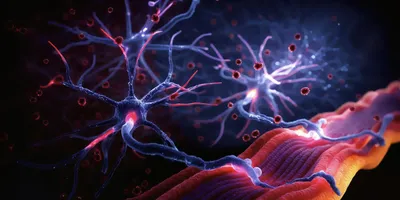
Nusinersen helps a person with spinal muscular atrophy compensate for the absence of SMN2 genes by binding to the SMN2 mRNA sequence and increasing the amount of SMN protein that cells produce.
Credit: iStock.com/libre de droit
First, the scientists injected ASOs directly into the head of developing lambs, which were also about halfway through gestation. Subsequent analysis confirmed that the drug accumulated at therapeutic concentrations throughout the central nervous system of the fetuses. However, an intracranial injection could pose more risk for a fetus than an intra-amniotic injection, which would not directly pierce its body.
So, Sumner’s team then tried injecting ASOs into the amniotic fluid surrounding developing lambs. The drug — which moved throughout the body of the fetus, across the placenta, and into the mother’s tissue — did not appear to have any negative effects on either the developing lamb or its mother. However, the amount that accumulated in the developing lambs’ central nervous systems varied, raising questions about how effective intra-amniotic injections could be.
Still, Sumner thinks the results of her experiment are just a first step towards a deeper understanding of how to administer prenatal therapeutics without directly injecting them into the fetus. “We have a lot to learn about how best to deliver drugs into the amniotic space,” she said. For instance, she speculated that it may be important to inject a drug close to a fetus’s mouth to ensure ingestion.
On the other hand, Brunhilde Wirth, a neurogeneticist at the University of Cologne who was not involved in this study, thought the intracranial injections looked more promising. “It’s still tricky,” she said. “[But] the future is going to be open for everything, and the techniques are improving all the time.”
Wirth also wondered what might happen if prenatal treatment for SMA became a real option. “It would mean that you would need to know in advance,” she said, “which implies that you would do a prenatal diagnosis.” If expecting parents were then faced with risky and expensive treatments that wouldn’t necessarily guarantee a healthy life for their child, Wirth speculated that many might opt to terminate the pregnancy.
Sumner acknowledged that there is a lot of work left to do to even make intra-amniotic injections an option, but she’s excited by her team’s results. “I hope that we can keep moving forward and that success in SMA could also lead to similar approaches for other diseases,” she said.
References
- De Waele, L. & Servais, L. Treatment strategies for patients with spinal muscular atrophy. Expert Rev Neurother 25, 259-261 (2024).
- Belter, L. et al. Newborn screening and birth prevalence for spinal muscular atrophy in the US. JAMA Pediatr 178, 946-949 (2024).
- Kong, L. et al. Impaired prenatal motor axon development necessitates early therapeutic intervention in severe SMA. Sci Transl Med 13, eabb6871 (2021).
- Borges, B. et al. Intra-amniotic antisense oligonucleotide treatment improves phenotypes in preclinical models of spinal muscular atrophy. Sci Transl Med 17, eadv4656 (2025).
- Goasdoué, K. et al. Review: The blood-brain barrier; protecting the developing fetal brain. Placenta 54, 111-116 (2017).