Cancer

| 3 min read
Researchers showed that before cancer cells metastasize the brain, they enter a “proliferative pause” that can be targeted with drugs to prevent metastasis altogether.
| 3 min read
John Yu built Kairos Pharma on a simple bet: Cancer drugs don't fail, tumors just learn to outrun them.
| 4 min read
Imagene AI's quantitative pathology and CellCarta's CDx infrastructure offer biopharma sponsors one path from AI biomarker assay to regulatory submission
| 6 min read
As 3D cell models advance toward mainstream use, the field must learn to work with biological variability rather than against it.
| 2 min read
The next-generation tool, called Partita, identified both known and novel genes that contribute to resistance in lymphomas.
| 2 min read
New findings slowed tumor growth in a mouse model of triple-negative breast cancer, offering a new template for RNA drug design.

| 4 min read
Proteogenomic analysis of brain tumors identified potential treatment targets and prognostic markers that differed across age, developmental stage, and sex.
| 3 min read
The new highly scalable therapy successfully slowed tumor growth in mouse models of solid tumors.
| 4 min read
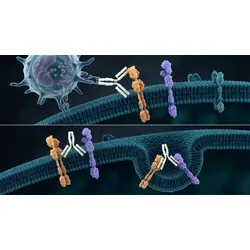
Final PAPILLON data show amivantamab-vmjw plus chemotherapy reaches 34 months median OS, the longest reported in this historically treatment-resistant NSCLC subtype

| 7 min read
CAR T has transformed treatment for some blood cancers, but manufacturing and healthcare system constraints still prevent many eligible patients from receiving it.
| 5 min read
From computationally designed repertoires to AI-driven specificity prediction and multispecific therapeutics, antibody researchers are developing new ways to design molecules for the biology they need to influence.

| 3 min read
A Nucleai-Gilead collaboration found tumor architecture and microenvironment context, not target expression alone, help predict ADC therapy response.