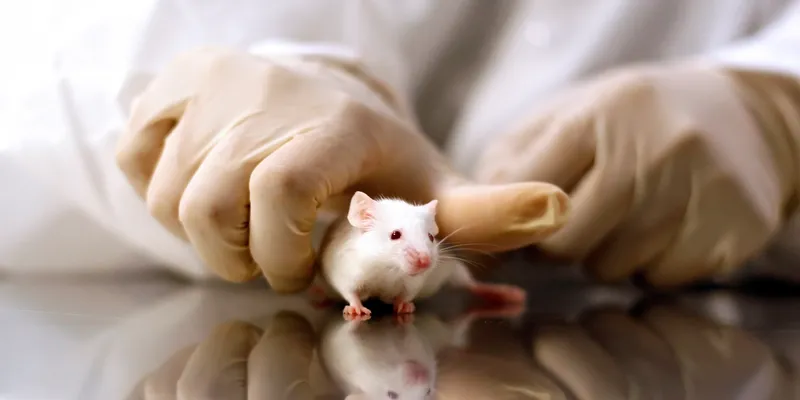
Governments around the world are moving to reduce the use of animal models in preclinical research, driven by ethical concerns and rapid advances in new approach methodologies (NAMs).
In the US, this transition has been accelerated by recent legislative changes. The FDA Modernization Act 2.0, enacted in 2022, removed the decades-old statutory requirement that animal testing be included in Investigational New Drug applications. Three years later, FDA Modernization Act 3.0 went further, directing the FDA to establish a formal process for qualifying nonclinical testing methods.
New draft guidance, Oncology Pharmaceuticals: Streamlined Nonclinical Safety Studies for Biologics and Conjugated Products, is now putting this into action. The guidance is intended to help sponsors simplify nonclinical safety assessments for biologics and conjugated oncology drugs, with an explicit emphasis on reducing animal testing while maintaining patient safety and improving development efficiency. For certain well-defined classes of cancer therapies — such as PD-(L)1 antibodies, CD3 bispecific T cell engagers, and some antibody-drug conjugates — the FDA suggests that lengthy animal studies may be replaced with a weight-of-evidence risk assessment, a single-species study, or rodent-only studies.
In a statement responding to the FDA's plans, Cure Coalition, a patient advocacy organization, warned that the shift of cancer drug development further from proven safety models could put American families at stark and growing risk from inadequately tested treatments.

“We are genuinely supportive of innovation,” Cara Kingan, the executive director of the Cure Coalition, told DDN. “But there’s a meaningful difference between developing new approaches and prematurely deploying them as replacements for validated methods.”
The promise and limits of NAMs
At the center of the debate are NAMs, which include computational modeling, AI, organoids, and organ-on-a-chip systems. These tools have been championed as ethical, faster, and more representative alternatives to animal testing.
For complex systemic treatments that affect the entire body, there simply isn’t a validated NAM that can replace an animal model right now.
—Cara Kingan, Cure Coalition
However, Kingan argues that many NAMs are still insufficiently validated to stand alone. “For complex systemic treatments that affect the entire body, there simply isn’t a validated NAM that can replace an animal model right now,” she said.
That limitation is widely recognized within the scientific community, but Kingan believes it is not well understood among policymakers, and that political enthusiasm to end animal testing risks overlooking the consequences of moving faster than the science allows.
“It sounds idyllic — who wouldn’t want to end animal testing?” she said. “But if we do it without rigor, the consequences fall on patients.”
In meetings with congressional offices, she said that the response has often been surprise rather than resistance. “Most people in Congress aren’t researchers or clinicians,” she said. “When you explain the realities of how drugs are developed and tested, the reaction is usually, ‘That makes sense — we hadn’t considered that.’”
Vulnerable populations left behind
One of the least discussed risks is what rapid shifts away from animal models could mean for understudied and vulnerable populations — including pregnant women, nursing mothers, children, and people with complex or rare diseases.
“These are the patients where safety is hardest to model,” Kingan said. “Until validated alternatives exist, animal studies are still the appropriate default.”
Animal models, while imperfect, currently offer the only validated way to study how drugs affect these populations across developmental stages and physiological states. Moving away from them too quickly could leave critical gaps in safety data — gaps that would ultimately be filled by patients themselves once drugs reach the market.
“If we don’t know, then pregnant or nursing women are effectively taking on that risk personally,” she said. “And I don’t think that’s being adequately considered in the regulatory conversation.”
The risk of exporting research — and ethics
Another concern raised by the Cure Coalition is the potential offshoring of biomedical research if US regulations outpace scientific readiness. Kingan noted that eliminating animal studies in the US would not eliminate them globally — it would simply push them to countries with less transparency and weaker animal welfare standards.

“China is already the largest producer of animal research models,” she said. “And their regulatory oversight does not match US standards.”
From both a patient safety and animal welfare perspective, Kingan argued that maintaining rigorous, transparent research within the US remains the lesser risk.
“If animal testing is going to happen — and right now, it has to — I would rather it happen under US standards than somewhere with far less oversight.”
A dual-track path forward
What’s concerning is the political push to fast-track the process. Real innovation earns patient trust through rigor, not by bypassing it for speed.
—Cara Kingan, Cure Coalition
Rather than choosing between old and new, Kingan advocated for a dual-track approach: validating NAMs alongside established animal models, not instead of them. That process, she argued, is the only way to build confidence that alternative methods can reliably predict human outcomes.
“Only once those methods consistently replicate known results can we have a serious conversation about replacing animal studies,” she said. “The FDA itself has suggested that we are five to ten years away from NAMs being fully validated. What’s concerning is the political push to fast-track the process. Real innovation earns patient trust through rigor, not by bypassing it for speed.”