Download the infographic here:
CREDIT: Kristyn Reid
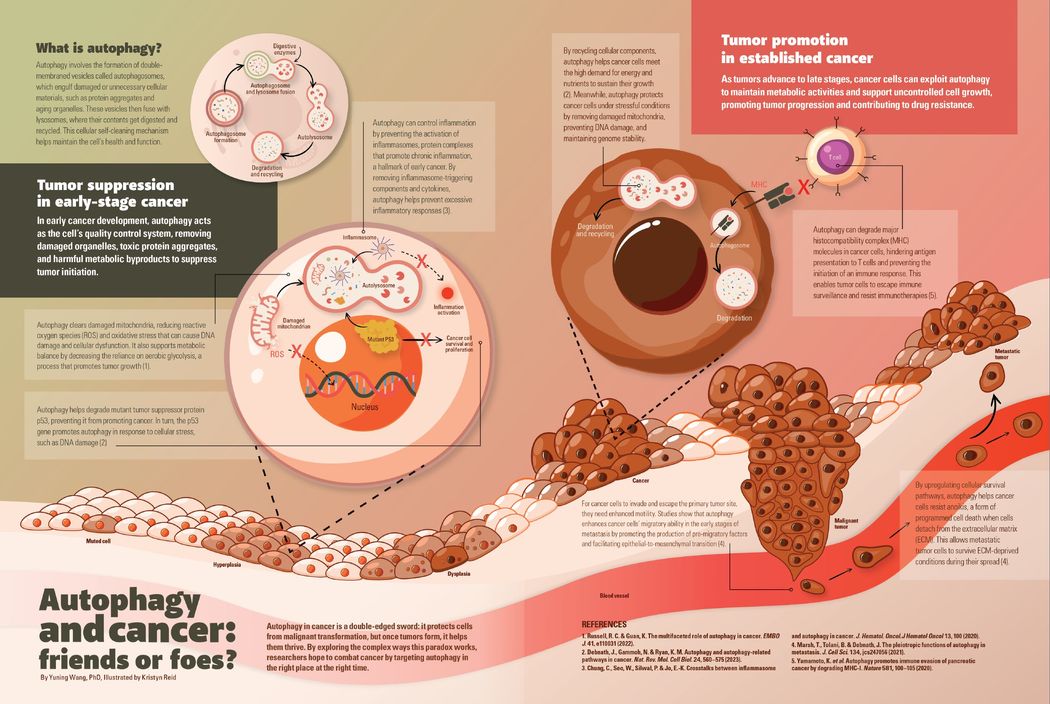
Autophagy in cancer is a double-edged sword: It protects cells from malignant transformation, but once tumors form, it helps them thrive. By exploring the complex ways this paradox works, researchers hope to combat cancer by targeting autophagy in the right place at the right time.
What is autophagy?
Autophagy involves the formation of double-membraned vesicles called autophagosomes, which engulf damaged or unnecessary cellular materials, such as protein aggregates and aging organelles. These vesicles then fuse with lysosomes, where their contents get digested and recycled. This cellular self-cleaning mechanism helps maintain the cell’s health and function.
Tumor suppression in early-stage cancer
In early cancer development, autophagy acts as the cell’s quality control system, removing damaged organelles, toxic protein aggregates, and harmful metabolic byproducts to suppress tumor initiation.
Autophagy clears damaged mitochondria, reducing reactive oxygen species (ROS) and oxidative stress that can cause DNA damage and cellular dysfunction. It also supports metabolic balance by decreasing the reliance on aerobic glycolysis, a process that promotes tumor growth (1).
Autophagy helps degrade mutant tumor suppressor protein p53, preventing it from promoting cancer. In turn, the p53 gene promotes autophagy in response to cellular stress, such as DNA damage (2).
Autophagy can control inflammation by preventing the activation of inflammasomes, protein complexes that promote chronic inflammation, a hallmark of early cancer. By removing inflammasome-triggering components and cytokines, autophagy helps prevent excessive inflammatory responses (3).
Tumor promotion in established cancers
As tumors advance to late stages, cancer cells can exploit autophagy to maintain metabolic activities and support uncontrolled cell growth, promoting tumor progression and contributing to drug resistance.
By recycling cellular components, autophagy helps cancer cells meet the high demand for energy and nutrients to sustain their growth (2). Meanwhile, autophagy protects cancer cells under stressful conditions by removing damaged mitochondria, preventing DNA damage, and maintaining genome stability.
For cancer cells to invade and escape the primary tumor site, they need enhanced motility. Studies show that autophagy enhances cancer cells' migratory ability in the early stages of metastasis by promoting the production of pro-migratory factors and facilitating epithelial-to-mesenchymal transition (4).
By upregulating cellular survival pathways, autophagy helps cancer cells resist anoikis, a form of programmed cell death when cells detach from the extracellular matrix (ECM). This allows metastatic tumor cells to survive ECM-deprived conditions during their spread (4).
Autophagy can degrade major histocompatibility complex (MHC) molecules in cancer cells, hindering antigen presentation to T cells and preventing the initiation of an immune response. This enables tumor cells to escape immune surveillance and resist immunotherapies (5).
References
- Russell, R.C. & Guan, K. The multifaceted role of autophagy in cancer. EMBO J 41, e110031 (2022).
- Debnath, J., Gammoh, N. & Ryan, K.M. Autophagy and autophagy-related pathways in cancer. Nat Rev Mol Cell Biol 24, 560–575 (2023).
- Chung, C., Seo, W., Silwal, P. & Jo, E.-K. Crosstalks between inflammasome and autophagy in cancer. J Hematol Oncol J Hematol Oncol 13, 100 (2020).
- Marsh, T., Tolani, B. & Debnath, J. The pleiotropic functions of autophagy in metastasis. J Cell Sci 134, jcs247056 (2021).
- Yamamoto, K. et al. Autophagy promotes immune evasion of pancreatic cancer by degrading MHC-I. Nature 581, 100–105 (2020).