Glucagon-like peptide-1 (GLP-1) is an incretin hormone, one of several gut-derived peptides secreted in response to nutrient intake that promote insulin release. These effects are mediated through GLP-1 receptors (GLP-1R), which are widely distributed throughout the body, including the pancreas, liver, skeletal muscle, gastrointestinal tract, cardiovascular system, and central nervous system.
Through these receptors, GLP-1 helps regulate blood glucose, appetite, and body weight. It also influences gastric motility, lipid metabolism, fat absorption, and even cardiovascular and neurological function. To harness these biological effects, scientists developed GLP-1 receptor agonists (GLP-1 RAs) — drugs that imitate GLP-1 by activating the same receptors. The first of these drugs, exenatide, was approved by the FDA in 2005. Since then, the class has quickly grown to include albiglutide, dulaglutide, liraglutide, lixisenatide, and semaglutide.
This article explores the biology of GLP-1, reviews current and emerging therapies, and examines their implications for the future of drug discovery and development.
For the receptor mechanism that underlies this work, see how the GLP-1 receptor is structured and signals, and for how discovery connects to the wider therapeutic landscape, the full picture of GLP-1 and metabolic disease.
The GLP-1 pathway
GLP-1 is secreted primarily by endocrine cells in the small intestine and proximal colon in response to nutrient ingestion. It binds to the GLP-1R, stimulating insulin secretion, suppressing glucagon release, delaying gastric emptying, and promoting satiety. Under normal physiological conditions, however, GLP-1 is rapidly degraded by the enzyme dipeptidyl peptidase IV (DPP-4), giving it a fleeting half-life of just a few minutes.
To overcome this limitation, GLP-1 RAs have been developed to resist DPP-4–mediated degradation. Structural modifications — such as acylation or targeted amino acid substitutions — extend their stability and half-life, enabling convenient daily or even weekly dosing.
The first GLP-1RA was discovered in the Gila monster, a desert-dwelling lizard capable of consuming up to half its body weight in a single meal while maintaining stable blood glucose levels. Researchers discovered exendin-4, a peptide structurally similar to human GLP-1 but far more resistant to enzymatic breakdown. This discovery led to the development of exenatide, which in 2005 became the first GLP-1 receptor agonist approved by the FDA for the treatment of type 2 diabetes (T2DM).
More than just diabetes
Since their introduction, GLP-1 RAs have revealed a surprising range of biological effects extending well beyond glucose control (Fig 1). This versatility stems from the complex network of intracellular signaling pathways triggered by GLP-1R activation. When engaged, the receptor initiates cascades that influence metabolism, inflammation, cell survival, and neural activity.
Studies indicate potential roles in neurodegenerative and oncologic diseases, where GLP-1 signaling can inhibit aberrant cell proliferation and promote apoptosis. GLP-1 RAs have also been found to reduce the risk of acute and chronic kidney disease, cardiovascular events, liver disease, sepsis, and substance use disorders. While these findings are preliminary, they highlight the broad pharmacological potential of GLP-1–based therapies and the need for continued investigation across multiple fields of medicine.
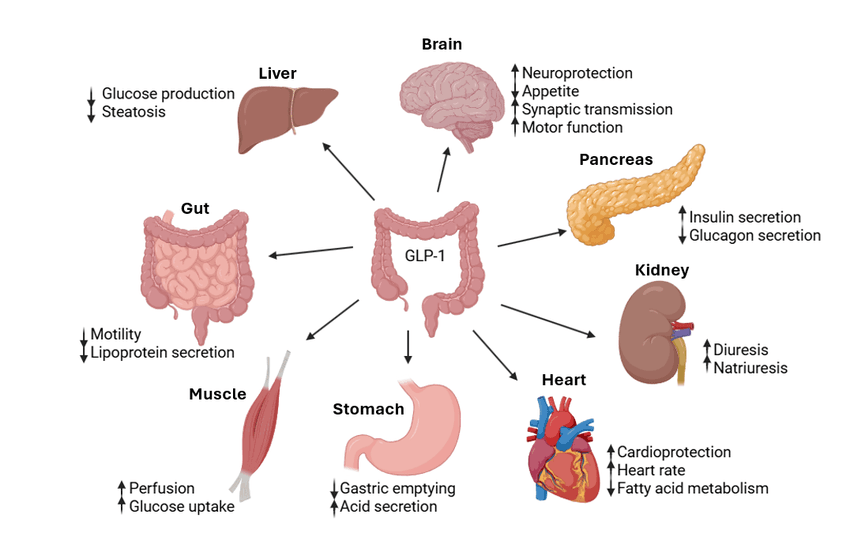
Figure 1. GLP-1 signaling is involved in a range of biological systems.
CREDIT: Gemini.
At the same time, clinicians are getting a clearer sense of the side effects, mild and severe. A study published in Nature Medicine mapped the association between GLP-1RAs and 175 different health outcomes, using data from over 2 million people obtained from the US Department of Veterans Affairs.
The researchers identified an increased risk of gastrointestinal disorders, particularly during the initial stages of treatment. Common issues include nausea and diarrhea, but complications can also extend to conditions such as gastroesophageal reflux disease, gastroparesis (paralysis of the stomach), and colonic inflammation.
Beyond that, some other potential risks included sleep issues, low blood pressure (sometimes leading to fainting), kidney stones, arthritis, and acute pancreatitis.
Advances in GLP-1 receptor agonists
Efforts to optimize GLP-1 RAs are currently focused on enhancing efficacy, minimizing side effects, and expanding administration options.
One way to simultaneously improve blood sugar, body weight, and overall metabolic health is the development and use of dual and triple agonists. Dual agonists target both the GLP-1R and another specific receptor, such as GIP (glucose-dependent insulinotropic polypeptide) or IGF (insulin-like growth factor) receptors. A popular dual agonist, tirzepatide (Mounjaro), activates both GLP-1R and GIPR, producing synergistic effects on insulin secretion, appetite suppression, and weight reduction (Table 1). Approved by the FDA in 2022 for type 2 diabetes, tirzepatide has demonstrated superior glycemic control and significant weight loss.
Triple agonists take this strategy further by targeting GLP-1R, GIPR, and the glucagon receptor (GCGR), aiming to regulate multiple complementary metabolic pathways. As of now, GLP-1-related triple agonists are primarily still in the development stage and have not been widely approved for use. For example, both triple agonists retatrutide and HM15211 have shown promising results. However, activating multiple receptors may lead to more complex side effects.
Another exciting avenue is the development of small-molecule GLP-1RAs, designed for oral delivery. These compounds offer the potential for greater convenience, improved tissue penetration, longer half-lives, and lower production costs. Several candidates are advancing through clinical development, including orforglipron, currently in Phase III trials for obesity and type 2 diabetes; danuglipron, which has completed Phase II studies demonstrating significant reductions in blood sugar and body weight; and GSBR-1290, now in early Phase IIa evaluation.
Table 1. Overview of current and emerging GLP-1 receptor agonists.
Drug Name | Type | FDA Approval / Status | Indications | Administration | Notes |
Albiglutide | Peptide | 2014–discontinued | T2DM | Subcutaneous weekly | Once-weekly dosing; discontinued for commercial reasons |
Dulaglutide | Peptide | 2014 | T2DM | Subcutaneous weekly | Long-acting analog |
Exenatide | Peptide | 2005 | T2DM | Subcutaneous | Derived from Gila monster |
Liraglutide | Peptide | 2010 | T2DM, Obesity | Subcutaneous daily | Daily dosing; multiple indications |
Lixisenatide | Peptide | 2016 | T2DM | Subcutaneous daily | Short-acting |
Semaglutide | Peptide | 2017 | T2DM, Obesity | Subcutaneous/Oral | Weekly injection or oral tablet |
Tirzepatide | Dual agonist | 2022 | T2DM | Subcutaneous weekly | GLP-1 + GIP receptor agonist |
Retatrutide | Triple agonist | Development / Phase III | T2DM, Obesity | Subcutaneous | GLP-1 + GIP + GCGR agonist |
HM15211 | Triple agonist | Early clinical trials | Obesity, NASH | Subcutaneous | GLP-1 + GIP + GCGR agonist |
Orforglipron | Small molecule | Phase III | T2DM, Obesity | Oral | First oral small-molecule GLP-1 RA |
Danuglipron | Small molecule | Phase IIb | T2DM | Oral | Reduces HbA1c and body weight |
GSBR-1290 | Small molecule | Phase IIa | T2DM, Obesity | Oral | Early efficacy data |
The next generation of treatments
GLP-1 receptor agonists have transformed the management of type 2 diabetes and obesity, but their therapeutic potential extends far beyond glucose regulation. Acting on widely expressed GLP-1 receptors, these drugs influence multiple signaling pathways involved in metabolism, cardiovascular health, neuroprotection, and anti-inflammatory responses. Emerging therapies, including dual and triple agonists and small-molecule oral formulations, demonstrate how targeting multiple pathways and improving delivery can enhance efficacy and patient convenience.
With continued research and collaboration between academia, industry, and clinicians, GLP-1–based interventions have the potential to address complex metabolic diseases more comprehensively, shaping the next generation of treatments and improving outcomes for patients worldwide.
Frequently Asked Questions:
What are GLP-1 receptor agonists (GLP-1 RAs)?
GLP-1 receptor agonists are drugs that mimic the natural hormone glucagon-like peptide-1 (GLP-1). They activate GLP-1 receptors throughout the body to regulate blood glucose, suppress appetite, slow gastric emptying, and influence cardiovascular and neurological function.
How do GLP-1 receptor agonists help with diabetes and obesity?
By stimulating insulin secretion and reducing glucagon release, GLP-1 RAs lower blood sugar levels. They also promote satiety and delay gastric emptying, which helps with weight management. Drugs like semaglutide and tirzepatide have shown significant benefits for both type 2 diabetes and obesity.
Are there side effects of GLP-1 receptor agonists?
Yes. Common side effects include nausea, diarrhea, and vomiting, especially when treatment begins. Some patients may experience gastrointestinal complications like gastroparesis or reflux, and rare risks include pancreatitis or low blood pressure. Most side effects are mild to moderate and can be managed with dose adjustments.
What are dual and triple GLP-1 agonists?
Dual and triple GLP-1 agonists are next-generation therapies that activate multiple receptors to enhance metabolic effects. Dual agonists typically target GLP-1R, GIP (glucose-dependent insulinotropic polypeptide) or IGF (insulin-like growth factor) receptors, while triple agonists target GLP-1R, GIPR, and the glucagon receptor (GCGR). By engaging multiple pathways, these drugs can improve blood sugar control, support weight management, and offer broader therapeutic potential than traditional single-target GLP-1 therapies.
Are there oral GLP-1 receptor agonists?
Yes. Small-molecule oral GLP-1 RAs, such as orforglipron and danuglipron, are in development or early clinical trials. They aim to improve convenience, tissue penetration, and adherence compared to injectable forms.
What is the future of GLP-1 receptor agonists?
Ongoing research is focused on multi-target agonists, oral drugs, and broader therapeutic applications beyond diabetes and obesity, including cardiovascular, kidney, liver, and neurodegenerative conditions. These innovations may transform metabolic disease treatment over the next decade.
This article was created with the assistance of Generative AI and has undergone editorial review before publishing.