Most of the recent progress in Alzheimer's disease therapeutics has centered on clearing amyloid from the brain. The approval of lecanemab and donanemab has validated the amyloid hypothesis well enough to change clinical practice, but neither drug stops the disease. They slow it, modestly, in carefully selected patients.
The field's attention is increasingly turning to what comes after amyloid accumulation: the cascade of synaptic damage, network disruption, and cognitive decline that amyloid pathology sets in motion but does not entirely account for.
A small-molecule program testing LM11A-31 from PharmatrophiX is taking aim at that cascade from a different angle — targeting the p75 neurotrophin receptor (p75NTR), a molecular regulator of synaptic survival that has been implicated in Alzheimer's pathology for decades but has only recently become tractable as a drug target. New imaging data presented at the Alzheimer's Association International Conference (AAIC) in London this month, drawn from a re-analysis of the completed Phase 2a trial, adds a dimension to the clinical picture that the primary analysis could not see: evidence that LM11A-31 may be influencing not just individual biomarkers but the brain's network-level communication architecture.
Why p75 took so long
Frank Longo, co-founder of PharmatrophiX and Professor of Neurology at Stanford University, told DDN that the p75 receptor's role in Alzheimer's pathology is both central and counterintuitive. "Think of the p75 neurotrophin receptor as a molecular gatekeeper — one that determines whether synapses hold together or begin to fall apart under the assault of Alzheimer's pathology," he said.
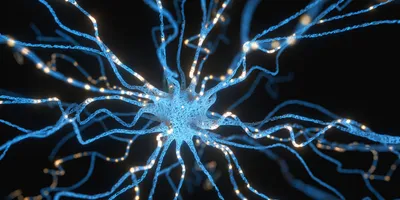
When amyloid is present, p75NTR enables a cascade of damage: Neurons develop the excess curvature known as neuritic dystrophy, synaptic connections deteriorate, and the brain networks that support memory and cognition begin to break down. Removing p75NTR entirely in animal models eliminates those amyloid-induced effects — pointing to the receptor not as a bystander but as a central driver.
The reason it took so long to act on that insight was partly scientific and partly technical. P75NTR lacks the intrinsic kinase or enzyme activity that makes most receptors straightforward drug targets. Its primary role — promoting cell death — made it an unappealing target in an era when the field focused on growth factor signaling. And the tools to measure what a drug acting on p75NTR was actually doing in patients simply were not there yet.
"Conventional approaches largely focused on isolated brain regions without considering their network involvement — but memory and other forms of cognition don't reside in a single place, they emerge from communication across many interconnected regions working together," Longo said. "We knew the biology. What we needed was the ability to quantify it in people. And now we can."
The path to druggability required a peptide mapping program to identify the parts of pro-neurotrophins that bind to p75, followed by in silico screening of millions of small molecules for properties that would allow them to modulate that interaction. LM11A-31 emerged from that work as a first-in-class molecule that modulates the interaction between p75NTR and its downstream adaptor and signaling proteins — inhibiting death-promoting signaling while supporting pathways linked to synaptic resilience.
What the Phase 2a data showed
The completed Phase 2a randomized controlled trial enrolled 242 participants with mild-to-moderate Alzheimer's disease across placebo, low-dose (200 mg), and high-dose (400 mg) groups over 26 weeks. Results, published in Nature Medicine in 2024, showed significant drug-placebo differences across five biomarker categories: structural MRI, 18F-fluorodeoxyglucose positron emission tomography (FDG-PET), cerebrospinal fluid (CSF) synaptic and glial markers, CSF proteomic modules weighted toward synaptic proteins, and plasma p-tau217. On cognitive measures, placebo patients progressed significantly on both ADAS-cog13 and MMSE; those on LM11A-31 showed approximately half that rate of decline.
"LM11A-31, compared to placebo, produced significant beneficial effects in five distinct biomarker categories," Longo noted. "Each of the five biomarker data sets correlated with cognitive measures. For a drug targeting a novel mechanism in a notoriously difficult disease, that's a genuinely strong result."
The safety profile was clean — adverse events were transient and non-serious — and critically, no treatment-related amyloid-related imaging abnormalities (ARIA) were observed, a concern that has complicated the clinical use of anti-amyloid antibodies.
Reading the brain as a network
The new analysis presented at AAIC builds on the Phase 2a FDG-PET data but applies a fundamentally different analytical framework. Rather than examining individual brain regions, a team led by Paul Territo and Juan Antonio Chong Chie at the Indiana University School of Medicine treated the brain as an integrated network — mapping how regions communicate, how those communication patterns reorganize over time, and whether LM11A-31 influenced that reorganization relative to placebo.
Using metabolic covariance analysis, hierarchical clustering, shortest-path analysis, and efficiency analysis applied in a blinded fashion to fluorodeoxyglucose-positron emission tomography (FDG-PET) data from 159 trial participants, the Indiana team found dose-dependent improvements in whole-brain network connectivity, community structure, and brain efficiency in treated groups. Region-set enrichment analysis identified significant functional changes in networks relevant to cognition, memory, and sensory processing. The high-dose group showed stronger effects than the low-dose group, and males showed a particularly pronounced dose-dependent efficiency response — a sex-dependent pattern consistent with prior findings from Territo's lab showing that male and female Alzheimer's patients exhibit different trajectories of brain network change over time.
"Alzheimer's disease is not simply a disease of individual brain regions — it is a disease of disrupted brain networks," Territo said in a press release. "By measuring how these networks perform in terms of efficiency, and how these quantitative measures change with time and by sex, we can gain a deeper understanding of the biological effects of a therapy."
Longo told DDN that the network analysis changed how the Phase 2a data should be read. "What they found was striking," he said. "Treatment groups showed sex- and dose-dependent improvements in whole-brain network connectivity, community structure, and brain efficiency. What this tells us about LM11A-31's mechanism is that its effects aren't confined to a local region or a single biomarker — they propagate across the brain's communication architecture in ways that are consistent with a drug reducing neuritic dystrophy and protecting synaptic integrity at scale."
He added that the findings strengthen the case for longer trials. "These new findings also further increase the likelihood that LM11A-31 will significantly affect cognitive and other clinical measures in a trial of treatment duration beyond 26 weeks and sufficiently powered for clinical assessments," he told DDN.
What comes next
PharmatrophiX is planning a Phase 2b/3 trial on the basis of the Phase 2a results and the new network connectivity findings. The program's profile — oral small molecule, no amyloid-related imaging abnormalities (ARIA) signal found with lecanemab and donanemab, mechanism upstream of amyloid targeting synaptic integrity and network function — positions it as a potentially complementary approach to existing anti-amyloid therapies rather than a direct competitor.
The Indiana University imaging methodology itself represents a broader contribution to the field. Built over many years from animal models through large Alzheimer's disease registries, the approach offers a way to measure network-level therapeutic effects in living patients that conventional imaging analysis does not provide. For a disease in which clinical outcomes take years to emerge and biomarker-to-cognition correlations are imperfect, a network-level readout that ties more directly to cognitive function may prove valuable well beyond this particular program.
This article is part of The Spin-Off, a Drug Discovery News series that follows the journey from academic discovery to biotech company. From unexpected biological insights to first-in-class therapeutic approaches, university research often lays the foundation for the next generation of medicines. The Spin-Off follows the journey beyond the lab, examining the people, technologies, and translation challenges involved in turning scientific discoveries into biotech ventures.