Sean Tucker founded Vaxart in 2004 to turn oral vaccines into a reality.
Credit: Vaxart, Inc.
Most of today’s vaccines are administered via intramuscular injection. At the site, immune cells quickly recognize the foreign antigen and mount an immune response. But getting the shot itself requires a trip to a doctor’s office or pharmacy — a task that immunologist Sean Tucker believes is a limiting step for many. In 2004, Tucker founded the company Vaxart with the goal to develop vaccines that could easily be consumed as an oral pill. “The idea was reasonably simple,” said Tucker, now Chief Scientific Officer at Vaxart. “How do I get a vaccine to come to you rather than having to go get a vaccine?”
Since then, Tucker and his team have spent several years figuring out how to make oral vaccine tablets into a reality. Today, Vaxart has successfully developed several pill-based vaccines that have entered clinical trials to prevent norovirus, influenza, and COVID-19. So far, the tablets have been well tolerated, with side effects comparable to those reported when taking a placebo. On the preclinical side, the team is currently working on a vaccine that could be used as a therapeutic to treat human papillomavirus (HPV).
One of the most promising aspects of Vaxart’s new vaccines is that, unlike intramuscular injections that only induce systemic immunity throughout the body, their pills appear to also provide mucosal immunity — offering protection not only in the gut but also in the nose and mouth. That could be critical in stopping respiratory viruses at their point of entry.
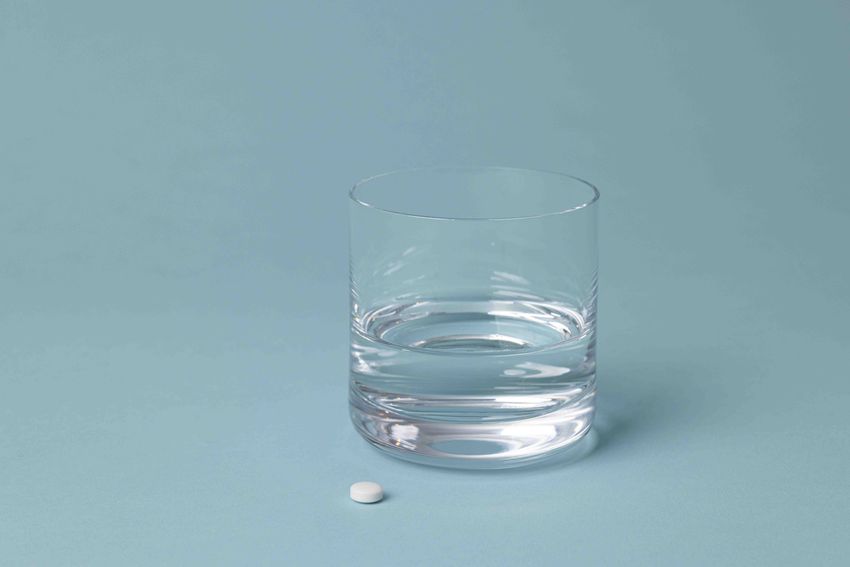
Tucker remains hopeful that, if approved, Vaxart’s oral pill vaccines could provide a welcome change for many and improve vaccine uptake around the world. “The dream was essentially, put it in the mail and get it out to everybody, instantaneously,” he said. But he added that his kids told him that these days, there is an even faster way: a delivery service like UberEats. “They joke we could get a chocolate shake, and then we could also get our vaccine in the same order,” he said.
DDN spoke with Tucker to better understand the science behind Vaxart’s platform and where oral vaccines may be headed next.
Why has it been so challenging to develop oral vaccines?
The main problem is that when you deliver a protein into your intestine, it is recognized as food, not as a pathogen — so it is dissolved or digested instead of triggering an immune response. At Vaxart, what we did is we essentially made a fake virus system that gets into the intestinal epithelium and expresses the antigen of choice. But it also expresses a viral danger signal, so the immune system knows, “Hey, this is a protein you need to pay attention to.”
There have been other oral vaccines out there made from live-attenuated pathogens, but it takes a long time to figure out how to make those so that they won’t cause harm and still trigger an immune response. We wanted to build a platform technology that could be used for every indication, and if you use a replicating pathogen, you're going to be creating immune responses against only that pathogen. We wanted to build something where the delivery agent is invisible to the immune system, so the non-replicating virus would get in, not trigger any immune recognition, and then express the protein of interest of the pathogen, along with that danger signal to basically tell the immune system to pay attention to this protein.
Beyond ease of delivery, what are the main benefits of a vaccine in pill form?
On the technical side of things, if you use a vaccine that is delivered to a mucosal surface like the intestines, you get antibodies in other mucosal surfaces. So, we deliver our vaccine, it opens up in the intestine, then we get antibodies in the intestine, but we also get antibodies in the nose and the mouth, which is the first line of defense for respiratory pathogens. We think that's really critical from the standpoint of providing additional levels of protection because now you're essentially creating a barrier at that surface.
In support of this concept, our recent study in older adults published in Science Translational Medicine showed Vaxart’s vaccines will do just as well in the older as in the younger population, and that they trigger not just intestinal antibody responses, but also antibody responses in the saliva and in the nose. That was something that was underappreciated in the scientific community; the dogma was that if you wanted to make an immune response in the nose, you had to put your vaccine in the nose. But we found that is not the case. Our vaccine in the intestine can produce quite robust antibodies in the nose and the mouth.
The other thing about initiating immune responses at those mucosal surfaces is that, even if you get infected, you're less likely to transmit that virus, which can have profound impacts on the ability of that virus to get out and infect other people. Another study that we published in Science Translational Medicine about COVID-19 showed that hamsters were less likely to transmit to neighboring hamsters that were unimmunized if they had a mucosal vaccine such like ours which can be delivered orally.
Which vaccine pill did you develop first?
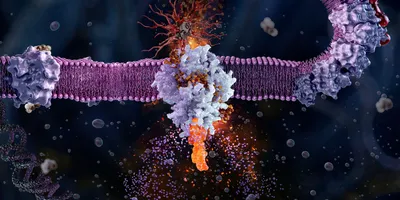
Vaxart’s vaccine pills stimulate immunity in the intestinal mucosa that also spreads to other mucosal surfaces like the nose and mouth.
Credit: Vaxart, Inc.
Vaxart’s first targets were avian and seasonal flu. In a study in humans, we compared our single-dose flu vaccine with a traditional injected vaccine from Sanofi – one that was a market leader —and we showed that not only was our vaccine just as protective, it also worked a little bit better. So, that was a really great story: an oral tablet vaccine, single dose, which is as good — if not better — than the injected market-leading vaccine.
Recently, the team announced that we are working on new, updated pandemic influenza H5 strains. We will have some additional preclinical data coming out later in 2025.
Why pursue an oral COVID-19 vaccine?
During the pandemic, scientists were trying to figure out solutions. Nobody knew what would work. We thought we had a good platform to meet the challenge. In addition, we had some interesting data that was different from what had been done with the injected vaccines, which led to additional funding to explore next-generation COVID vaccines from the US government.
The team found that when you inject the vaccines, they produce a strong and specific serological response. In contrast, our vaccine made a large number of cross-reactive mucosal antibodies in the nose. When people had increases in antibodies against SARS-CoV-2, they also had it against SARS-CoV-1, MERS-CoV, and many other coronaviruses.
This response suggests that our vaccine could offer protection against future coronavirus strains. Obviously we've made improvements over time, but that's what we are going forward with in the trial that we're working on with the US government right now.
What is the status of your norovirus pill, which could become the first-ever vaccine for norovirus?
We were in a Phase 2 trial with our norovirus vaccine, and then we announced recently that we found more potent constructs in preclinical models that we are now moving forward with. They showed 40- to 100-fold stronger immunogenicity, meaning they result in higher antibody titers. We are very excited about that, and recently completed a study to compare our old with our new constructs.
We didn't take the decision to go back into Phase 1 again lightly, but the constructs were just so much more potent, at least in preclinical models. Our scientific advisory board said, “It’s worth taking that six-month hit on the timeline.” Now, of course, we need to prove it in humans, but that's the whole point of the new study.
Why develop a therapeutic vaccine for HPV?
There's a very good vaccine out there that protects against HPV infections and those that lead to cervical cancer and other HPV-related cancers. That's fantastic. However, not everybody in the world is adopting that vaccine.
Our pill is being developed as a therapeutic. The hypothesis is that we could treat precancerous lesions by providing this new vaccine pill that triggers the right T cell responses, and then those T cells travel to the cervical tissue and eliminate those lesions. One of the things that our vaccine does very well is make CD8 T cells that have the right markers that will go to the mucosa. So, we do think that our thesis is sound, and that this is going to be a very potent approach. In preclinical models, our vaccine has essentially eliminated HPV-positive tumors.
We are aiming to offer this to women that have cervical dysplasia, so the tissue is not cancerous yet, but this would be a non-invasive treatment — because usually the process is to wait or have surgery. Instead of having surgery, or perhaps as an adjunct option with surgery, they could have our oral vaccine and that might be able to quickly clear the lesions.
What do you find most exciting about this approach?
I wanted to have a big impact on public health: make it easier for people to take vaccines and improve their availability. That's what gets me excited. If you had this technology out there, there would be more people getting the flu vaccine every year. There would be more people getting COVID vaccines. We could make a big impact on norovirus.
If we can make vaccines more accessible, we can make global health better.
This interview has been condensed and edited for clarity.