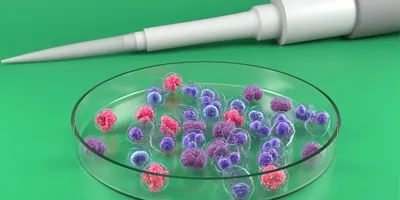
To treat cancer, one of the strongest weapons is already inside a patient: their immune system. In particular, T cells engineered to recognize proteins on cancer cells by attaching a chimeric antigen receptor, or CAR, can be a valuable asset in the fight against cancer. The Food and Drug Administration (FDA) has already approved a handful of therapies that use a patient’s own cells to create personalized CAR T cells in a lab — also known as autologous or ex vivo therapy.
When patients undergo these therapies, doctors remove some of the patient’s T cells and send them to a lab, where scientists deliver genes into the T cells that encode the CAR and other molecules required to fight cancer. Then, these augmented T cells are shipped back to the hospital to be infused into the patient.
However, this approach has a key weakness: Its cost and complexity can make it inaccessible to many cancer patients. This has spurred the development of an alternative: in vivo therapies that transform T cells already in a patient’s body into CAR T cells.
These drugs still need to prove themselves in clinical trials. In the race to the clinic, two companies are leading the pack: Umoja Biopharma and Interius BioTherapeutics. Each company has in vivo candidates in Phase 1 clinical trials, and their success could set the stage for the future of in vivo CAR T cells.

“Umoja and Interius are two of the companies at the frontier [of a technology that] will have profound effects on healthcare for cancer patients and autoimmune patients,” said Gabe Kwong, a biomedical engineer at Georgia Institute of Technology.
Patients as CAR T cell factories
Researchers and physicians agree: CAR T cells have revolutionized cancer treatment. Ever since Kymriah became the first CAR T cell therapy approved by the FDA in 2017, a handful of other CAR T cell drugs have also passed this hurdle to reach the clinic. Once in the clinic, these drugs have had success rates upwards of 40 percent, offering new hope to people who had run out of other treatment options (1).

Johnson leads Interius, which is developing in vivo CAR T and CAR NK cell therapies for cancer and autoimmune diseases.
Interius BioTherapeutics
All of the currently approved CAR T cell therapies are designed for blood cancers, such as leukemias, lymphomas, and myelomas. They use CARs chosen to recognize markers of the blood cells that proliferate excessively in the cancer — for example, CD19 for B cell lymphomas.
However, since these therapies use ex vivo approaches, a single dose can be as much as $400,000 — a cost that derives from the technical complexity of extracting, transforming, and returning T cells to the patient (2). The infusions are also complex enough that patients need to travel to a medical center with the right expertise to do the procedure. Estimates suggest that less than 20 percent of eligible patients actually receive CAR T cell treatment (3).
“It creates a situation where even though these therapies could potentially be curative, they’re likely not accessible for the broad population in the United States, as well as globally,” Kwong said.
This requires further modifying the CAR T cell to minimize its reactivity against the patient (5).
Gill and others suspected there was a better alternative: Rather than manufacturing CAR T cells in a facility, why not turn the body itself into a CAR T cell factory? This would require engineering T cells in vivo — inside the patient’s body. Luckily, with significant improvements in cell and gene therapy in recent decades, there were promising avenues to deliver the genetic material encoding the necessary molecules to T cells in the patient’s body via virus-inspired vectors.
At least seven biotech companies are now focused on developing this technology and getting it into clinical trials. This includes Interius, a Philadelphia-based company founded by Gill and his colleagues, Umoja, Kelonia Therapeutics, Capstan Therapeutics, and others.
“We’re in very early days, of course, but the promise is there,” said Phil Johnson, Chief Executive Officer of Interius. “I think there’s enough information now to say it’s going to work.”

Building blocks of an in vivo CAR T cell therapy
An in vivo CAR T cell therapy has a few key building blocks. First, there’s the CAR itself: the receptor that will end up on the surface of the T cell and allow it to target the malignant cell type. In vivo therapies have largely focused on the same cancer types as the ex vivo therapies — blood cancers — so they have been able to target the same molecules, such as CD19 and CD20.
Next, the therapy requires a vector to deliver the genetic material encoding the CAR to the T cells. Both Umoja and Interius are using vectors that draw inspiration from lentiviruses, a class of viruses that can inject their genetic material into a cell and integrate into the host’s genome so it is passed down to new cells as the original cell divides. While these viruses use this tactic in the wild to infect humans and replicate themselves, therapeutic vectors instead harness this capability to genetically engineer cells.
But viral vectors are not the only approach under investigation. Some companies such as Capstan Therapeutics, are instead using lipid nanoparticles to introduce mRNA encoding the CAR into T cells (6). A key difference is that this genetic material is transient — meaning it won’t become a permanent part of the cell, so once the cell dies, the CAR is gone.
Interius has chosen to pursue a lentivirus-based approach because it can potentially reduce the amount of drug that needs to be given to the patient. “For cancer, we really like the idea that the CAR cells that are generated in the first round lead to progeny cells [that] are also CAR cells,” Johnson said.
Umoja and Interius are two of the companies at the frontier [of a technology that] will have profound effects on healthcare for cancer patients and autoimmune patients.
–Gabe Kwong, Georgia Tech
There are also other considerations. For example, when the drug is infused into the patient — typically through an IV — companies need to ensure that the lentiviral vector goes to T cells and not other cell types. Interius has designed their lentiviral vector to have proteins on the surface that specifically bind to CD7, a molecule on the surface of T cells (7). This serves as a homing beacon of sorts that guides the lentivirus to specifically deliver their cargo to these cells. Johnson noted that CD7 is also found on natural killer (NK) cells, another immune cell type, but added that this is actually a strength of Interius’s approach: NK cells can also be transformed with CARs to attack tumors, so this creates a more diverse army of cancer-fighting cells.
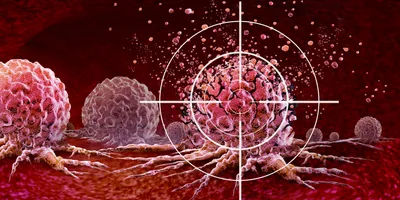
Umoja’s platform, called VivoVec, takes a similar approach by packaging the genetic material encoding the CAR into a lentivirus-based vector engineered to target T cells (8). VivoVec also has a few other features, though, to increase the potency of the CAR T cells. One strategy is including co-stimulatory molecules on the surface of the vector. These molecules are also found on cells in the immune system and when they bind to molecules on a T cell’s surface, they help activate the T cell to respond to a foreign molecule.
To Kwong, who is not involved in Umoja or Interius’s CAR T cell efforts, co-stimulation is a crucial distinguishing factor of Umoja’s product. “I one-hundred-percent believe that the medicine that will give us the best cells, that are most durable, that are most active, will be the ones that include co-stimulation,” he said.
He also highlighted Umoja’s rapamycin-activated cytokine receptor (RACR) system that helps increase T cells’ potency. Normally, cytokines such as interleukin-2 (IL-2) and interleukin-15 (IL-15) can trigger T cells to proliferate more quickly to respond to a potential threat. The RACR system allows physicians to control this pathway and specifically activate it in CAR T cells when needed. The RACR genetic construct is delivered to T cells alongside the CAR and encodes proteins that can trigger the cell activation pathway in the presence of a drug called rapamycin to make the CAR T cells more potent against cancer.
Because RACR is controlled by rapamycin, it offers another key benefit. Rapamycin normally slows down T cell proliferation — it’s commonly used as an immunosuppressant when people receive organ transplants — but in cells that have been successfully transformed by Umoja’s vector, this won’t happen because of the RACR system. Therefore, when doctors administer rapamycin to patients who have received Umoja’s in vivo CAR T cell therapy, it will shut down cells that have not been turned into CAR T cells and boost the potency of cells that have been turned into CAR T cells.
Umoja scientists hope this helps avoid the need for immune cell-depletion strategies that often accompany CAR T cell treatments. “Those engineered CAR T cells won’t have to compete for resources with the rest of the immune system,” said Ryan Larson, Senior Vice President and Head of Research at Umoja.
Putting the T cells to the test
Interius and Umoja have tested their platforms extensively in preclinical animal models, including mice and monkeys (5). Now, they are both in the midst of Phase 1 clinical trials, and the scientific community is waiting apprehensively to see how these therapies fare in human patients.
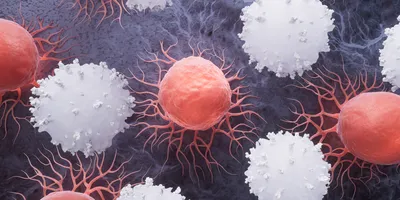
Interius’ trial focuses on B cell malignancies, mainly non-Hodgkin’s lymphoma. Their drug introduces an anti-CD20 CAR into T and NK cells to turn them against B cells, which express CD20 on their surface. Many of the approved ex vivo CAR T cell therapies target a different B cell protein — CD19 — but Johnson says that Interius’ decision to target CD20 is strategic. “By the time the patient gets to us, they will most likely have relapsed off of one of the ex vivo therapies, and doctors will not re-treat them with another CD19-targeting product,” he said.
Their Phase 1 trial began recruiting patients in the fall of 2024 in Australia, with the goal of assessing the safety of the drug by starting with a low dose and gradually increasing it. Johnson expects they will have some preliminary data by the end of 2025, when they also plan to expand the trial to Europe.

Larson hopes Umoja’s ongoing trials offer insights into the safety profile of their in vivo CAR T cell approach.
Credit: Umoja Biopharma
Umoja’s two clinical trials also focus on blood cancers. One trial conducted in partnership with AbbVie is testing an anti-CD19 CAR T cell to treat a variety of B cell-driven blood cancers. Umoja is currently running another trial in China to test an in vivo CAR therapy that engineers T cells to target CD22, a B cell protein, in patients with diffuse large B cell lymphoma who have relapsed off a CD19-targeting treatment. Because these drugs include the RACR system, the patients will also receive rapamycin as part of their treatment.
Umoja’s and Interius’s trials have been running since late 2024, and so far, safety is one of the main outcomes that the teams are focused on. “We’ve seen no safety signals in either our animal models or in our humans,” Johnson said. “But that doesn’t mean it’s not going to happen tomorrow. That’s what keeps me up at night, if anything.”
While these drugs are being tested in humans, Interius and Umoja are continuing preclinical work to explore other targets and indications. Umoja has products in the pipeline to treat multiple myeloma and autoimmune diseases, which are also a target for Interius. Johnson said Interius’ autoimmune drugs are approximately one year behind their cancer drugs in the pipeline, so he hopes they may reach clinical trials next year.
Expanding the toolbox
While success in the clinic would be a major victory for these pioneering in vivo CAR T cells, leaders in the field agree that the current iteration is unlikely to be the final version of these drugs. “The first-to-market may not always be the best,” Kwong said.

Larson’s team at Umoja is thinking about how to refine the payload — the genetic constructs delivered by the vector to the T cells — and how to build combinatorial approaches that could help T cells target multiple proteins on cancer cells. They also plan on building newer generations of RACR to keep increasing the potency of the cancer-fighting T cells.
Interius is also working on improvements to their system to make it longer-lasting and effective at a lower dose. “In the next few years, we will be looking to make the original concepts even better,” Johnson said.
Another looming target for companies is to go beyond blood cancers and treat solid tumors. So far, CAR T cells targeting solid tumors have repeatedly underperformed, Kwong said. One explanation is that there isn’t a single protein that a CAR can be designed to target as solid tumors often have diverse protein markers and it’s hard to find a marker that doesn’t lead to off-target side effects.
Another challenge in this area is the tumor microenvironment: the set of cellular defenses that have evolved in the space around the tumor to protect and sustain it. The tumor microenvironment can create physical and chemical barriers that prevent T cells from reaching the tumor or make the tumor cells more resistant to attack. Many companies are working on creative solutions to this challenge, such as combining CAR T cells with drugs that target the tumor microenvironment, or engineering CAR T cells to produce molecules that can break down those defenses.
For now, scientists are watching closely to see if the first in vivo CAR T cells prove their mettle in human patients. If they do, it could open the door to a new generation of immunotherapies that are more accessible, more flexible, and more powerful weapons against cancer.
Editor's Note: An earlier version of this story incorrectly attributed the following quote to Ryan Larson: "We’ve seen no safety signals in either our animal models or in our humans ... But that doesn’t mean it’s not going to happen tomorrow. That’s what keeps me up at night, if anything.” That quote was said by Phil Johnson, and the story was updated on 8/28/25.
References
- Cappell, K.M. & Kochenderfer, J.N. Long-term outcomes following CAR T cell therapy: what we know so far. Nat Rev Clin Oncol 20, 359–371 (2023).
- Di, M. et al. Costs of care during chimeric antigen receptor T-cell therapy in relapsed or refractory B-cell lymphomas. JNCI Cancer Spectr 8, pkae059 (2024).
- Odstrcil, M.S. et al. Access to CAR T-cell therapy: Focus on diversity, equity and inclusion. Blood Rev 63, 101136 (2024).
- Aranda-Orgilles, B. et al. Preclinical Evidence of an Allogeneic Dual CD20xCD22 CAR to Target a Broad Spectrum of Patients with B-cell Malignancies. Cancer Immunol Res 11, 946-961 (2023).
- Depil, S. et al. ‘Off-the-shelf’ allogeneic CAR T cells: development and challenges. Nat Rev Drug Discov 19, 185-199 (2020).
- Hunter, T.L. et al. In vivo CAR T cell generation to treat cancer and autoimmune disease. Science 388, 1311-1317 (2025).
- Andorko, J.I. et al. Targeted in vivo delivery of genetic medicines utilizing an engineered lentiviral vector platform results in CAR T and NK cell generation. Mol Ther (2025).
- Michels, K.R. et al. Preclinical proof of concept for VivoVec, a lentiviral-based platform for in vivo CAR T-cell engineering. J Immunother Cancer 11, e006292 (2023).