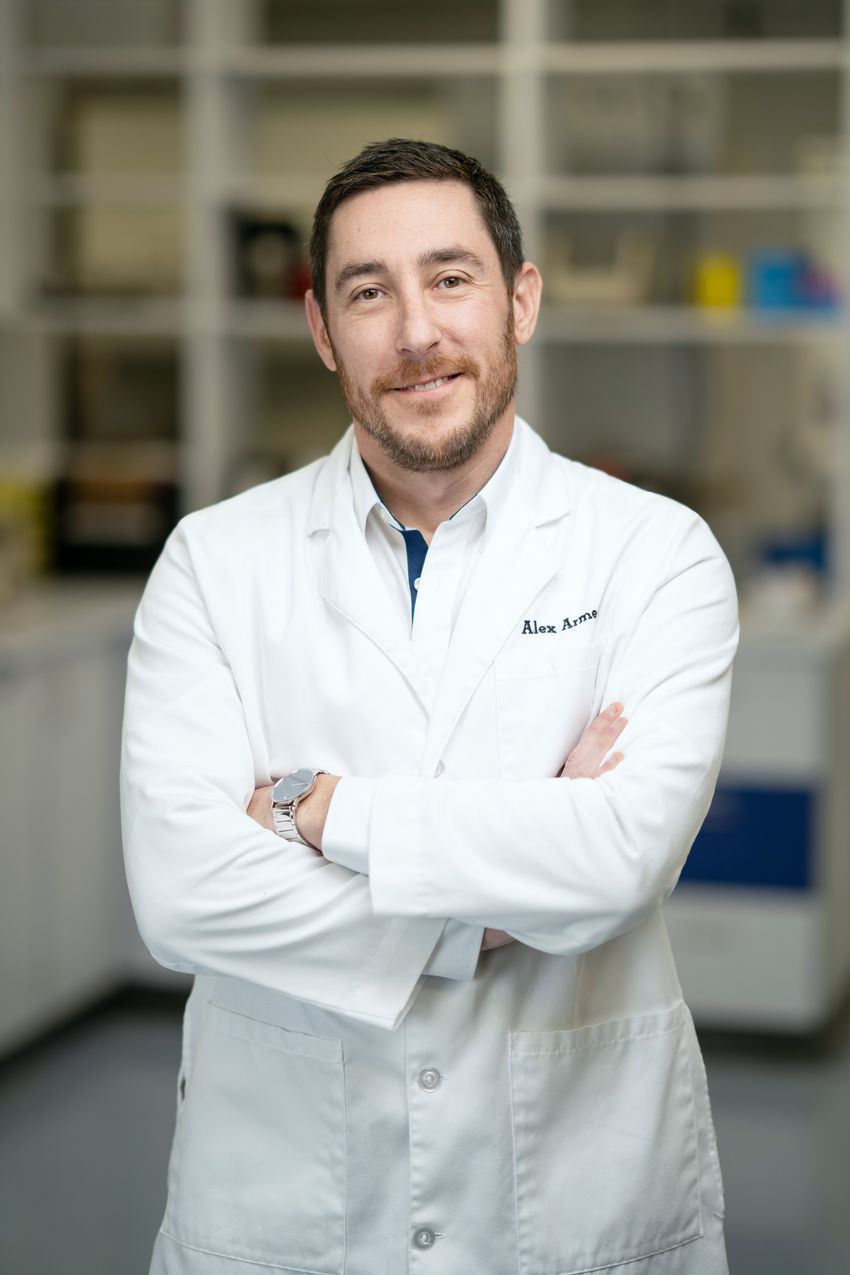
Alex Armento is a biotechnology executive and business leader serving as Head of Mattek, where he oversees the company’s global strategy, operations, and innovation initiatives in advanced in vitro tissue models and human-relevant testing technologies.
Credit: Mattek
New Approach Methodologies (NAMs) are increasingly central to efforts to reduce reliance on animal testing and improve the human relevance of preclinical research. While regulatory acceptance has expanded in recent years, the field is still navigating a transition from promising alternative tools to broadly adopted decision-making systems across drug development and safety assessment.
DDN spoke with Alex Armento, Head of Mattek, now part of Sartorius, to explore how these technologies are evolving in practice. With more than three decades of experience developing 3D human tissue models, Mattek sits at the centre of one of the most active areas in preclinical science — where advances in human-relevant systems are reshaping long-standing assumptions about how safety, efficacy, and disease biology are studied.
Mattek has been developing 3D human tissue models for more than 30 years. How do you distinguish between incremental progress in NAMs and the kinds of advances that actually change how science is done?
There is certainly a difference between incremental changes and the kinds of advances that actually alter decision-making and R&D strategies. Over the course of developing 15 different organ models across more than 40 years, Mattek has delivered a series of important incremental improvements — higher-throughput formats, longer tissue viability, increased model complexity, a larger and more biologically diverse donor inventory, and greater reproducibility. All of these are meaningful and collectively move the field forward, but they don’t fundamentally redefine a workflow.
The bigger breakthroughs will occur when 3D tissues capture more complex human biology and help scientists answer more complex questions. Things like chronic exposure, immune interactions, multi-cell and multi-organ interactions, and patient-specific responses. The real shift will come when this technology goes from being viewed as a “neat new research tool” to being viewed as a cornerstone of evidence-based decision-making.
In your view, which areas of research are closest to truly moving beyond animal testing, and which remain the hardest to displace?
We’re already seeing a huge shift away from animal testing in the cosmetics and personal care industries, which most frequently use our skin and eye tissues for safety and efficacy testing. The relevant biological markers that answer their questions are readily present in a controlled environment and supported by regulatory validations. Our skin irritation test is validated as a stand-alone in vitro test that eliminates the need to test on animals, for example.
These are mature NAMs that have undergone that perception shift from “supporting data” to a genuinely accepted stand-alone method that’s giving product developers better data, which in turn helps them make better products, and satisfies their markets’ demands for ethical testing.
The hardest area to displace animal testing is systemic biology. Reproducing whole-body complexity with immune interactions, endocrine signaling, multi-organ metabolism, and even neurological function, is challenging. Liver, kidney, and cardiac models work very well independently and certainly do provide valuable insight into organ-specific effects, but humans are a multi-organ system, so one of the major goals now is connecting these organs to achieve that organ-to-organ interaction in an in vitro model.
One critique of advanced in vitro systems is that increasing complexity can make models harder to validate and standardize. How do you think about the trade-off between physiological realism and reproducibility?
That’s something that will require constant balancing as this technology becomes more widely used and as regulatory agencies become more comfortable with the data it generates. As you increase the complexity of these models, you naturally introduce more variables. But those variables are also what make the systems more predictive, because they better reflect the variability of human biology.
The way I think about it is that models should be as complex as they need to be to answer a specific context-of-use question, but as simple as possible beyond that. The Organization for Economic Co-operation and Development (OECD)-validated skin models are a good example of a standardized system applied within a clearly defined context of use.
The flip side of that is if you’re evaluating a more complex condition that inherently has more biological variables — inflammation, fibrosis progression, immune response, or multi-organ response. In those cases, increased complexity may reduce reproducibility in a narrow sense, but it can significantly improve biological relevance and predictive power.
Animal tests have missed a lot of human biological mechanisms, so we also must get away from comparing in vitro human models to legacy animal testing data and instead compare in vitro human to in vivo human. Ultimately, the goal is a complex model with a defined context of use that answers a specific question where you can build reproducibility, transferability, and regulatory acceptance.
Recent regulatory changes have lowered formal barriers to NAM use. In practice, what still holds companies back from relying on NAMs as primary evidence in safety decisions?
Regulatory change is very important, but it’s only one piece of the puzzle and it doesn’t automatically create confidence in alternative test methods. What ultimately holds companies back from adopting NAMs is risk. Most organizations have decades of historical knowledge built on animal data, and their development pipelines, databases, and decision-making frameworks are all structured around it.
Mattek has 40 years of reproducible data behind it but is still seen as a “new” technology. Additionally, not all NAM platforms integrate easily into existing workflows. In our case, our tissues can be run in a standard cell culture lab. Other systems may require significant investment in specialized, dedicated equipment, which can fundamentally change workflows, infrastructure, and even staffing requirements through retraining. Those are not decisions organizations make quickly.
Researchers will begin to rely on NAMs for safety decisions when the perception shifts to viewing NAMs as scientifically and strategically dependable.
How important is regulatory confidence compared with peer adoption — does change ultimately flow top-down from regulators or bottom-up from industry practice?
We’ve seen the biggest shifts occur when bottom-up scientific confidence and top-down regulatory confidence start to reinforce each other. It really starts with scientists and industry teams discovering a method — often through peer adoption — that enables better, faster decision-making, earlier in the process, or with greater human relevance. In those cases, NAM adoption can move faster than formal regulatory mandates.
Regulators typically need to see the method used in practice in order to validate and accept it, and we have seen this pattern again and again in our 40 years of doing this work. Industry initiates the shift, and regulatory confidence institutionalizes it. A technology can be scientifically respected for years, but once regulators clearly define a context of use and companies know the data will be accepted consistently, adoption moves from experimental to operational.
Organ-on-chip and multi-organ systems are often described as the future, but adoption has been slow. What needs to happen for these platforms to move from promise to routine use?
Organ-on-chip and multi-organ systems absolutely have the potential to reshape preclinical science, but the reason adoption has been slower than expected is the difference between technological possibility and operational reality. Building an impressive prototype in a research setting is very different from creating a platform that pharmaceutical companies can use routinely across programs, sites, and points of decision-making. The economics and workflow integration have to improve. Pharmaceutical R&D requires scalability and operational efficiency. If a system requires highly specialized expertise, custom engineering, or is a low-throughput format, it becomes difficult to fit that into a workflow, no matter how technologically sophisticated it is.
One long-standing challenge for NAMs has been scale — both manufacturing consistency and global accessibility. Do you think this is beginning to change?
Absolutely — and I think Mattek’s experience with 3D human tissue models is a good example of how the field has evolved from niche innovation toward scalable, widely accessible solutions. It demonstrates that human-relevant 3D tissues can now be manufactured consistently, validated rigorously, and distributed globally in a way that supports real-world adoption.
Forty years ago, in vitro tissues were novel, handcrafted research tools — scientifically impressive, but not necessarily practical for widespread industrial or regulatory use. Today, we ship 16 different organ models via FedEx to destinations around the world every week, arriving ready-to-use. That shift has been made possible through tightly controlled manufacturing processes, rigorous quality control, and lot-to-lot reproducibility, enabling us to deliver tissues that perform consistently from lab to lab, and country to country.
Where do you see exciting growth areas for this space?
I think some of the most exciting growth areas are where NAMs are expanding beyond hazard identification and becoming tools for understanding more complex aspects of human biology. They were first used as predictors of acute toxicity, but now they’re being used for more complex disease modelling.
We’re seeing researchers use them to study inflammation, respiratory disease, gastrointestinal disorders, and fibrosis, because they provide physiologically relevant insight into disease mechanisms. That makes them useful not only for safety testing, but also for drug discovery and mechanistic biology at the cellular and molecular level — with real impact on understanding human health.
Another very interesting area is the integration of NAMs with computational modelling and the combination of advanced human tissue models with AI and predictive modelling frameworks that can improve real human outcomes. More broadly, it’s striking to see how far the technology has matured over the past 20 years, and how quickly its global deployment is now accelerating — and to consider the scale of its potential impact over the next 20.