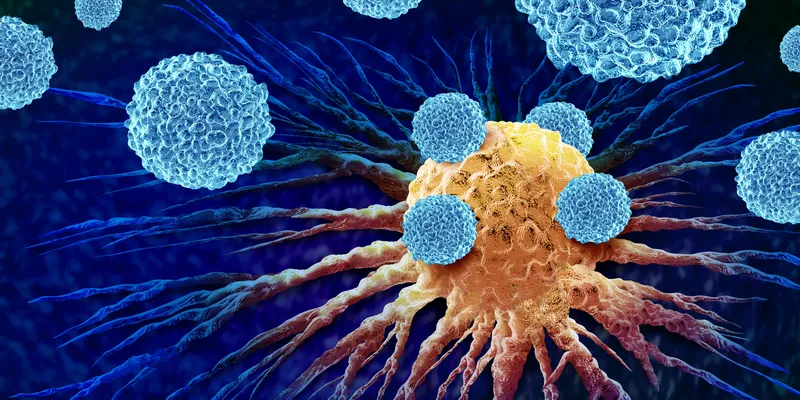
Neutrophils are the most abundant immune cells in human blood and bone marrow, forming the first line of defense in the innate immune system. Upon infection or injury, neutrophils are rapidly recruited to eradicate pathogens, clear dead cells, and support tissue repair. Due to their diverse functions, these cells display remarkable heterogeneity and plasticity, shaped by complex signals in their surrounding environment.
This versatility is especially evident within tumor microenvironments (TMEs), where neutrophils can either promote or suppress cancer growth depending on local cues. Tumor-associated neutrophils can support tumor progression by suppressing immune responses or promoting angiogenesis, but they can also exhibit anti-tumor activity, directly killing cancer cells or aiding cytotoxic T cells.
Amid this complexity is a possible pathway for developing a broad-spectrum anti-cancer therapy. A study published in Cell in 2021 found that when human neutrophils undergo controlled activation and cell death, they release neutrophil elastase (ELANE) — an enzyme capable of selectively killing cancer cells while sparing healthy cells.
Building on this mechanism, Onchilles Pharma has developed a next-generation ELANE-based therapy, N17350, designed to harness this natural anticancer pathway. Today, the company announced the publication of foundational preclinical data in Cell Reports Medicine, highlighting N17350’s potency, selectivity, and ability to stimulate anti-tumor immunity.
The ELANE pathway
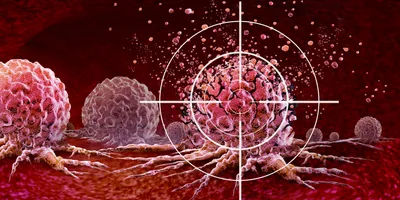
ELANE exerts its cancer-killing effects through a highly specific molecular cascade. Once released from neutrophils, ELANE is taken up by cancer cells, where it cleaves the CD95 (cluster of differentiation 95) receptor, also known as the Fas death receptor.
The ELANE pathway represents a new way to think about cancer-selective cytotoxicity.
- Lev Becker, Onchilles Pharma
This cleavage liberates the receptor’s DD (death domain), which then interacts with histone H1 isoforms that are elevated in many malignant cells. The interaction between CD95-DD and histone H1 triggers a series of intracellular events, including DNA damage, mitochondrial dysfunction, and activation of apoptotic pathways, ultimately leading to cancer cell death.
Non-cancerous cells generally express lower levels of CD95 and histone H1 isoforms, making them less susceptible to ELANE-induced apoptosis. This selectivity distinguishes the ELANE pathway from traditional cytotoxic therapies, which often damage both tumor and healthy tissues.
By targeting a fundamental vulnerability shared across diverse cancers, the ELANE pathway provides a potential strategy for broad-spectrum anticancer therapy. Lev Becker, cofounder and Chief Scientific Officer of Onchilles Pharma, told DDN, “The ELANE pathway represents a new way to think about cancer-selective cytotoxicity. Because the ELANE pathway acts on a feature found in many tumor types, its effects are independent of tumor genotype and tissue of origin.”
Translating the ELANE pathway into a therapeutic
Building on the natural anticancer activity of ELANE, researchers have sought to develop therapeutics that harness this pathway while overcoming challenges in the TME. One major obstacle is the presence of serine protease inhibitors, or serpins, in both the TME and circulation, which can neutralize ELANE and limit its effectiveness in vivo.
In our studies, N17350 consistently demonstrated broad anti-tumor activity across 30 cancer cell lines, 15 tumor models, and 45 patient samples that represented major solid tumor types including ovarian, colon, breast, lung, melanoma, and prostate cancers.
- Lev Becker, Onchilles Pharma
“ELANE is rapidly inhibited by circulating serine protease inhibitors such as alpha-1-antitrypsin, which limits its therapeutic potential. N17350 overcomes this limitation through enhanced enzymatic activity and increased uptake by cancer cells, resulting in strong tumor retention after intra-tumoral administration,” said Becker.
Preclinical studies show that N17350 replicates the hallmarks of the ELANE pathway — cleavage of CD95, histone H1 translocation, DNA damage, and apoptosis — while maintaining selectivity for cancer cells and sparing immune and healthy cells.
Early data suggest that N17350 can regress tumors across multiple cancer types, including chemotherapy-resistant and genetically heterogeneous tumors, validating its potential as a broadly effective cytotoxic agent. “In our studies, N17350 consistently demonstrated broad anti-tumor activity across 30 cancer cell lines, 15 tumor models, and 45 patient samples that represented major solid tumor types including ovarian, colon, breast, lung, melanoma, and prostate cancers,” said Becker.
Systemic anticancer immunity
Excitingly, N17350 also exhibited features consistent with immunogenic cell death. In preclinical models, treatment not only reduced primary tumor growth but also stimulated adaptive immune responses, including CD8+ T cell activation, which can mediate systemic effects against metastatic or distant tumors.
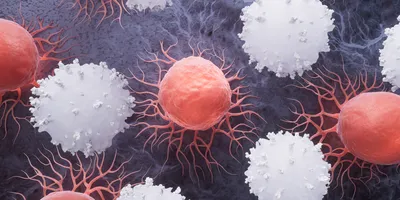
“Our preclinical results show that N17350 produces two complementary waves of anticancer activity: an immediate cytotoxic effect that rapidly reduces tumor burden, followed by an immune-driven response that sustains tumor control and prevents recurrence. In multiple preclinical models, including those resistant to checkpoint inhibitors, a single intra-tumoral injection of N17350 induced complete tumor regression, long-term immune memory, and/or abscopal effects in distant tumors,” said Becker.
With these results, Onchilles plans to initiate a first-in-human trial of N17350, a tumor-directed injectable, in patients in Australia early next year, with Investigational New Drug clearance in the US and US patient enrollment expected in mid-2026. The study will evaluate safety, monotherapy activity, and biomarkers of immune activation across multiple solid tumor types, including breast, skin, and head and neck cancers.
“Beyond our lead program, we are advancing additional ELANE pathway therapeutics designed for different routes of administration and tumor settings. Together, these programs have the potential to establish a new class of innate immune-based therapies that selectively kill cancer cells, stimulate durable anti-tumor immunity, and offer broad applicability across solid tumors,” noted Becker.