Articles, Explainers, Milestones
| 6 min read
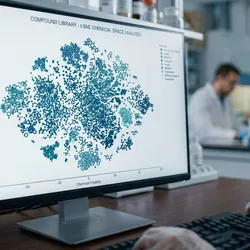
There are vastly more possible drug-like molecules than any chemist could ever screen. Here is how generative models are actually being used to search that space, and where the approach still runs into hard limits.

| 8 min read
No single rulebook governs artificial intelligence in drug development. Instead, three different regulators are moving at three different speeds, and knowing exactly where each one stands is now part of the job.
| 7 min read
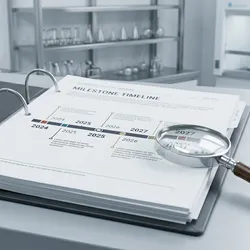
FDA's paper trail on artificial intelligence is longer and more scattered across centers than most bench scientists realize. Here is what each document actually says, and which ones apply to drugs rather than devices.
| 6 min read
Patent law was not written with generative models in mind. As AI becomes central to drug discovery, questions about ownership, inventorship, and data sharing are being answered in real time, not always consistently.

| 6 min read
A model that says a molecule scores 0.87 has not told a chemist anything actionable. Explainability is what turns a score into a design decision, and it is harder to get right than it sounds.
| 6 min read
Central nervous system drug design lives or dies on brain penetration, and AI now predicts it well.

| 6 min read
Every ADMET model has a confidence interval; few teams have a rule for when to act on it.

| 6 min read
AI drug-drug interaction models are sophisticated enough to shape candidate choices, within limits.

| 7 min read
AI toxicity models catch real safety liabilities, but off-target biology still slips past them.

| 6 min read
Metabolic liability drops promising compounds early, and machine learning is changing how that call gets made.

| 8 min read
Machine learning flags ADMET liabilities earlier, but knowing when to trust it still matters most.

| 8 min read
Antibody drug discovery poses a different set of AI problems than small molecules. Here is what is actually working for biologics, and how far it is from designing an antibody from scratch.