Articles, Explainers, Milestones
| 5 min read
Spatial transcriptomics has become a standard lens on tumor biology in pharma, revealing how gene programs organize across a tumor and change under treatment.

| 5 min read
Tumors are patchworks of competing clones arranged in space. Spatial biology maps that architecture, and it predicts how tumors resist therapy.

| 9 min read
Tissue architecture used to be background information. Now it is a data type pharma teams use to find targets, read the tumor microenvironment, and build the next generation of biomarkers.
| 7 min read
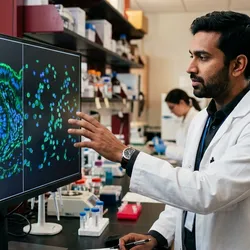
A target that looks promising in a dissociated cell suspension can behave differently once it is put back in the tissue that determines whether it actually matters.

| 6 min read
The best targets are often defined by where they act, not only whether they are expressed. Spatial data is what finally lets a discovery team see that distinction.
| 2 min read
Mass spectrometry infrastructure decisions are increasingly workflow decisions rather than single-instrument decisions.

To keep pace with modern drug discovery, researchers need molecular biology approaches that can support complexity without slowing down the science.


| 4 min read
The Nurix and Roche partnership on bexobrutideg is the latest sign that targeted protein degradation is moving well beyond oncology.

| 6 min read
Researchers are moving beyond the male default as evidence reveals how sex influences disease, drug response, and clinical outcomes.

| 4 min read
A cascade of high-profile drug recalls and evolving FDA and EMA guidance have pushed nitrosamine risk assessment from a late-stage afterthought to an early-development priority

As flow cytometry panels grow larger and more complex, thoughtful panel design has become critical for experimental success.

| 5 min read
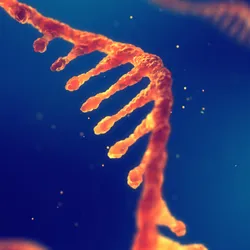
Wobble Genomics is using long-read RNA sequencing to reveal the molecular signals that determine whether a cancer treatment will work.