Aging gradually erodes the function of cells, tissues, and organs, increasing the risk of chronic diseases such as cardiovascular disease, neurodegeneration, and cancer. Researchers are therefore investigating ways to reverse age-related changes without disrupting normal cellular function.
Now, researchers at the Wyss Institute at Harvard University and the Center for Cooperative Research in Biosciences (CIC bioGUNE) in Spain have identified an RNA-processing factor that could help rejuvenate aging cells while preserving their specialized identity. The study, published in Nature Aging, found that increasing the expression of SRSF1 (serine and arginine rich splicing factor 1) reversed several age-associated changes in human skin cells and extended median lifespan by 14 percent in aged mice.
The findings provide a potential new target for rejuvenation research, although further work is needed to understand how SRSF1 produces these effects and whether the approach could be translated into a safe and effective treatment for humans.
Finding a safer route to rejuvenation
Aging is associated with interconnected biological changes, including chronic inflammation, impaired protein maintenance, and alterations in gene expression. These processes contribute to the progressive decline in cellular function and tissue resilience.
One approach to reversing some of these changes is partial reprogramming, which builds on Shinya Yamanaka's discovery that four transcription factors can return mature cells to a pluripotent state. Briefly expressing these factors has been found to restore some youthful molecular features without fully erasing a cell's identity.
However, controlling the process remains difficult. Full cellular reprogramming can cause abnormal cell proliferation and tumor formation, while even partial reprogramming must balance rejuvenation against the risk of disrupting the functions that make each cell type distinct.
“In reprogramming, there is a fundamental tradeoff between rejuvenation and cell identity; achieving one without losing the other requires walking a fine line,” said Alex Plesa, a scientist at the Wyss Institute and co-first author of the study, in the press release.
This has prompted the search for alternative targets that can reverse age-associated changes without triggering the cellular identity shifts associated with reprogramming. To do this, the team first developed a machine learning model that estimates cellular age from gene expression.
The researchers trained the predictor using transcriptomic profiles of human dermal fibroblasts from individuals aged one to 96. The final predictor incorporated 146 genes across eight biological processes, which included histone methylation, endoplasmic reticulum quality control, and translation initiation.
The team tested the predictor in fibroblasts from donors aged 55, 65, and 79 years, confirming its ability to detect age-related changes and responses to experimental interventions, including partial reprogramming. They then used it to evaluate a focused library of genes predicted to influence aging.
Among the candidates, SRSF1 produced the most consistent age-reversal effects. Follow-up experiments in fibroblasts from six additional donors confirmed that increasing SRSF1 expression shifted their transcriptomic profiles toward those of younger cells, corresponding to an average estimated age reversal of approximately 26 years.
Rejuvenation without erasing cell identity
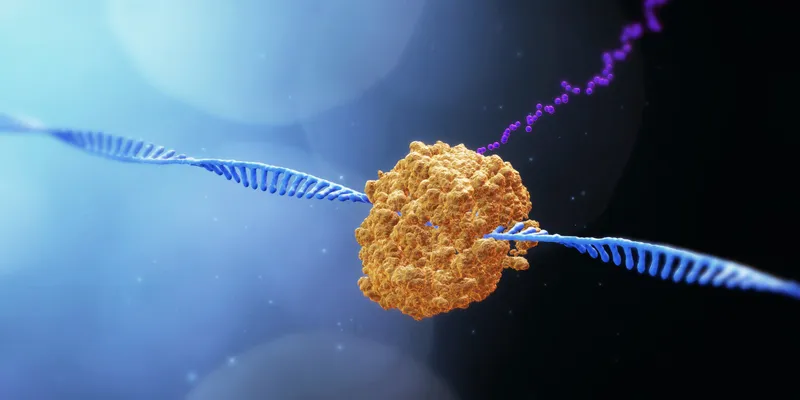
SRSF1 encodes a protein involved in RNA splicing, the process through which cells select and combine different segments of RNA to produce mRNA molecules. Alternative splicing allows a single gene to generate different RNA transcripts, potentially changing the proteins that a cell produces and how they function.
Increasing SRSF1 expression affected several processes associated with cellular aging. The treated fibroblasts showed reduced markers of cellular senescence, reduced proteostatic stress, and dampened inflammatory signaling associated with aging.
The researchers additionally observed changes consistent with improved DNA repair programs and more youthful gene expression. Functional assays provided further evidence of an effect beyond the age predictor alone: Transient SRSF1 treatment increased collagen production by approximately 25 percent and reduced reactive oxygen species levels following oxidative stress by around 30 percent.
Crucially, the fibroblasts retained their characteristic morphology and continued to express genes associated with their specialized functions.. These results suggest that SRSF1 can influence several interconnected aging processes without requiring cells to relinquish their identity. However, the researchers do not yet fully understand how changes in RNA splicing produce these broader effects.
From cells to whole-body effects
To investigate whether SRSF1’s effects extended beyond cultured cells, the researchers tested the gene in aged mice. Using an adeno-associated viral vector that primarily targeted the liver, they found that treated animals accumulated frailty more slowly and had a 14 percent longer median lifespan than control animals.
The study reported a 44 percent reduction in the progression of frailty, suggesting that the intervention affected more than molecular markers of aging. The results also raise the possibility that modifying aging processes in one organ could influence other tissues through systemic signals, although the pathways responsible remain unclear.
For drug developers, the findings provide a potential starting point for exploring gene-based interventions that target the biology of aging. The researchers envision that identifying individual rejuvenation factors could eventually support tissue-specific therapies, provided that expression can be controlled and delivery can be directed to the appropriate cells.
Several questions remain before that approach can be translated into a treatment. SRSF1 regulates RNA processing across many genes, so researchers will need to understand its downstream effects, determine how much and how long to express it, and establish whether prolonged intervention is safe. This is particularly important as earlier research has linked SRSF1 overexpression to tumor-promoting effects in particular experimental settings.
The study nevertheless offers a different direction for rejuvenation research. Rather than resetting cells to a pluripotent state, targeting regulators such as SRSF1 could allow researchers to modify age-associated gene expression while preserving specialized cellular functions. Establishing how reliably that balance can be achieved across tissues will be an important next step toward translating cellular rejuvenation into therapies.