At Advanced Therapies 2026, DDN spoke with Claudio Panzarella, Head of Business Development, and Angelo Raggioli, Head of Technology Development, at ReiThera, about how the company’s early COVID-19 vaccine efforts shaped its current scientific programs, including the gorilla adenovirus (GRAd) platform, ongoing HIV vaccine trials, and the potential for oncology therapeutics.
Founded in 2014 as a successor to Okairos, the company has built a reputation as a one-stop partner for the development and manufacturing of viral vectors. By building internal development and manufacturing capabilities, the company could advance its own platform technologies while supporting an ecosystem of academic groups and biotech firms.
The COVID-19 pandemic put this model to the test immediately. In August 2020, with financial backing from the Italian government, ReiThera launched an early-stage trial of its COVID-19 candidate vaccine, GRAd-COV2, aiming to produce up to 100 million doses per year and make Italy self-sufficient in vaccine production. However, despite promising results, the program faced massive hurdles.
The COVID vaccine program
ReiThera’s COVID-19 candidate, GRAd-COV2, was built on a gorilla-derived adenovirus vector engineered to be replication-defective in humans. This proprietary vector is considered among the most potent platforms for vaccine delivery. Crucially, the vector has low seroprevalence in humans, meaning pre-existing immunity does not significantly blunt vaccine-induced responses — an advantage over many human adenovirus-based platforms.
In July 2020, Italy’s drug regulator authorized a Phase 1 clinical trial of GRAd-COV2. Supported by €8 million in public funding, the study enrolled 90 volunteers aged 18 to 85. Results showed that within four weeks of vaccination, more than 97 percent of participants generated neutralizing antibodies alongside robust T cell responses, with only mild side effects reported, including headache, fatigue, and injection-site pain.
The platform’s safety and immunogenicity were further evaluated in a larger Phase 2 study, which enrolled 917 participants. Volunteers were randomized to receive either a single intramuscular dose of GRAd-COV2 followed by placebo, two vaccine doses administered three weeks apart, or placebo alone. The trial demonstrated that GRAd-COV2 was well tolerated and induced strong immune responses after a single immunization, with a second dose further boosting binding and neutralizing antibody titers.
Despite these encouraging results, the program was ultimately constrained by funding challenges. In May 2021, a court blocked a planned €50-million public investment, disrupting the financial support required to advance into Phase 3 trials. The decision cast uncertainty over the future of Italy’s domestically developed COVID-19 vaccine, but the scientific and manufacturing lessons learned from the program would go on to shape ReiThera’s subsequent work in HIV, Ebola, and other emerging infectious diseases.
Expanding the platform
Although GRAd-COV2 did not advance to late-stage development, the program validated ReiThera’s GRAd platform and set the stage for broader applications. The same vector that demonstrated strong immunogenicity during the pandemic is now being deployed across multiple disease areas, including HIV and Ebola.
While only Phase 1 and Phase 2 studies were completed for the COVID vaccine, the data were promising — particularly in demonstrating robust T cell responses, which are a critical component for HIV vaccines.
—Claudio Panzarella, ReiThera
One of the most advanced extensions of the GRAd platform is in HIV vaccine development. ReiThera has partnered with the Ragon Institute and the International AIDS Vaccine Initiative (IAVI) to develop a T cell-focused HIV vaccine. The candidate, GRAdHIVNE1, is designed to deliver networked epitopes of HIV — regions of the virus that are less prone to mutation and better suited to driving durable cellular immunity.
“While only Phase 1 and Phase 2 studies were completed for the COVID vaccine, the data were promising — particularly in demonstrating robust T cell responses, which are a critical component for HIV vaccines,” said Panzarella. “This strong immunogenicity attracted the interest of the Gates Foundation, prompting discussions and small-scale experiments that combined ReiThera’s platform with a transgene designed by the Ragon Institute to specifically stimulate CD4 and CD8 responses. The outcomes were very encouraging and provided the foundation for advancing the program further.”

In August 2025, the GRAdHIVNE1 vaccine entered Phase 1 clinical trials at the Mutala Trust clinical site in Harare, Zimbabwe, with additional trial sites in Cape Town and Durban, South Africa. “HIV is one virus, but it exists in multiple strains. The strains circulating in these two countries closely match the design of the vaccine, which is why these sites were selected,” Raggioli emphasized.
The study is enrolling 120 participants, including both HIV-negative individuals and people living with HIV who are virally suppressed on antiretroviral therapy. Although the trial focuses on safety and immune responses rather than efficacy, it marks a significant milestone as the first of its kind led by African principal investigators at multiple sites across the continent.
Ensuring global accessibility
“One of the key lessons we’re still learning comes from observing the Gates Foundation’s approach to these trials,” said Panzarella. “They’ve built a network of local organizations, each responsible for different aspects of clinical development — ranging from supplying materials to running the trial itself. This model not only facilitates the eventual delivery of a vaccine in Africa but also helps shift local perspectives, allowing communities to engage with and absorb the scientific innovation required to make vaccines accessible in their own countries.”
The project also highlights broader lessons in accessibility. Trials require participants to remain local for follow-up visits, navigate cultural stigma around HIV, and engage with clinical infrastructure. “Importantly, it underscores that vaccines must be designed with accessibility in mind for regions with limited infrastructure. While the program isn’t aimed at generating revenue, its primary goal is to establish local capability for manufacturing and distributing vaccines. The technology we’re using is well-suited for transfer to emerging countries, and even though it’s a modest contribution, it has the potential to significantly strengthen the scientific environment and capacity in these regions,” said Panzarella.
ReiThera places strong emphasis on safeguarding product integrity through strict cold chain control, specialized packaging, and full traceability. Each international shipment begins with a regulatory assessment of the destination country, ensuring import/export authorizations are secured and documentation prepared in advance. Transport routes and local infrastructure are carefully evaluated to minimize customs delays and deliver products on time.
Those efforts also form part of a multifaceted response from the firm to active outbreaks of Ebola and the similar Marburg virus disease (MVD), as part of its 2029 collaboration with the Sabin Vaccine Institute to produce clinical-grade virus vaccines. In September 2024, Rwanda declared an outbreak of MVD. ReiThera produced and delivered more than 2,700 doses, helping to vaccinate 1,500 healthcare workers in the area. This rapid deployment, achieved just nine days after the outbreak was declared, was crucial in protecting those most vulnerable and curbing the impact of the outbreak.
From vaccines to oncology
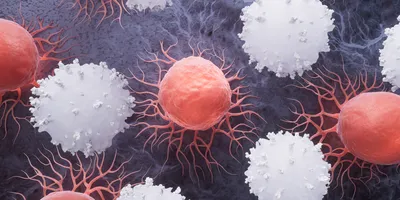
Beyond vaccines, ReiThera is now applying its GRAd platform to oncology. According to Raggioli, the vector’s biology is key. “Most oncolytic adenoviruses in the clinic are based on human adenovirus type 5 (HAdV-5). Compared to this, our vector has three key advantages.”
While HAdV-5 requires genetic modification to limit replication to tumors, our virus naturally targets cancer cells while sparing normal tissue.
—Angelo Raggioli, ReiThera
First, the gorilla-derived vector has very low pre-existing immunity in humans. Many people carry neutralizing antibodies against HAdV-5 due to prior exposure, which can reduce the effectiveness of therapies based on that virus. By contrast, the gorilla-derived adenovirus is largely unaffected by pre-existing antibodies, allowing the therapy to work at full potency.
Second, the vector exhibits natural selectivity for cancer cells. “While HAdV-5 requires extensive genetic modification to limit replication to tumors, our virus naturally targets cancer cells while sparing normal tissue,” said Raggioli.
Third, the vector avoids the liver tropism seen with HAdV-5. Systemic administration of HAdV-5 tends to direct the virus to the liver, whereas the gorilla-derived virus primarily localizes to the lungs, making it particularly well-suited for lung cancer applications.
In addition, the platform is highly manufacturable, with robust productivity that facilitates large-scale production and purification. Together, these features position the GRAd platform as a potentially safer, more effective, and more scalable option for oncolytic therapies.
What's next for GRAd?
From COVID-19 to HIV and Ebola vaccines, and now extending into oncology, ReiThera’s trajectory demonstrates how a flexible, well-characterized viral vector platform can address multiple global health challenges. The lessons learned from rapid pandemic response, clinical development, and international collaboration have informed not only the company’s scientific strategy but also its approach to accessibility and technology transfer.