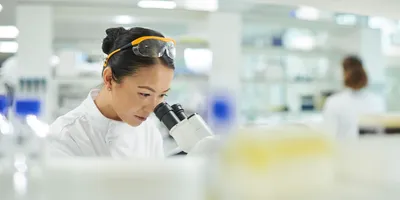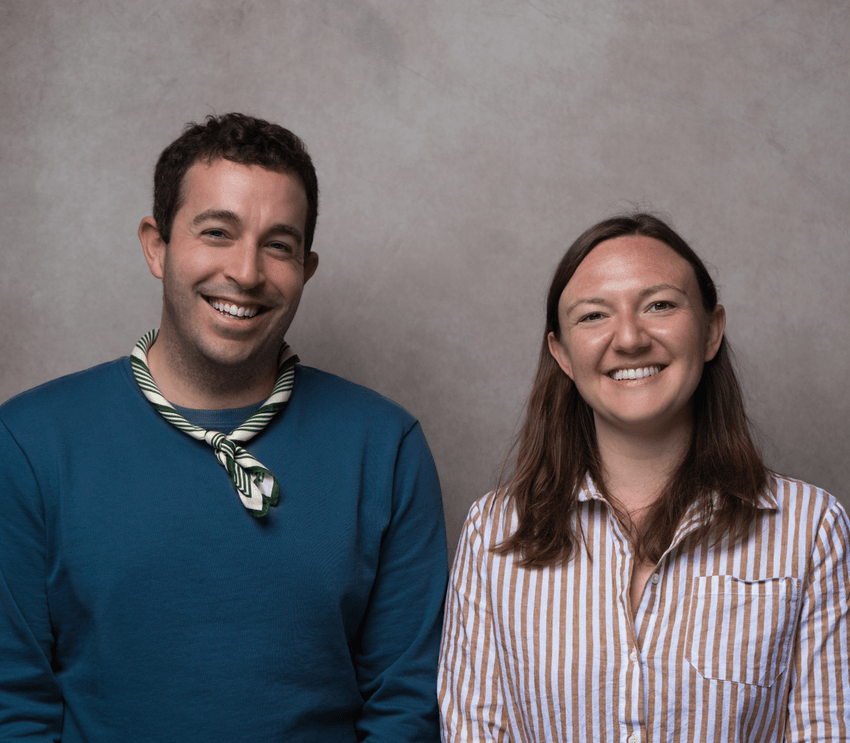
DiFazio and Hilliard lead Parallel Bio as CEO and Chief Scientific Officer. DiFazio has extensive experience in preclinical vaccine development and research strategy, while Hilliard specializes in organoid-based drug discovery and high-throughput screening pipelines.
CREDIT: Amavi Social
Drug development has historically relied on animal models to assess safety and efficacy before human trials. While these models have provided critical data, they come with well-documented limitations: Species differences, inbred strains, artificially induced disease states, and controlled laboratory environments that differ markedly from human biology. As a result, many drugs that appear safe and effective in animals fail in clinical trials, sometimes with serious consequences for patients.
DDN spoke with Robert M. DiFazio, cofounder and CEO, and Juliana L. Hilliard, cofounder and Chief Scientific Officer, at Parallel Bio. The company is pioneering a human-first approach that combines organoids, artificial intelligence (AI), and robotics to model human biology more accurately and at scale. By starting with human biology rather than animal surrogates, Parallel Bio aims to improve the predictability of drug efficacy and safety, uncover new disease targets, and ultimately reshape how medicines are discovered and developed.
Animal models have long been the standard in drug development. Why is Parallel Bio moving away from that approach, and what are you using instead?
A fully human-relevant drug discovery pipeline would bear little to no resemblance to today’s pipelines. Human diseases would be modeled accurately and realistically for the first time.
- Juliana Hilliard, Parallel Bio
Hilliard: Animal models may have long been the standard, but simply put, they do not work. Drugs are extensively tested for safety and efficacy in mice, only to fail 95 percent of the time in subsequent clinical trials. As a result, 110 million animals are needlessly killed every year, drug programs take over a decade and waste billions of dollars, and patients are actively harmed by misses in safety or drugs failing to treat their disease. There is no clear case to use animals, and therefore, we are moving away from that approach.

Human-first drug discovery approaches are emerging that start with human biology at the earliest stages, rather than relying on animal models. Using immune organoids in combination with AI, researchers can create models that replicate human immune responses across diverse populations.
These models are designed to evaluate potential drug targets and predict outcomes more accurately than traditional animal studies.
Such platforms are intended to reduce dependence on animals in preclinical testing and to inform the design of clinical trials by providing earlier insights into safety and effectiveness. As the technology scales, the data generated could help determine which therapies are most likely to succeed in people, potentially shortening development timelines and lowering costs.
Why did you choose to focus on modeling the immune system first?
DiFazio: The human immune system is the human body’s master regulator of health and disease. It touches nearly every disease and drug action in our body, so starting with the immune system unlocks a massive opportunity to discover new immunotherapies through our platform.
Current efforts focus on the immune system, with plans to expand to additional organs and systems to gain a more comprehensive understanding of disease mechanisms and drug interactions throughout the body.
How do your models reflect human diversity, and what does that mean for understanding immune responses across populations?
Hilliard: There’s no better predictor of what works for people than real human biology. Other methods rely on artificial or computational biology, while we choose to harness biology itself to model human responses across populations.
The process begins with a biobank of tissue from diverse patients — spanning age, sex, ethnicity, and other characteristics — and scales the creation of immune organoids across populations. Each organoid preserves the complexity of the original organ and the individual traits of the donor, a level of fidelity that is often lost when human cells are combined with other materials or simulated.
The FDA and EMA are moving toward accepting “New Approach Methodologies.” What do regulators need to see from organoid-based systems for broader acceptance in preclinical pipelines?
DiFazio: Regulators want to see evidence of translatability from organoids to people. This starts by producing datasets that demonstrate that our approach replicates clinical trial data from drugs already on the market. Data can also be generated to compare organoid-based results with animal studies, highlighting cases where animal testing failed to predict safety or efficacy. For example, the antibody TGN1412 was considered safe in animals but caused severe reactions in humans. Validation datasets have already been produced, and additional studies are in progress, with plans for publication.
One of our key pharmaceutical partners, Centivax, is on track to start clinical trials next year for its universal flu vaccine that includes preclinical data from our human-first platform. This will be a pivotal step, providing a clear comparison between the preclinical organoid-derived data and clinical data.
Are there still areas where animal models offer advantages? And how might organoid systems evolve to close those gaps?
Hilliard: Animal models can model the entire body, but it’s tough to describe that as an advantage when drugs tested extensively in animals are still almost guaranteed to fail in humans. We are currently developing approaches that will close this gap and allow us to generate ‘whole body’-like data by combining organoids with computational approaches.
Parallel Bio combines AI, robotics, and organoids. How do you use AI to enhance your service?
DiFazio: We’re using AI to analyze our human-first data and predict results as we grow. The organoids provide realistic human data, and the automation and robotics provide the scale necessary to generate very large quantities of human data on which to train AI models. By applying AI to human disease models and drug discovery and development, we are able to supercharge the speed and scale of identifying successful drugs and proving they work in a diverse array of patients prior to a clinical trial.
Our broader vision is to generate massive amounts of human-first biological data to power a flywheel, feeding more advanced AI models to uncover novel disease insights, predict drug success, and deepen our understanding of human biology. The reality is that AI is hitting a wall in available biological data — too much of which is from animal studies and irreproducible literature. We’ll help solve that as we scale.
You’ve been involved in testing 20 drugs with pharma partners. Have your models surfaced insights that might have been missed in traditional approaches?
With academia largely dependent on mouse data, significant gaps persist in our knowledge of human biology, both at the level of fundamental health and disease mechanisms and in the diversity of disease phenotypes and drug responses across individuals.
– Juliana Hilliard, Parallel Bio
Hilliard: While not necessarily an insight, our approach can reveal safety and efficacy issues that mouse models frequently miss. This prevents clinical trial failures by enabling early detection of ineffective or unsafe candidates, allowing faster iteration, saving time and money, and ultimately leading to better outcomes.
The biggest insight is the massive lack of knowledge around human biology. With academia largely dependent on mouse data, significant gaps persist in our knowledge of human biology, both at the level of fundamental health and disease mechanisms and in the diversity of disease phenotypes and drug responses across individuals. In collaboration with leading pharmaceutical companies, we’ve identified many novel facets of human biology that mouse models miss because they are usually single sex, inbred, and kept in completely sterile environments. This highlights the need for all of biological sciences to shift their focus to real human biology as quickly as possible.
You tested Centivax’s universal flu vaccine using your organoid platform. What did that process look like, and what did you learn?
DiFazio: Centivax wanted to derisk the biggest source of failure in vaccine development: ensuring vaccines work in humans before clinical trials even begin. The company previously validated its pan-influenza responses in mice, rats, pigs, and ferrets, but ultimately wanted human-first data as well by testing on our immune organoid platform.
The organoid study revealed that by effectively targeting common features of the virus shared by many different influenza strains, Centi-Flu even produces strong immune responses against strains not included in the vaccine. Human immune organoids were “vaccinated” with Centi-Flu, leading to the production of B cells capable of reacting to a wide variety of flu strains.
The immune organoids were derived from patients with prior flu exposure, proving that Centi-Flu could trigger broad humoral responses in flu-exposed individuals. The organoid model also showed activation of CD4+ and CD8+ T cells, which are important for fighting infections. This suggests that Centi-Flu helps stimulate both antibody production and T cell immunity. This combination is particularly valuable for protecting against severe flu, including hospitalization and death.
Looking ahead, what would a fully human-relevant drug discovery pipeline look like, from target discovery through safety testing, and how close are we to achieving it?
Hilliard: A fully human-relevant drug discovery pipeline would bear little to no resemblance to today’s pipelines. Human diseases would be modeled accurately and realistically for the first time. Machine learning approaches would rapidly identify and validate novel disease targets. Drugs could then be immediately developed and screened on the platform, with quick iteration loops to further hone these candidates into final candidates. Clinical trial-scale data would then be generated, submitted to regulatory bodies, and then approved. This process would be on the order of months instead of decades and would be done for 1-5 percent of the cost of current approaches.
The platform is currently being used to discover and validate disease targets, develop drug candidates, and assess safety and efficacy within the immune system. Work is underway to extend these capabilities to additional organs and systems. The long-term goal is to substantially reduce reliance on animal models — with the expectation that their use could decline by as much as 90 percent over the next several years — while also decreasing the scale of human trials.
This interview has been condensed and edited for clarity.