- Introduction: Redefining drug discovery through targeted protein degradation
- What are PROTACs?
- Mechanism of action: Harnessing the ubiquitin-proteasome system
- Advantages of PROTACs over traditional small molecules
- Applications and emerging targets
- Design considerations and optimization
- Key challenges and limitations
- Beyond PROTACs: The expanding landscape of targeted protein degradation
- Future outlook
Introduction: Redefining drug discovery through targeted protein degradation
The concept of drugging the “undruggable” has long challenged pharmaceutical research. Conventional small-molecule inhibitors, while effective for many targets, depend on binding to active sites—leaving a large portion of the human proteome inaccessible.
Enter PROTACs, or proteolysis targeting chimeras—a new class of small-molecule therapeutics that harness the cell’s degradation machinery to selectively eliminate disease-causing proteins. Rather than inhibiting function, PROTACs remove the target protein entirely, representing a fundamental shift in targeted therapy design.
What are PROTACs?
PROTACs are heterobifunctional small molecules composed of three key parts:
A ligand that binds the target protein.
A ligand that recruits an E3 ubiquitin ligase.
A chemical linker connecting the two.
Once inside the cell, a PROTAC acts as a molecular bridge between the target and an E3 ligase, inducing ubiquitination of the target and its subsequent degradation by the proteasome.
Because PROTACs catalytically trigger protein removal rather than continuously inhibit activity, a single molecule can degrade multiple targets—demonstrating an event-driven pharmacology model distinct from the occupancy-driven mechanisms of classical drugs.
Mechanism of action: Harnessing the ubiquitin-proteasome system
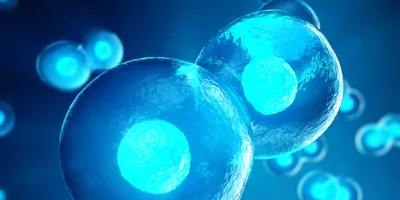
The ubiquitin-proteasome system (UPS) maintains protein homeostasis through a cascade involving E1 activating enzymes, E2 conjugating enzymes, and E3 ligases that attach ubiquitin to target proteins. The ubiquitinated proteins are then degraded by the 26S proteasome.
PROTACs hijack this pathway in several coordinated steps:
Target binding: The PROTAC ligand binds the protein of interest.
E3 ligase recruitment: The other ligand binds an E3 ligase—commonly VHL (von Hippel–Lindau) or cereblon (CRBN).
Ternary complex formation: The PROTAC promotes a transient complex between target and ligase.
Ubiquitination: The E3 ligase catalyzes the transfer of ubiquitin to lysine residues on the target protein.
Proteasomal degradation: The tagged protein is degraded by the proteasome, while the PROTAC is recycled to initiate another degradation cycle.
This catalytic cycle allows PROTACs to act at substoichiometric concentrations, achieving potent, durable effects.
(Sakamoto et al., PNAS 2001; Wurz et al., Nat Commun 2023)
Advantages of PROTACs over traditional small molecules
1. Expanding the druggable proteome
Because PROTACs rely on proximity rather than enzymatic inhibition, they can target proteins lacking active sites, such as transcription factors or scaffolding proteins—dramatically expanding the therapeutic landscape.
2. Catalytic efficiency
After initiating degradation, the PROTAC is released and reused, enabling potent effects at lower doses and potentially reducing off-target toxicity.
3. Overcoming resistance mechanisms
Drug resistance often emerges through mutations that reduce inhibitor binding or through protein overexpression. By eliminating the protein itself, PROTACs can bypass many of these pathways.
For example, BTK degraders such as NX-2127 degrade both wild-type and C481-mutant BTK, showing clinical activity in B-cell malignancies. However, new resistance mutations (e.g., BTK A428D) have also been observed, emphasizing the need for ongoing resistance monitoring.
4. Sustained pharmacological effects
Once a target is degraded, its resynthesis is required to restore function, providing prolonged target suppression even after the PROTAC has cleared.
Applications and emerging targets
Since the first demonstration of PROTACs in 2001, hundreds of preclinical programs have emerged, and several have entered human trials.
Oncology
Cancer remains the most active field for PROTAC development.
- Vepdegestrant (ARV-471; Arvinas/Pfizer): An oral estrogen receptor-targeting PROTAC that advanced to Phase 3 (VERITAC-2) with positive topline results reported in 2025 for ER+/HER2- breast cancer.
- Bavdegalutamide (ARV-110; Arvinas): An investigational androgen receptor degrader evaluated in a Phase 1/2 study (NCT03888612) for metastatic castration-resistant prostate cancer.
- ARV-766 (licensed to Novartis in 2024): A next-generation AR degrader now in global clinical development.
Neurological diseases
PROTACs targeting tau and α-synuclein are in preclinical development for Alzheimer’s and Parkinson’s disease, offering potential to clear misfolded or toxic proteins. Blood-brain barrier penetration remains a major challenge.
Inflammation and immune disorders
Programs are exploring degraders for NF-κB, STAT, and other transcription factors to modulate immune signaling in autoimmune diseases.
Design considerations and optimization
Designing PROTACs requires precise tuning of molecular properties:
- E3 ligase selection: Although ~600 E3 ligases exist, only a few—VHL, CRBN, MDM2, and IAP—have been chemically exploited. Broadening this “E3 toolbox” will enable tissue-specific and condition-specific degradation.
- Linker length and composition: The linker determines ternary complex geometry and cooperativity. Too short restricts alignment; too long can reduce selectivity or solubility.
- Ternary complex cooperativity: Positive cooperativity between the target and E3 ligase increases degradation potency.
- Pharmacokinetics: With molecular weights often >800 Da, optimizing permeability, solubility, and oral bioavailability remains critical.
(Bondeson et al., Nat Chem Biol 2015; Wurz et al., Nat Commun 2023)
Key challenges and limitations
1. Size and physicochemical properties
Many PROTACs violate Lipinski’s “Rule of Five.” Strategies such as macrocyclization, prodrugs, and conformational control aim to improve permeability and pharmacokinetics.
2. Selectivity and off-target degradation
Because E3 ligases can engage unintended proteins, proteomic profiling is required to confirm selectivity and mitigate toxicity.
3. E3 ligase expression and tissue specificity
Different tissues express distinct E3 ligases; ligase-dependent PROTACs may have variable efficacy. Developing ligands for new ligases could yield organ-specific degraders.
4. Resistance and adaptive responses
Although PROTACs overcome many inhibitor-class resistances, adaptive responses—such as reduced E3 ligase expression—may limit durability.
5. Safety and immunogenicity
By perturbing protein networks, PROTACs can produce unanticipated downstream effects. Comprehensive preclinical assessment of proteomic impact is essential.
Beyond PROTACs: The expanding landscape of targeted protein degradation
PROTACs are part of a growing family of protein fate-modifying technologies:
- Molecular glues: Small molecules that stabilize a target-E3 interaction without a linker (e.g., lenalidomide/thalidomide analogs).
- LYTACs (lysosome-targeting chimeras): Developed by the Bertozzi lab (2020), these direct extracellular or membrane proteins to lysosomes via receptors such as CI-M6PR or ASGPR.
- AUTACs/AUTOTACs/ATTECs: Autophagy-based degraders that recruit p62/SQSTM1 to clear cytosolic or aggregated proteins (Ji et al., Nat Commun 2022).
- DUBTACs: Molecules that stabilize proteins by recruiting the deubiquitinase OTUB1 to remove ubiquitin chains (Henning et al., Nat Chem Biol 2022).
Together, these tools extend degradation beyond the proteasome, offering new ways to control protein stability.
Future outlook
The therapeutic potential of PROTACs continues to grow. Advances in AI-assisted design, computational modeling, and cryo-EM structural analysis are improving predictions of ternary complex formation and degradation kinetics.
As medicinal chemists refine linker architecture and expand ligase chemistry, future generations of PROTACs will likely feature enhanced selectivity, oral bioavailability, and tissue-specific control.
If late-stage trials such as VERITAC-2 translate into approved therapies, PROTACs will cement a new paradigm in drug discovery—one defined not by inhibiting protein function but by controlling protein fate.
This article was created with the assistance of Generative AI and has undergone editorial review before publishing.