Welcome to the Weekly Rundown where the DDN editors cover this week’s top biotech and pharma news.
Lilly expands in vivo CAR T push with $7 billion Kelonia deal
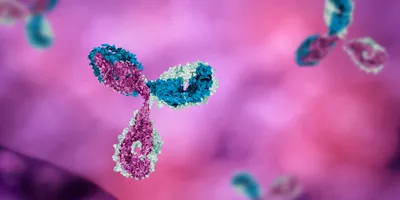
Eli Lilly has agreed to acquire Kelonia Therapeutics in a deal worth up to $7 billion, bringing in a first-in-class in vivo CAR T platform that programs the body’s own T cells to attack cancer without the need for ex vivo cell manufacturing. Kelonia’s lead program, KLN-1010, is an investigational lentiviral gene therapy for relapsed or refractory multiple myeloma that generates anti-B-cell maturation antigen (BCMA) CAR T cells directly inside the patient, bypassing the complex manufacturing steps required for conventional CAR T treatments. Early Phase 1 data, presented at the 2025 American Society of Hematology annual meeting, showed that a single intravenous infusion generated robust in vivo CAR T cell expansion without prior lymphodepleting chemotherapy, with CAR-positive cells reaching up to 72 percent of circulating T cells and sustained presence in blood and bone marrow through at least three months. All patients achieved early measurable residual disease negativity within one month, with responses deepening over time to very good partial responses, and no disease progression reported at the time of follow-up. Pharma companies are now racing to simplify CAR T manufacturing and expand access beyond highly specialized centers. – Bree Foster
White House directs FDA to expand access to investigational psychedelics
President Donald Trump has signed an executive order aimed at accelerating research into psychedelic drugs and expanding patient access to experimental therapies for serious mental illness, with a particular focus on veterans and treatment-resistant conditions. The order directs the FDA to prioritize review of qualifying psychedelic therapies that have received Breakthrough Therapy designation, while instructing the FDA and the Drug Enforcement Administration to create an access pathway under the Right to Try framework for certain investigational compounds. It also commits $50 million to support state-level research programs, calls for closer collaboration with the Department of Veterans Affairs to expand clinical trial participation, and directs the Attorney General to begin rescheduling reviews following successful Phase 3 trials, potentially clearing a faster path to approval for psychedelic-based treatments. – Bree Foster
An AI model just designed a new antibiotic from scratch — and it worked in mice
Researchers at McMaster University have published results from a generative AI model that designed a novel antibiotic candidate from a chemical space of 46 billion possible compounds, a scale no laboratory screen could realistically approach. The study, published April 23 in Molecular Systems Biology, describes SyntheMol-RL, developed by the lab of Jon Stokes and built in collaboration with Stanford University. Unlike earlier AI drug design tools that optimized only for antibacterial activity, SyntheMol-RL was trained to simultaneously select for compounds that are water-soluble and easy to synthesize in the lab — properties critical to clinical viability but historically difficult to bake into the design process itself. From a batch of 79 model-generated candidates targeting Staphylococcus aureus, the team identified one standout compound, which they named synthecin. Formulated as a topical cream, it proved highly effective in a mouse model of drug-resistant wound infection. Mechanism-of-action studies are underway, a necessary step before any path to the clinic can be mapped out. The broader implication, the team says, is a potential shift in how drug discovery works — from laboriously hunting for viable molecules to efficiently designing and refining them. The model was built to be disease-agnostic, and the group says it could be applied to cancer, diabetes, and other indications. – Andrea Corona
AbbVie breaks ground on its biggest-ever campus with a $1.4 billion North Carolina bet
AbbVie announced this week that it will invest $1.4 billion to build a 185-acre pharmaceutical manufacturing campus in Durham, North Carolina, near Research Triangle Park, marking the company's largest single-campus capital investment since its founding. Construction begins this year, with completion expected by the end of 2028. The campus will serve as AbbVie's US center of excellence for small volume parenteral (SVP) manufacturing, producing sterile injectable medicines across its immunology, neuroscience, and oncology portfolios, and will integrate AI and advanced manufacturing technologies throughout. The company plans to hire 734 people over four years, covering roles from engineers and scientists to manufacturing operators, while an additional 2,000 construction jobs are expected during development. The project is part of AbbVie's broader $100 billion commitment to US research and development and capital investment over the next decade, and brings its total US manufacturing commitments over the past 12 months to more than $2.2 billion. The move reflects a wider pharma industry trend of reshoring and expanding domestic manufacturing capacity, particularly for complex injectable biologics. — Andrea Corona
UK pharmacists report rising costs and potential shortages amid Iran war disruption
Community pharmacies in England are warning that the Iran war is driving sharp increases in the price of common medicines, with painkillers, antihistamines and other over-the-counter drugs rising by as much as 20–30 percent in recent weeks as energy and transport costs ripple through global supply chains. According to The Guardian, the National Pharmacy Association said pharmacists are paying 40–50 percent more to restock some products, with wholesale paracetamol (acetaminophen) prices jumping from 41p to £1.99 (about $0.55 to $2.68 USD) for a 100-pack at the end of March, and cetirizine costs nearly doubling since January. The disruption has been linked to higher fuel prices, a surge in air freight costs, and shortages of petroleum-derived chemicals used in manufacturing widely used drugs such as paracetamol, aspirin and co-codamol. Industry leaders warned that further pressure could build as the conflict affects key shipping routes and raw material supply, with manufacturers of generic medicines beginning to pass on higher costs after operating on thin margins, pushing up both National Health Service reimbursement bills and prices paid by patients at the till. – Bree Foster
Proposed $5 billion NIH cut draws rare bipartisan pushback in Congress
Health Secretary Robert F. Kennedy Jr. faced pointed questions from lawmakers on both sides of the aisle this week over the Trump administration's proposed 2027 budget, which would slash more than 12 percent of the Department of Health and Human Services' budget, including approximately $5 billion from the National Institutes of Health. The cuts drew unusually bipartisan resistance, with Republican Sen. Thom Tillis of North Carolina warning that reduced research investment risks ceding scientific ground to China. Kennedy acknowledged the reductions were "painful" and said neither he nor others at the agency wanted to see them, framing the cuts as a necessary response to the federal government's $39 trillion deficit. For the drug discovery community, the stakes are significant: NIH funding is the primary pipeline for early-stage basic research that feeds preclinical and translational science, and sustained cuts at that level could have downstream consequences for target identification, academic partnerships, and the broader innovation ecosystem that industry increasingly depends on. – Andrea Corona