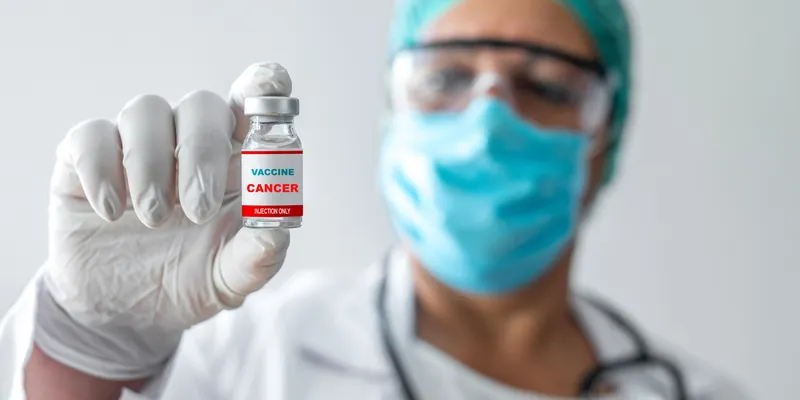
On November 11th, data from the INTerpath-001 Phase 3 trial provided the first clinical evidence that a personalized mRNA cancer vaccine can improve outcomes when combined with immunotherapy. The encouraging results have prompted a new US public–private initiative to accelerate the development of therapeutic cancer vaccines across multiple tumor types.
The National Cancer Institute (NCI) and the Foundation for the National Institutes of Health (FNIH) are establishing a $200 million Therapeutic Cancer Vaccines Initiative (TCVI) to advance promising vaccine candidates into clinical testing.
We're going to specifically aim for contexts where commercial interests are not already working.
—Anthony Letai, National Cancer Institute
"We're going to specifically aim for contexts where commercial interests are not already working. That is to say, we don't want to replicate work that others are doing,” said Anthony Letai, the Director of the National Cancer Institute, in the FNIH webinar hosted on November 17th.
In the INTerpath-001 trial, 1,137 patients who had undergone surgery to remove their melanoma received either Merck and Moderna’s intismeran autogene alongside the immunotherapy pembrolizumab, or pembrolizumab alone. At two years, the recurrence-free survival rate was 82.2 percent among patients who received the vaccine alongside pembrolizumab, compared with 70 percent among those who received pembrolizumab alone. The combination also improved distant metastasis-free survival, with rates of 88.5 percent and 80.2 percent, respectively.
“[The trial provides] the first evidence that a modern cancer vaccine can delay cancer relapse,” said Vinod Balachandran, Founding Director of The Olayan Center for Cancer Vaccines at Memorial Sloan Kettering Cancer Center, in the FNIH webinar.
Expanding cancer vaccine research
Therapeutic cancer vaccines aim to train the immune system to recognize and attack cancer cells, including residual disease that may remain following surgery or other initial treatment. Unlike preventive vaccines, which protect against infections, these treatments are designed for people who already have the disease.
One of the central challenges is identifying antigens that distinguish cancer cells from healthy tissue. Because tumors arise from the body's own cells, the immune system does not necessarily recognize them as foreign. However, mutations acquired as cancer cells divide can produce abnormal proteins called neoantigens, which may provide targets for a tumor-specific immune response.
Intismeran is designed to exploit these differences. To tailor it to each patient, researchers analyze tumor and blood samples to identify mutations unique to an individual's cancer, selecting up to 34 neoantigens predicted to generate an immune response. The selected sequences are encoded into mRNA and packaged into lipid nanoparticles, creating a personalized vaccine intended to stimulate new T-cell responses and expand existing ones against the patient's tumor.
While the melanoma results demonstrate the potential of this approach, the NCI and FNIH want to investigate whether different vaccine platforms can generate similar benefits in other cancers.
The initiative's initial clinical program is expected to focus on pancreatic, colorectal, and liver cancers in the adjuvant setting, as well as pancreatic, colorectal, and ovarian cancers in the neoadjuvant setting. A further basket trial will investigate fusion-positive sarcomas in children and young adults.
The first two vaccine platforms selected for investigation are personalized mRNA vaccines and shared-antigen DNA vaccines. The latter target antigens found across multiple patients, potentially offering a more readily scalable alternative to manufacturing an individual vaccine for every patient.
A national learning ecosystem
The TCVI aims to establish a coordinated research infrastructure through which different vaccine approaches can be tested and compared. "I do want to emphasize that what the Therapeutic Cancer Vaccine Initiative will be building is a national learning ecosystem. We will not be backing a single product,” said Stacey Adam, Senior Vice President and Chief Clinical Officer at the FNIH, in the webinar.
The initiative will bring together vaccine manufacturers, diagnostic developers, contract research organizations, academic researchers, and patient organizations. It also plans to build on the NCI's existing clinical trial data infrastructure, creating a resource where researchers can combine clinical and biological data to investigate why particular vaccines succeed or fail.
What we hope to create is an unparalleled data resource to help us better understand the immune system and how the immune system can fight cancer in every patient.
—Stacey Adam, Foundation for the National Institutes of Health
"What we hope to create is an unparalleled data resource to help us better understand the immune system and how the immune system can fight cancer in every patient,” Adam said.
By embedding immune monitoring and data analysis into clinical trials, the partners hope to use findings from each study to inform subsequent vaccine design, antigen selection, and patient stratification.
The initiative is organized in two stages. The first three years will focus on establishing the infrastructure and conducting early demonstration studies, with a second stage intended to expand successful approaches through larger trials and broader clinical networks.
"If successful, we hope to create a phase two that we can then spread what we've learned, take the winners out of this initial effort, and put them in many centers across the country to increase access,” said Letai.
Ultimately, the partners hope to turn isolated clinical successes into a more systematic approach to cancer vaccine development, expanding access to treatments while establishing which platforms and targets offer the greatest potential across different tumor types.