- Key takeaways
- Introduction: The ghost in the machine
- The Invader: Mechanisms of rejection
- The Defender: The Anti-Drug Antibody (ADA)
- The battleground: Where efficacy goes to die
- Tale of the tape: Native vs. Engineered
- The convergence: Engineering tolerance
- Conclusion: The cost of complexity
- References and further reading
Key takeaways
- The Threat: Immunogenicity is the tendency of a therapeutic protein to trigger an unwanted immune response, primarily through the production of Anti-Drug Antibodies (ADAs).
- The Consequences: ADAs can neutralize the drug (loss of efficacy), cause hypersensitivity (anaphylaxis), or cross-react with endogenous proteins (autoimmunity).
- The Risk Factors: Aggregation is the "bad apple" of formulation; even microscopic clumps can act as powerful adjuvants. Post-translational modifications (like glycosylation) also play a critical role.
- The Verdict: The industry must pivot from "reactive" management (measuring ADAs in Phase 3) to "proactive" design (de-immunization algorithms and tolerance induction) in discovery.
Introduction: The ghost in the machine
In the golden age of small molecules, toxicity was chemical—a drug might poison the liver or stop the heart. In the era of biologics, toxicity is biological. The danger isn't that the drug is a poison; it's that the body thinks it is a virus.
Therapeutic proteins—monoclonal antibodies, enzyme replacements, and fusion proteins—are the pillars of modern medicine. They promise targeted precision that small molecules can't match. But they all share a fatal flaw: they look foreign. When the immune system detects them, it does what it was evolved to do: it attacks.
For the pharmaceutical executive, immunogenicity is the ghost in the machine. It is the invisible variable that can sink a drug in late-stage trials, not because the target was wrong, but because the patient's own body neutralized the cure before it could work.
The Invader: Mechanisms of rejection
To the immune system, a therapeutic protein is just another antigen. The reaction typically follows one of two paths:
The "Vaccine" Effect (T-cell Dependent): Dendritic cells ingest the drug, chop it up, and present specific peptide fragments (epitopes) to T-cells. If the T-cells recognize these fragments as "foreign," they signal B-cells to produce high-affinity IgG antibodies. This is the classic pathway for most ADAs.
The "Cluster" Effect (T-cell Independent): If the drug forms repeating patterns (aggregates), it can directly cross-link receptors on B-cells, triggering an immediate, often weaker IgM response. This is why protein stability and formulation are immunological issues, not just chemical ones. [2]
The Defender: The Anti-Drug Antibody (ADA)
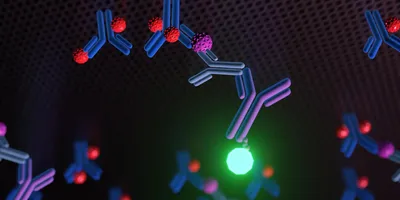
The primary weapon of the immune system is the Anti-Drug Antibody (ADA). Not all ADAs are created equal.
- Binding ADAs: These stick to the drug but don't necessarily stop it from working. They act like barnacles, potentially speeding up the drug's clearance (altering Pharmacokinetics/PK) but leaving its mechanism intact.
- Neutralizing ADAs (NAbs): These are the deal-breakers. They bind directly to the drug's active site—the part that grabs the target. A NAb turns a precision missile into a dud. In replacement therapies for genetic diseases (like Hemophilia or Pompe disease), NAbs can render a life-saving infusion completely useless. [1]
The battleground: Where efficacy goes to die
The war between the drug and the immune system is fought on three fronts.
1. Secondary Failure (The "Stop-Working" Phenomenon)
This is the most common clinical manifestation. A patient responds beautifully to a biologic for six months, and then the effect fades. The dose is increased, but the response doesn't return. This "secondary failure" is often due to the silent accumulation of ADAs that clear the drug faster than you can infuse it.

2. Hypersensitivity (The Safety Crisis)
Sometimes the response isn't silent; it's loud. ADAs can trigger infusion reactions ranging from mild fever to life-threatening anaphylaxis. In rare cases, they form immune complexes that deposit in kidneys or joints, causing serum sickness.
3. Cross-Reactivity (The Autoimmune Nightmare)
The worst-case scenario is when the ADAs don't just hit the drug—they hit the patient's own natural protein. The classic cautionary tale is Pure Red Cell Aplasia (PRCA). In the late 90s, a formulation change in Epoetin alfa caused patients to develop antibodies against the drug and their own erythropoietin. They stopped making red blood cells entirely, becoming transfusion-dependent for life. [1]
Tale of the tape: Native vs. Engineered
How does the risk profile change as we move further from nature?
Feature | Native/Human Proteins | Engineered/Foreign Proteins |
|---|---|---|
Primary Example | Fully Human mAbs, Insulin. | Chimeric mAbs, Bacterial Enzymes, Fusion Proteins. |
Recognition Risk | Low (Protected by tolerance). | High (Recognized as "non-self"). |
Main Trigger | Aggregation or PTMs (e.g., altered glycosylation). | Sequence foreignness (T-cell epitopes). |
ADA Type | Often Binding (PK impact). | Often Neutralizing (Efficacy impact). |
Mitigation | Stabilization, Formulation optimization. | De-immunization (humanization), PEGylation. |
Clinical Impact | Rare but can be autoimmune (e.g., PRCA). | Common efficacy loss or hypersensitivity. |
The convergence: Engineering tolerance
The industry is no longer satisfied with just "humanizing" antibodies. We are now actively engineering de-immunization.
New computational tools allow developers to scan protein sequences for "T-cell epitopes"—the specific peptide barcodes that trigger immune alarms—and mutate them into silence. This "epitope masking" is becoming a standard step in lead optimization. [3]
Furthermore, we are seeing the rise of Tolerance Induction. By co-administering tolerogenic nanoparticles or specific regulatory T-cell (Treg) epitopes, companies (like Selecta Biosciences or Anokion) aim to "teach" the immune system to ignore the drug. It's not just about hiding the drug anymore; it's about reprogramming the defender. [5]
Conclusion: The cost of complexity
As biologics become more complex—bispecifics, ADCs, multi-domain fusion proteins—they become more immunogenic. The more we engineer nature, the more nature resists.
For the investor, immunogenicity is a critical diligence item. A drug with a 50% ADA rate in Phase 1 is a ticking time bomb for Phase 3. The winners of the next decade will not just be the companies with the most potent molecules, but those who have mastered the art of immunological stealth.
References and further reading
Baker, M. P. et al. (2010). Immunogenicity of protein therapeutics: The key causes, consequences and challenges. Self/Nonself.
Ratanji, K. D. et al. (2014). Immunogenicity of therapeutic proteins: Influence of aggregation. Journal of Immunotoxicology.
FDA. (2014). Immunogenicity Assessment for Therapeutic Protein Products. FDA Guidance for Industry.
Vaisman-Mites, A. et al. (2020). The Molecular Mechanisms That Underlie the Immune Biology of Anti-drug Antibody Formation. Frontiers in Immunology.
Harris, C. & Cohen, S. (2024). Reducing Immunogenicity by Design: Approaches to Minimize Immunogenicity of Monoclonal Antibodies. BioDrugs.