- Key takeaways
- Introduction: The billion-dollar bottleneck
- The fortress: The endosomal trap
- The gravity well: The hepatic sink
- The battleground: Three hurdles to the finish line
- Tale of the tape: Delivery vs. Defense
- The convergence: Biological mimicry
- Conclusion: Stratification by tissue
- References and further reading
Key takeaways
- The Barrier: The Endosome is the "cellular stomach." 99% of RNA therapeutics get trapped and destroyed here, never reaching the cytoplasm where they work.
- The "Liver Trap": Large particles naturally accumulate in the liver due to fenestrated capillaries. Reaching the brain, heart, or lungs requires defying physics and biology.
- The Stealth Problem: The "PEG dilemma"—polyethylene glycol protects the particle but triggers antibodies (ABC phenomenon) that clear it rapidly upon repeat dosing.
- The Verdict: The industry is moving from "passive" carriers (standard LNPs) to "active" biological Trojan horses (exosomes, viral-like particles) to breach extrahepatic tissues.
Introduction: The billion-dollar bottleneck
In the boardroom, RNA is sold as software. You change the code (the sequence), and you change the drug. It promises a world where we can program medicines as easily as we update an app. But in the wet lab, RNA is not software; it is a large, negatively charged, fragile molecule that the human body hates. [4]
The body has spent millions of years evolving defenses against foreign RNA (viruses). It has built physical walls (cell membranes), chemical moats (nucleases), and sentries (the innate immune system). The "Delivery Challenge" is not a minor formulation issue; it is the single greatest existential threat to the RNA pipeline. We have the warheads—siRNA, mRNA, CRISPR—but we are struggling to build the missile that can fly past the liver and land inside a neuron or cardiomyocyte.
The fortress: The endosomal trap
If you inject a Lipid Nanoparticle (LNP) into the blood, it might successfully reach a target cell. It might even get eaten by that cell (endocytosis). But then it faces the Endosomal Trap.
The endosome is the cell's sorting bay, which rapidly acidifies and matures into a lysosome (the cell's incinerator). To work, the RNA must escape this compartment before it is destroyed. This is the rate-limiting step of the entire industry. Current estimates suggest that less than 2% of siRNA or mRNA actually escapes the endosome into the cytosol. [1]
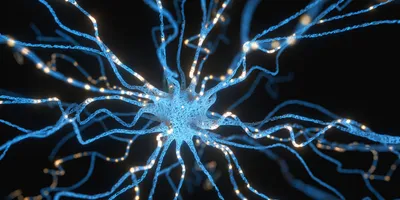
Imagine a logistics company that loses 98% of its packages in the mailroom. That is the current state of RNA delivery. Solving "Endosomal Escape"—perhaps by using fusogenic lipids or pH-sensitive polymers—is the multi-billion dollar prize.
The gravity well: The hepatic sink
Physics is cruel to RNA therapies. When you inject a nanoparticle intravenously, it follows the path of least resistance. In the human body, that path leads directly to the liver. [2]
The liver's capillaries are "fenestrated" (full of holes), designed to filter blood. Nanoparticles slip through these holes and are avidly consumed by hepatocytes. This is great if you are treating liver diseases (like TTR amyloidosis). It is a disaster if you are trying to treat anything else.
To reach "extrahepatic" targets—like a tumor in the lung or a plaque in the brain—you have to fight this natural gravity. You have to design particles that can dodge the liver's filtration system, a challenge that requires precise surface engineering to recruit specific "protein coronas" from the blood that act as a disguise.
The battleground: Three hurdles to the finish line
1. The Blood-Brain Barrier (The Iron Curtain)
The brain is the ultimate fortress. The Blood-Brain Barrier (BBB) is a tight junction of endothelial cells that blocks 100% of large molecules. Standard LNPs bounce off it. To cross, you need a key. Strategies like "Trojan Horse" receptor targeting (hijacking the Transferrin or Insulin receptor) are showing promise, allowing particles to undergo transcytosis—literally walking through the wall to the other side. [5]
2. Immunogenicity (The PEG Dilemma)
To keep nanoparticles stable, we coat them in Polyethylene Glycol (PEG). This "stealth" coating prevents them from clumping. But the immune system is learning. We are seeing the rise of "Anti-PEG Antibodies"—the body recognizes the disguise and scrubs the drug from circulation. This "Accelerated Blood Clearance" (ABC) phenomenon means the second dose works far less well than the first, a critical failure for chronic therapies. [3]
3. Cargo Size (The Heavy Lift)
siRNA is small. mRNA is large. CRISPR-Cas9 complexes are enormous. As the payload grows, the delivery vehicle becomes less stable and harder to manufacture. Large particles are also more likely to be flagged by the immune system and cleared by the spleen, limiting the "therapeutic window."
Tale of the tape: Delivery vs. Defense
Challenge | The Biological Barrier | The Delivery Strategy |
|---|---|---|
Entry | Cell Membrane (Negatively charged, impermeable). | Ionizable Lipids (Flip charge in acid to fuse with membrane). |
Survival | Endosome/Lysosome (Acidic degradation). | Proton Sponge Effect or Fusogenic peptides to rupture the vesicle. |
Distribution | Liver Accumulation (Fenestrated capillaries). | Active Targeting (Ligands) or Size/Charge tuning (to bypass liver). |
Access | Blood-Brain Barrier (Tight junctions). | Receptor-Mediated Transcytosis (Transferrin/CD98 targeting). |
Stealth | Opsonization (Immune tagging). | PEGylation (Stealth coating) or Biomimicry (Exosomes). |
The convergence: Biological mimicry
The industry is realizing that we can't just "engineer" our way out of biology; we have to mimic it.
The future lies in Bio-Hybrid vehicles. Instead of purely synthetic plastic spheres (LNPs), we are seeing the rise of Exosomes (nature's own delivery vesicles) and Virus-Like Particles (VLPs). These modalities borrow the "entry codes" of viruses—the proteins that allow them to fuse with membranes and escape endosomes—without carrying the infectious genetic material.
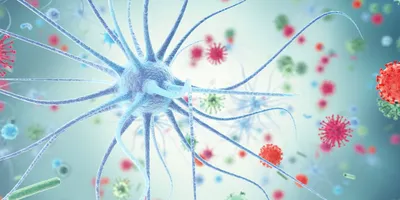
We are also seeing Conjugates (like GalNAc) that ditch the particle entirely, attaching the RNA directly to a sugar that a liver cell wants to eat. This solves the size and toxicity problem but restricts the therapy to the liver.
Conclusion: Stratification by tissue
The era of the "one-size-fits-all" LNP is over. The market will stratify based on the zip code of the disease.
The Liver is solved (GalNAc and standard LNPs).The Muscle is accessible (Vaccines).The Brain and Tumor remain the frontier.
The winners of the next decade won't be the companies with the best RNA editor; they will be the companies that own the "addressable" delivery IP. If you can't deliver it, you don't have a drug—you just have a very expensive sequence.
References and further reading
Dowdy, S. F. (2023). Endosomal escape of RNA therapeutics: How do we solve this rate-limiting problem?. RNA.
Chattergee, S. et al. (2022). The role of lipid components in lipid nanoparticles for vaccines and gene therapy. PNAS.
Creative Biolabs. (2024). Navigating the Immunogenicity of Lipid Nanoparticles - Insights into IgE and IgM Dynamics. Creative Biolabs Insights.
Precedence Research. (2025). Life Sciences Growth Fueled by mRNA and Gene Therapies. Precedence Research.
LabOnline. (2025). mRNA successfully delivered through blood–brain barrier. LabOnline News.