While microbial diversity keeps the gut in good shape, a healthy vagina thrives under a different rule: Few bacterial species should dominate the niche. The human vagina’s glycogen-rich environment is a unique biochemical haven for some members of the genus Lactobacillus. These microbes convert glycogen and its breakdown products into lactic acid, leading to a particularly low vaginal pH in humans — about 4.5. This is a stark contrast to the 5.4 to 7.8 range observed in other mammals (1). The acidic environment creates a hostile barrier that keeps many pathogens in check.
Yet, the vagina is anything but isolated. Semen, menstrual blood, diet, douching, and other factors often disrupt its microbial balance. These changes can increase the risk of bacterial, viral, and fungal infections, and sometimes they can even lead to complications like preterm birth or cervical cancer (2). “Having a lactobacilli dominance really does set you up for positive outcomes: obstetric, gynecologic, and reproductive,” said Melissa Herbst-Kralovetz, a vaginal microbiome researcher at the University of Arizona.
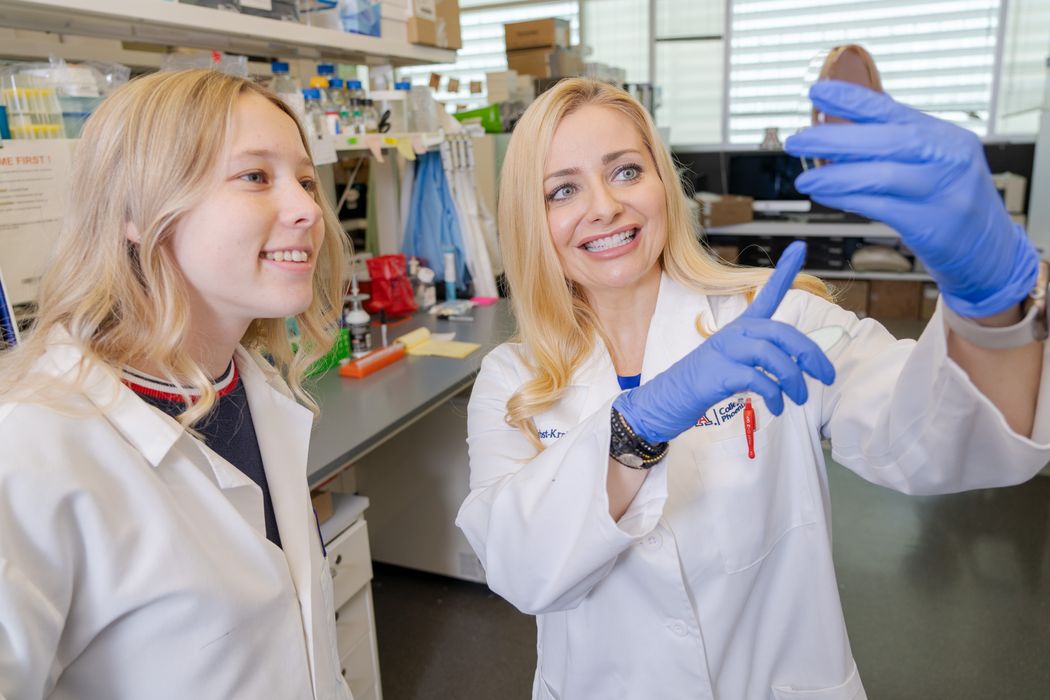
Melissa Herbst-Kralovetz (right) and her trainee, Hannah Harris (left), study the microbial ecosystem of the female reproductive tract to improve women’s health.
Credit: University of Arizona College of Medicine – Phoenix Marketing and Communication
Given the essential role of these bacteria, scientists, clinicians, and entrepreneurs have been testing whether introducing them into the vagina could reduce the risks of infections and other diseases since the 1980s (3). In fact, probiotics marketed as food supplements or antiseptics are already available on drugstores shelves. But evidence of their efficacy remains limited, and their product composition sometimes fails to match the labels (4-6).
Probiotics for vaginal health have become very popular in the past decade, said Leslie Thian Lung Than, a medical mycologist at the University of Putra Malaysia. “Whether the trend of its popularity reflects the efficacy of vagina probiotics, I cannot really answer that question,” he said.
However, a new wave of efforts is driving the development of live biotherapeutics — a term many experts favor over “probiotics” to distinguish these medically-tested treatments from dietary supplements — for vaginal health. Unlike early probiotics marketed under the Food and Drug Administration (FDA)’s Generally Recognized as Safe (GRAS) status, live biotherapeutics are undergoing rigorous clinical trials to establish their efficacy. While challenges persist in using them to treat vaginal disorders, recent research highlights critical directions for the road ahead.
Getting the right strains to the right place
Two essential factors are driving the new era of these microbial therapies: strains and delivery route.
First, not just any Lactobacillus species will work. One of four key species typically dominates a healthy vaginal microbiome: L. iners, L. crispatus, L. gasseri, or L. jensenii (7). Among these, L. crispatus has shown significant protective effects against different infections (8,9). Based on many recent studies, “it seems like L. crispatus is the way to go,” said Anke Hemmerling, a microbiome researcher at University of California, San Francisco.
Second, most efforts these days focus on directly delivering lactobacilli to the vagina. For years, researchers supported the idea of introducing these bacteria orally, assuming they could migrate passively from the rectum to the vagina. While this route is possible, its efficacy varies across different studies (10). Most experts agree that the likelihood of an orally administered strain successfully traversing the gastrointestinal tract and colonizing the vaginal environment is low.
Oral probiotics could be helpful as they may enhance gut health, which is important to overall health, said Herbst-Kralovetz. However, it’s unlikely that they could treat specific vaginal infections, she said. That’s why “we’ve seen this evolution towards vaginally-applied probiotics, and that makes a lot of sense, because then you’re directly delivering that probiotic to [the vaginal] mucosal site,” she noted.
But microbiologist Mariya Petrova cautioned to not completely cut out the option of oral probiotics. “Probiotic species taken orally have been detected in the vaginal niche, [but] you need a very careful selection of strains” to ensure they survive the transit to the vagina, said Petrova, who is a consultant for and founder of Microbiome and Probiotics (MiP) Consultancy and a scientific educator at Winclove Probiotics. “It’s best to have something that is directly locally administrated,” she added, but oral probiotics can still offer benefits and may also have systemic effects (11).
A promising treatment for a prevalent infection
Live biotherapeutic research has zeroed in on bacterial vaginosis (BV), the most prevalent vaginal disease, as a critical target for treatment. BV disrupts the vaginal microbiome, allowing anaerobic bacteria to overgrow as the lactobacilli lose dominance. Beyond causing unpleasant symptoms like a smelly white or gray discharge and discomfort, this imbalance paves the way for more serious health risks, including urinary tract infections, sexually transmitted diseases, adverse pregnancy outcomes, and even cervical cancer (12-15).
Current treatment primarily relies on antibiotics, but their efficacy in preventing recurrence is limited: more than half of the women treated with antibiotics for BV experience a relapse within three to six months, underscoring the urgent need for more sustainable solutions (16).
It’s always better for women to have a lactobacilli-dominated vaginal microbiome; it protects them from all kinds of complications.”
- Janneke van de Wijgert, University Medical Center Utrecht
Hemmerling is part of a team investigating L. crispatus CTV-05, also known as Lactin-V, one of the earliest strains isolated from healthy women and tested as a live biotherapeutic. “When Osel, the biotech company that developed Lactin-V ... decided on a L. crispatus twenty years ago, that was a little bit of a gamble,” she said. This was long before there was extensive evidence supporting L. crispatus’ critical role in the vaginal microbiome. But, they chose it because it looked like it grew in healthy women — a decision that proved fortuitous.
Lactin-V has undergone testing in various populations, with the largest study involving 228 women from four different sites in the United States (17). In this Phase 2b trial, Hemmerling and her colleagues assessed whether an 11-week course of vaginally-applied Lactin-V could prevent BV recurrence after antibiotic treatment. By week 12, BV recurrence was significantly lower in the Lactin-V group compared to the placebo group, at 30 versus 45 percent, respectively.
The researchers also tested for the presence of Lactin-V to see if the strain actually colonized the vaginal environment, finding it in 79 percent of participants at week 12. “But, I was even more excited, three months later, at six months, where they hadn’t gotten [any study drug for three months], we could still see Lactin-V in almost 50 percent of the women,” said Hemmerling.
Even though these results were more promising than previous trials with laboratory strains, the levels of colonization were still disappointing, said Janneke van de Wijgert, a physician epidemiologist at the University Medical Center Utrecht, adding that colonization is in fact one of the current main challenges in the field. “One would like to have the majority of women to continue to be colonized and not only half of them,” she said. Moreover, it is unclear whether women with detectable Lactin-V are fully dominated by the strain or carry it in low quantities.
Van de Wijgert expressed optimism about other efforts, such as those by the Vaginal Microbiome Research Consortium (VMRC), which is experimenting with formulations that combine multiple L. crispatus strains (18). The approach could improve colonization chances, she said. However, no data is yet available since clinical studies are ongoing.
Hemmerling acknowledged the challenges associated with limited colonization but highlighted ongoing efforts to better understand the variability in treatment responses. Her team recently reported that the initial success of the antibiotic treatment is a strong predictor of Lactin-V’s colonization success and effectiveness in preventing BV recurrence (19). She added that a recent trial in South African women also showed that Lactin-V colonized about 69 percent of the participants treated. The team is currently trying to find funding to begin a Phase 3 trial.
More challenging to treat a cosmopolitan yeast
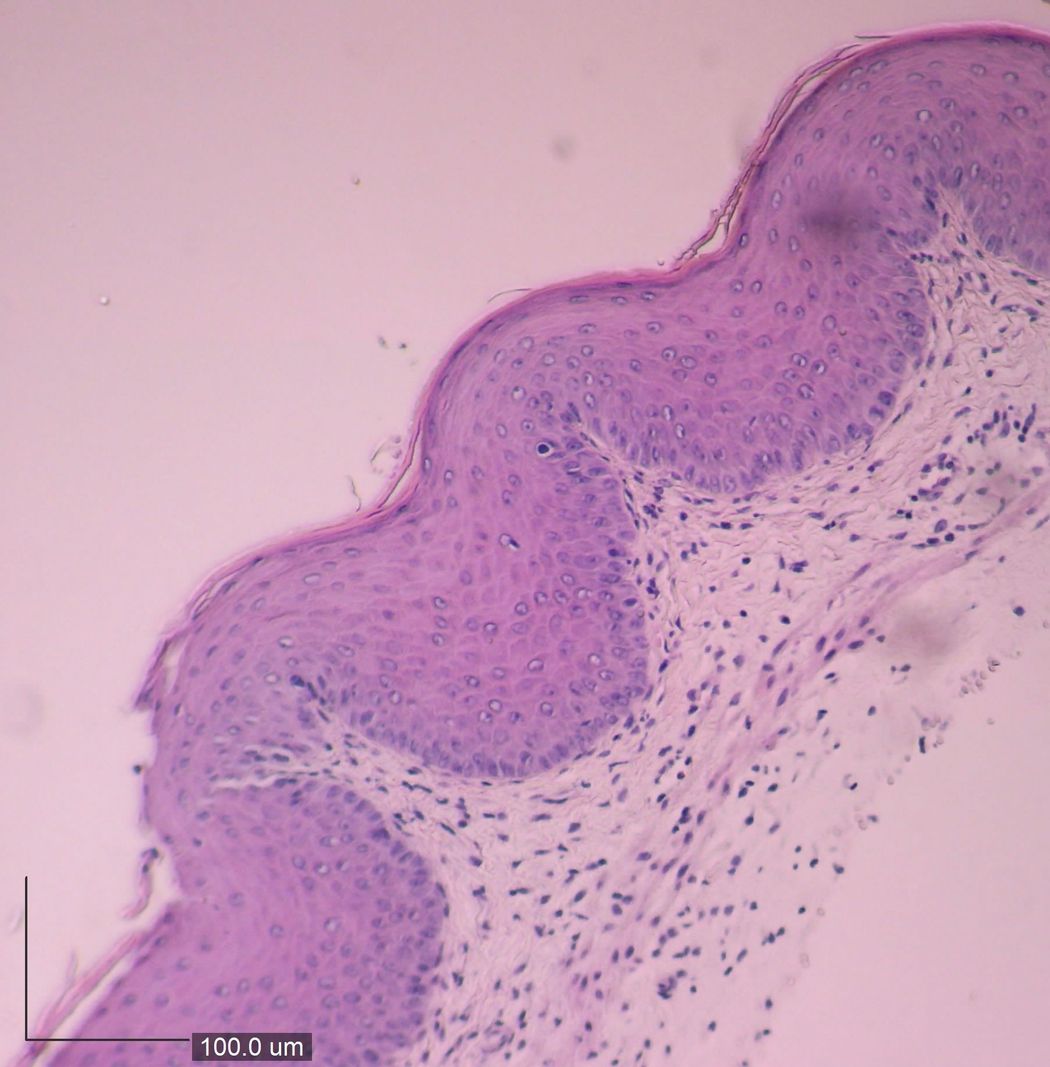
Experiments in a mouse model of candidiasis suggest that lactobacilli treatment could potentially fight the disease. Yet, it’s unclear whether these findings could be replicated in clinical settings.
Credit: Angela Boahen
Data on the potential of lactobacilli-based therapies for fighting candidiasis, a fungal infection at the opening of the vagina, is less convincing (5). Than and his colleagues have observed positive outcomes while treating a mouse model of candidiasis with the cell-free supernatant produced by a lactobacilli strain (20). However, the significant differences between human and mouse vaginal microbiome raise questions about whether these findings could hold in clinical settings.
In humans, a team of researchers at the company Seed Health tested a vaginal tablet combining three L. crispatus strains with nutrients promoting their growth. The results of the trial, detailed in a preprint, showed a significant reduction in Candida species among participants treated with this formulation compared to a placebo group (21).
One of the main challenges to treat these fungal infections with live biotherapeutics is that, unlike the pathogenic bacteria associated with BV, the yeast causing candidiasis can survive a wide range of pH levels (22). “That’s why I think these vaginal probiotics based on lactobacilli have not been very successful in preventing Candida,” said van de Wijgert. But overall, she emphasized, “it’s always better for women to have a lactobacilli-dominated vaginal microbiome; it protects them from all kinds of complications.”
Challenges ahead
For van de Wijgert, the live biotherapeutics field is promising, but challenges still lie ahead. One of the biggest ones is limited bacterial colonization. “While the lactobacilli are introduced, they do seem to have some beneficial effects, but the moment you stop doing that, they disappear,” she explained. “It’s not like a permanent cure.”
Expanding the understanding of the vaginal microbiome across diverse populations is another significant task ahead. “A lot of these studies have been done in white non-Hispanic, mostly European[-descent] women,” said Herbst-Kralovetz. To ensure live biotherapeutics are effective for all women, clinical trials must include more diverse participants, she noted.
Van de Wijgert also emphasized the need for larger clinical trials, given the strict regulations currently governing live biotherapeutics. Without robust data, it will be challenging for these products to gain market approval.
However, clinical trials require substantial funding, and experts agreed this remains a struggle in the field. “Women’s health is not a priority for many people,” said Petrova. She highlighted the lack of innovation in treatments for bacterial vaginosis as an example. “The last antibiotic developed for women for BV was in 1986. ... There is nothing new that has been developed for vaginal infections,” she said.
References
- Miller, E.A. et al. Lactobacilli Dominance and Vaginal pH: Why Is the Human Vaginal Microbiome Unique? Front Microbiol 7, 1936 (2016).
- Amabebe, E. & Anumba, D.O.C. The Vaginal Microenvironment: The Physiologic Role of Lactobacilli. Front Med 5, 181 (2018).
- Bruce, A.W. & Reid, G. Intravaginal instillation of lactobacilli for prevention of recurrent urinary tract infections. Can J Microbiol 34, 339-343 (1988).
- Buggio, L. et al. Probiotics and vaginal microecology: fact or fancy? BMC Womens Health 19, 25 (2019).
- van de Wijgert, J.H.H.M. & Verwijs, M.C. Lactobacilli-containing vaginal probiotics to cure or prevent bacterial or fungal vaginal dysbiosis: a systematic review and recommendations for future trial designs. BJOG 127, 287-299 (2019).
- Di Pierro, F. et al. Microbiological Assessment of the Quality of Some Commercial Products Marketed as Lactobacillus crispatus-Containing Probiotic Dietary Supplements. Microorganisms 7, 524 (2019).
- Ravel, J. et al. Vaginal microbiome of reproductive-age women. Proc Natl Acad Sci U S A 108, 4680-4687 (2010).
- Breshears, L.M. et al. Lactobacillus crispatus inhibits growth of Gardnerella vaginalis and Neisseria gonorrhoeae on a porcine vaginal mucosa model. BMC Microbiol 15, 276 (2015).
- Van de Wijgert, J.H.H.M. et al. The Vaginal Microbiota: What Have We Learned after a Decade of Molecular Characterization? PLoS One 9, e105998 (2014).
- Ottinger, S. et al. The human vaginal microbiota: from clinical medicine to models to mechanisms. Curr Opin Microbiol 77, 102422 (2024).
- Chen, R. et al. Probiotics are a good choice for the treatment of bacterial vaginosis: a meta-analysis of randomized controlled trial. Reprod Health 19, 137 (2022).
- Sumati, A.H. & Saritha, N.K. Association of Urinary Tract Infection in Women with Bacterial Vaginosis. J Glob Infect Dis 1, 151-152 (2009).
- Julius, A. et al. Bacterial vaginosis and HIV acquisition: a meta-analysis of published studies. AIDS 22, 1493-1501 (2008).
- Mohanty, T. et al. Effect of bacterial vaginosis on preterm birth: a meta-analysis. Arch Gynecol Obstet 308, 1247-1255 (2023).
- Gillet, E. et al. Association between Bacterial Vaginosis and Cervical Intraepithelial Neoplasia: Systematic Review and Meta-Analysis. PLoS One 7, e45201 (2012).
- Borges, S. et al. The role of lactobacilli and probiotics in maintaining vaginal health. Arch Gynecol Obstet 289, 479-489 (2014).
- Cohen, C. et al. Randomized Trial of Lactin-V to Prevent Recurrence of Bacterial Vaginosis. N Engl J Med 382, 1906-1915 (2020).
- Mahajan, G. et al. Vaginal microbiome-host interactions modeled in a human vagina-on-a-chip. Microbiome 10, 201 (2022).
- Hemmerling, A. et al. Response to Antibiotic Treatment of Bacterial Vaginosis Predicts the Effectiveness of LACTIN-V (Lactobacillus crispatus CTV-05) in the Prevention of Recurrent Disease. Sex Transm Dis 51, 437-440 (2024).
- Boahen, P. et al. Limosilactobacillus reuteri 29A Cell-Free Supernatant Antibiofilm and Antagonistic Effects in Murine Model of Vulvovaginal Candidiasis. Probiotics Antimicrob Proteins 15, 1681-1699 (2023).
- Ravel, J. et al. A Novel Multi-strain Vaginal Synbiotic is Effective in Optimizing the Vaginal Microbiome: Results from a Randomized, Placebo-controlled Clinical Trial. medRxiv (preprint) (2024).
- Davis, D. Adaptation to environmental pH in Candida albicans and its relation to pathogenesis. Curr Genet 44, 1-7 (2003).