Cancer vaccines have long been a goal in oncology — training the immune system to recognize tumors like it responds to infectious disease.
For years, progress was limited, with early vaccine candidates struggling to provoke strong or lasting responses. Recent advances in delivery methods, antigen targeting, and immunology are beginning to change that picture.
A new study published in Nature Medicine reports encouraging results from a therapeutic vaccine designed to target KRAS (Kirsten rat sarcoma virus) mutations, one of the most common drivers of solid tumors.
A clinical trial of the vaccine developed by Elicio Therapeutics, ELI-002 2P, demonstrated that it could generate powerful, durable immune responses and delay or prevent relapse in patients with pancreatic and colorectal cancer. The vaccine is off the shelf, meaning it does not need to be customized for each patient, an advantage that could make it more widely accessible if proven effective.
“This is an exciting advance for patients with KRAS-driven cancers, particularly pancreatic cancer, where recurrence after standard treatment is almost a given and effective therapies are limited,” said first author Zev A. Wainberg at the David Geffen School of Medicine at University of California, Los Angeles (UCLA) and researcher at the UCLA Health Jonsson Comprehensive Cancer Center.
How the vaccine works
KRAS mutations occur in about 25 percent of all solid tumors, including roughly 90 percent of pancreatic cancers and half of colorectal cancers.
While these mutations drive tumor growth and have been historically difficult to target with drugs, ELI-002 2P takes a different approach. It uses synthetic peptide antigens that mimic the KRAS mutations most often found in these cancers.
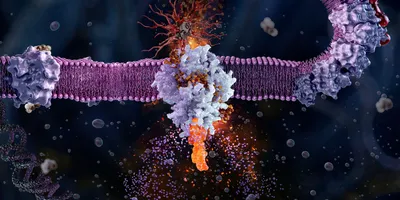
The vaccine is chemically engineered to bind to albumin in the bloodstream, allowing it to travel directly to the lymph nodes where immune responses are programmed. There, it primes both CD4+ helper and CD8+ killer T cells to recognize and attack cancer cells carrying KRAS mutations.
Supporting data
The AMPLIFY-201 Phase 1 trial enrolled 25 patients (20 with pancreatic cancer and five with colorectal cancer) who had completed surgery and standard treatment but still showed minimal residual disease. Patients received a series of subcutaneous doses followed by booster vaccinations.
After a median follow-up of 19.7 months, the trial reported an average relapse-free survival of 16.3 months and an average overall survival of 28.9 months, both surpassing historical outcomes for this high-risk group. Importantly, 84 percent of patients developed KRAS-specific T cell responses, and 71 percent mounted both helper and killer T cell responses.
Patients with immune responses above a defined threshold had not yet reached median survival, compared to 15.9 months for those below the threshold. Six patients achieved complete clearance of circulating tumor DNA, a marker of residual cancer.
The vaccine also induced “antigen spreading,” where the immune system began to recognize and attack tumor mutations not included in the vaccine formulation itself. This effect was observed in two-thirds of tested patients, suggesting the vaccine may help broaden immune recognition beyond KRAS. No new safety issues emerged during extended follow-up.
Now, a randomized Phase 2 trial is already underway, testing an expanded formulation that includes seven KRAS and NRAS (Neuroblastoma RAS viral oncogene homolog) peptides. If successful, this strategy could apply across multiple tumor types driven by KRAS mutations.
Unlike personalized cancer vaccines, which require tailoring to each patient’s tumor profile, ELI-002 2P was designed as a standardized therapy. Off-the-shelf accessibility could allow more rapid and scalable use in oncology settings, particularly where time is critical.
Cancer vaccines gaining traction
The AMPLIFY-201 results are part of a broader resurgence of cancer vaccine research.
Moderna and Merck are testing a personalized mRNA vaccine, mRNA-4157/V940, in melanoma alongside the checkpoint inhibitor Keytruda, showing reduced recurrence risk. Meanwhile, BioNTech is developing BNT111, a neoantigen-targeted vaccine in trials for advanced melanoma.
Combined, these efforts could signify a turning point — when cancer vaccines might finally do what scientists have been hoping for all along.