There's an old joke about a man looking for his keys under a streetlight. A police officer stops to help. After a few minutes, the officer asks if he's sure he dropped them there. “No”, The man says, “I dropped them somewhere in the park. But I’m searching where the light is.”
Drug discovery has its own streetlight. Cell assays, animal models, and simple in vitro systems are fast, affordable and generate a lot of data, so that's where the industry tends to look first. It's also where AI models learn. The issue is that many drugs fail for reasons that only show up in intact human biology.
Where the light falls
Billions have gone into AI drug discovery, and no AI-discovered drug has full FDA approval yet. Though, the first may be close. What is more telling is where AI is succeeding today. A 2024 BCG and Wellcome analysis found that 80 to 90 percent of AI-discovered molecules passed Phase 1, well above historical rates. In Phase 2, that dropped to about 40 percent, roughly the industry average. Worth noting the term "AI-discovered" is a loose term, since in practice it spans everything from AI-proposed targets to computationally optimized molecules. The sample was small, but even Insilico, perhaps the most prominent AI-native drug developer, acknowledged the same pattern in its 2025 Nature Medicine paper: AI-discovered drugs fail Phase 2 about as often as conventional ones.
That makes sense given what each phase tests. Phase 1 is mostly chemistry, pharmacokinetics, and tolerability. Those areas have plenty of structured, public data for models to learn from. Phase 2 asks whether the drug works in human disease, and that dataset is much more sparse. Lack of efficacy accounts for 40 to 50 percent of clinical failures, and unmanageable toxicity another 30 percent.
Another gap in data exists in “negative” results. Failed programs are competitive liabilities, so the results rarely get published. AI models only see the compounds that have worked. They rarely see the ones that looked promising and then broke down in human biology. AlphaFold was built on decades of structural data shared through the Protein Data Bank. Nothing like that exists for how intact human tissues respond to drugs, or why they fail.
Expanding the light’s reach
Regulators are already pushing this way. The FDA's 2025 roadmap to reduce animal testing, its one-year progress report, and a March 2026 draft guidance on validating new approach methodologies (NAMs) have moved NAMs into mainstream R&D strategy. The question now is how to combine these tools to produce the data AI needs.
No single platform will do this alone. Drug developers need a stack of human-relevant systems, each answering questions the others can't, with the combined output feeding AI models.
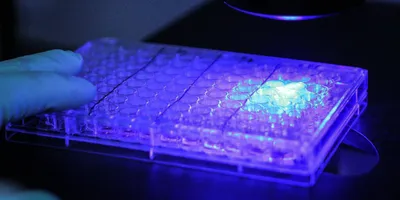
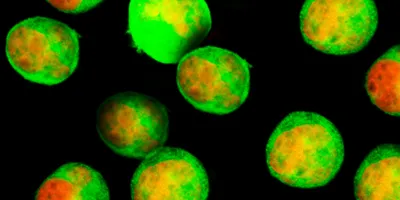
Organoids and engineered tissues bring throughput and genetic diversity for screening. Ex vivo perfused human organs add whole-organ physiology, e.g. blood flow, vasculature, resident immune cells, and donor history. Thousands of donated organs are declined for transplant every year, and many can support this research.
This is where effects on exposure, delivery and toxicity show up in human tissue instead of a proxy. Delivery is a good example. In 2018, my colleague Greg Tietjen and co-authors argued that nanoparticle targeting rules worked out under clean in vitro conditions don't translate neatly to living tissue. In a recent preprint, the same group, working with Nephrogen and Stanford, tracked a gene therapy vector through a perfused human kidney in real time, measuring clearance, urinary excretion, and cellular uptake. Those questions used to require an animal or a patient. As AI models improve, they should be retrained on more relevant human systems, including negative results.
These systems also make failure safe to observe. If a compound injures a perfused human liver, no patient is harmed. If a delivery strategy fails in a donated kidney, the cost is weeks, not a Phase 2 program. That changes the economics of learning what doesn't work.
But a failure observed in a perfused organ only helps AI if someone records it and shares it. Three things would make that happen. First, design NAM studies to capture failures with the same rigor and structured metadata as successes. Second, pair high-throughput models with whole-organ human systems, so a signal in one can be checked in the other. Third, find pre-competitive ways to pool negative human data, the way structural biologists did with the PDB.
Algorithms will keep improving. What will continue to limit AI is our willingness to look beyond familiar ground. Drug discovery has been searching under the streetlight, even though the keys were never there. Now we have the tools to illuminate more, offering an earlier, brighter view of where a drug may fail or succeed.