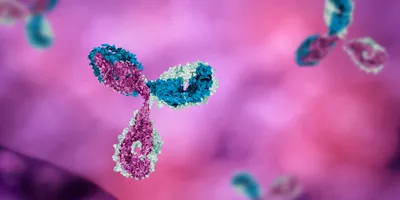
AlphaFold drug discovery has become one of the most discussed applications of artificial intelligence (AI) in the life sciences, and for good reason: AlphaFold2 solved a problem that had resisted structural biologists for half a century, predicting a protein's three-dimensional structure from its amino acid sequence with accuracy that often approaches experimental methods. The 2024 Nobel Prize in Chemistry recognized the achievement. The harder and more useful question for drug discovery scientists is narrower: given that AlphaFold predicts structures superbly, how much has it actually changed the day-to-day work of finding and designing drugs? The answer is genuinely mixed, and worth stating precisely.
This article gives that assessment. It sits within DDN's coverage of generative AI in molecular design and the broader guide to AI across drug discovery, and it stays deliberately balanced: separating the workflows AlphaFold has genuinely changed from those where experimental structural biology remains essential.
Key takeaways
|
What AlphaFold predicts
AlphaFold predicts the three-dimensional structure of a protein from its amino acid sequence, and it does so with an accuracy that, for many proteins, rivals experimental determination. Introduced by DeepMind in 2021, AlphaFold2 demonstrated unprecedented accuracy and effectively solved a 50-year scientific challenge, transforming structural biology almost overnight. Its impact has been felt at scale: the associated database now provides predicted structures for more than 200 million proteins, encompassing nearly the entire human proteome and almost all therapeutically relevant targets.

What matters for drug discovery is being precise about what that prediction is and is not. AlphaFold predicts a protein's most likely folded structure, typically a single conformational state, based on patterns learned from known structures and evolutionary sequence data. It is extraordinarily good at that specific task. But a drug does not bind to a static average structure; it binds to a specific conformation of a specific site, often reshaping that site as it binds, and in an environment full of water, ions, and other molecules that the prediction does not represent.
What AlphaFold does | What it gives you | What it does not give you |
Predicts fold from sequence | A high-quality model of the overall structure | Guaranteed accuracy at the binding-site level |
Predicts one conformation | The most likely single state | The full range of functional conformations |
Learns from known structures | Strong results for well-represented folds | Reliable results for novel or disordered regions |
Models the protein alone (AF2) | The apo-like protein structure | Bound ligands, ions, solvent or induced fit |
Reports confidence per residue | A useful guide to which regions to trust | A measure of usefulness for a specific chemistry task |
A drug does not bind to a static average structure. It binds to a specific conformation of a specific site, often reshaping that site as it binds. That gap is the heart of what AlphaFold has, and has not, changed.
How predicted structures enter drug design
Despite those caveats, predicted structures have found real and valuable roles in drug discovery, particularly at the earlier, more exploratory stages where a good model is far better than no structure at all. Understanding where they fit is the key to using them well.
Where predicted structures are genuinely useful:
- Targets without experimental structures. For a protein that has never been crystallized, a predicted structure provides a starting point for understanding its architecture, locating likely binding sites and forming testable hypotheses, work that was simply not possible before.
- Target understanding and triage. Early in a project, a predicted structure helps assess whether a target is tractable, where druggable pockets might be and how it relates to known protein families, informing decisions before major resources are committed.
- Molecular replacement in crystallography. Predicted models have become a powerful tool for solving experimental structures faster, providing the search model that helps determine an experimental structure from diffraction data.
- Filling gaps in known structures. Predicted models can complete regions missing from an experimental structure, such as flexible loops not resolved in a crystal, giving a more complete picture for analysis.
The common thread is that predicted structures excel where the alternative is nothing, and where the question is about overall architecture rather than atomic-level binding-site detail. That is a substantial contribution. It is also a different claim from saying AlphaFold has replaced experimental structure determination in drug design, which it has not.
Where AlphaFold structures are reliable for chemistry
The decisive question for medicinal chemistry is whether a predicted structure is accurate enough at the binding site to guide decisions about which molecules to make. Here the evidence calls for real caution, and the per-residue confidence score is an essential but incomplete guide.
What determines whether a predicted structure is chemistry-grade:
- Confidence varies across the structure. AlphaFold reports a per-residue confidence score, and high-confidence regions are generally reliable for overall fold while low-confidence regions, often flexible loops, are not. A binding site in a low-confidence region should be treated with skepticism.
- Binding-site detail is the weak point. Even when the overall fold is accurate, the fine detail of a binding site, exact side-chain orientations that determine how a molecule fits, is often not predicted accurately enough for confident structure-based design.
- The apo-holo problem. AlphaFold2 predicts the protein alone, and the unbound conformation may differ from the ligand-bound one. Using an unbound predicted structure for docking can mislead if the site reshapes on binding.
- Well-represented targets fare better. Predictions are more reliable for proteins similar to those well represented in the training data, and less reliable for novel folds, which is worth weighing when judging a given target.
Independent evaluation has repeatedly reached the same conclusion: while AlphaFold2 shows high prediction performance for proteins overall, it is challenging to accurately predict more detailed structures such as binding sites, which limits the direct use of predicted structures in downstream tasks like virtual screening and free-energy calculations. The practical rule that has emerged is to use predicted structures for orientation and hypothesis, and to confirm experimentally before betting a chemistry campaign on binding-site detail.
Where experimental structures still matter
The counterpart to knowing where predictions help is knowing where experimental structural biology remains indispensable, and for the most decision-critical stages of drug design, it clearly does. This is not a transitional limitation waiting to be solved; it reflects what the two approaches fundamentally provide.
Where experimental structures remain essential:
- Lead optimization and structure-based design. Refining a molecule against a target requires accurate, ligand-bound structural detail at the binding site, which is exactly what predicted apo structures are least reliable at providing.
- Capturing induced fit. When a target reshapes its binding site around a ligand, only an experimental structure of the actual complex captures that accurately, and that reshaping frequently drives potency and selectivity.
- Resolving conformational states. Many drug targets adopt multiple functional conformations, active and inactive kinases, different receptor states, and a single predicted structure cannot represent that range, which experimental methods can capture.
- Confirming binding mode. Before committing to a structure-based campaign, confirming how a molecule actually binds its target typically still requires an experimental structure of the complex.
The productive framing is not prediction versus experiment but prediction and experiment, used for what each does best. Predicted structures accelerate the early, exploratory work and reduce the number of experimental structures needed; experimental structures remain the standard for the decisions where binding-site accuracy is decisive.

AlphaFold 3 and protein-ligand prediction
The most important recent development directly targets the limitation that mattered most for drug discovery. AlphaFold 3, introduced in 2024 with a diffusion-based architecture, extends prediction beyond the protein alone to protein-ligand complexes, protein-nucleic acid interactions and other biomolecular assemblies. On static docking benchmarks, it is impressive: a comprehensive assessment of AlphaFold 3 found that it excels at predicting static protein-ligand interactions with minimal conformational change, significantly outperforming traditional docking methods in side-chain orientation accuracy.
What AlphaFold 3 does and does not resolve:
- Strong on static complexes. For protein-ligand complexes that do not involve large conformational change, AlphaFold 3 predicts binding poses and side-chain orientations more accurately than conventional docking, a meaningful step for structure-based work.
- Weak on conformational change. The same assessment found that AlphaFold 3 struggles with complexes involving significant conformational change beyond roughly 5 angstroms, precisely the induced-fit cases where accurate prediction would be most valuable.
- Persistent conformational biases. The evaluation identified a bias toward particular states, including active-state GPCR conformations, meaning predictions can be systematically skewed for important target classes rather than randomly imperfect.
- Not yet a replacement for experiment. AlphaFold 3 narrows the gap for static protein-ligand prediction but does not close it, and the cases where it is weakest overlap heavily with the cases that matter most in lead optimization.
AlphaFold 3 is a genuine advance on the problem that mattered most, and its trajectory is encouraging. But the honest reading is that it improves the static-case prediction that docking already handled reasonably, while still struggling with the dynamic, induced-fit cases that were hard before, which means the caution about binding-site-critical decisions still applies.
Case studies
The realistic pattern of AlphaFold's impact is best seen in how it is actually used across a project, where the value is concentrated at specific points rather than spread evenly across the pipeline.
Representative patterns of real-world use:
- Opening previously inaccessible targets. For targets that never had experimental structures, predicted models have enabled early structure-based hypotheses and druggability assessment that simply could not happen before, the clearest and most widely reported benefit.
- Accelerating experimental structure determination. Using predicted models as search models for molecular replacement has shortened the path to experimental structures, so prediction and experiment reinforce each other rather than compete.
- Proteome-scale target analysis. With predicted structures available across entire proteomes, researchers can analyze and compare targets at a scale that experimental structural biology could never reach, informing target selection and family-wide strategy.
- Guarded use in binding-site work. Experienced teams use predicted structures to orient and prioritize but confirm binding-site detail experimentally before committing a lead optimization campaign, the pattern that reflects the evidence most faithfully.
The overall verdict is that AlphaFold has changed drug discovery meaningfully but unevenly: transformative for structural biology and for early target access, genuinely useful across much of the exploratory pipeline and still limited precisely where atomic-level binding-site accuracy governs the decision. For how structure prediction connects to molecular generation and the rest of the pipeline, DDN's generative AI in molecular design hub and its guide to AI across drug discovery provide the wider context.
What this means for drug discovery teamsUse AlphaFold for what it does best and confirm what it does not. Predicted structures are genuinely valuable for targets without experimental structures, for early druggability and target understanding, and for accelerating experimental structure determination through molecular replacement. Treat the per-residue confidence score as a first filter, not a guarantee, and be especially cautious with binding-site detail, unbound-versus-bound conformations and novel folds. Reserve experimental structures for the decisions where binding-site accuracy governs the outcome, lead optimization, induced fit, and binding-mode confirmation. AlphaFold 3 improves static protein-ligand prediction and is worth adopting for those cases, but it does not yet resolve the conformational-change problem that matters most in optimization. The teams getting the most value pair prediction and experiment deliberately rather than treating one as a replacement for the other. For the wider pipeline, the AI in drug discovery guide maps how structure prediction connects to the rest of the workflow. |
This article was produced in accordance with Drug Discovery News’ Editorial Policies