When Hazel Harris was diagnosed with systemic lupus erythematosus (SLE) in 1986, she had never heard of the disease. She was 33 years old, busy, energetic, and always on the move. Then her body began to change in ways she couldn’t explain.
First came the rash on her face, in the shape of a butterfly. Then her eyes grew puffy. This was followed by a deep fatigue that was extremely unlike her. Finally, her leg began to swell so badly that she could no longer walk. “That’s when I had no choice but to go to the doctor,” she told DDN.
SLE is a chronic autoimmune disease in which the immune system attacks the body’s own tissues, causing inflammation that can affect the skin, joints, kidneys, lungs, brain, blood vessels, and heart. It affects approximately 3.4 million people worldwide, most commonly women, and disproportionately people of African ancestry.
Lupus is marked by an unpredictable cycle of flares and remissions, in which symptoms can worsen, ease, or disappear entirely. This volatility can make the disease deeply isolating, as its daily realities are often invisible and difficult for others to understand.
In rare cases, these periods of remission can last years, and even decades. Hazel Harris is one such case. After four or five years of lupus, she went into spontaneous remission 25 years ago — without medication.

Harris’ experience places her among a small and poorly understood group of people with SLE who enter sustained, drug-free clinical remission. While modern therapies can reduce disease activity, true long-term remission without immunosuppression remains rare — and largely unexplained.
Now, a large international research effort is examining patients in long-term, medication-free remission to determine whether the disease has genuinely resolved or entered a distinct biological state.
A slow, quiet disappearance
It was very gradual. I didn’t have a ‘Thank you Jesus, I’m healed’ moment. I just started thinking, maybe I’m healing. Maybe.
—Hazel Harris, patient with SLE in remission
Harris didn’t wake up one day cured. There was no dramatic turning point, no single moment when everything changed. “It was very gradual,” she said. “I didn’t have a ‘Thank you Jesus, I’m healed’ moment. I just started thinking, maybe I’m healing. Maybe.”
Months passed. Then a year. Then more. Even then, she remained cautious. “I didn’t want to be too optimistic,” she said. “It was always in the back of my mind that it could come back.”
Today, Harris has been in clinical remission for more than 20 years, without immunosuppressive medication. She dances. She practices tai chi. She lives without the daily constraints that once defined her life.
Still, she hesitates to call it permanent. “Nothing is guaranteed,” she said. “But I feel much better now than I did then.”
Studying the absence of disease
For decades, lupus research has focused on flares — how to suppress them, shorten them, and limit the organ damage they cause. Remission, when it occurred, was treated as an endpoint rather than a subject of study.
That is now changing.
A $15 million National Institutes of Health (NIH)-funded international study is examining patients like Harris to understand what remission actually means at a biological level. The project spans multiple continents and brings together immunology, neurology, microbiome research, and advanced data science.
One of the study’s leaders is Betty Diamond, an immunologist at the Feinstein Institutes who has spent decades studying autoimmune disease. “While there have been a few successes in lupus clinical trials, there have also been many failures,” she told DDN. “It seemed to my colleagues and me that perhaps we were thinking about how to achieve success the wrong way.”
Active SLE is highly heterogeneous, making it difficult to study and, in turn, difficult to treat. Studying remission, Diamond and her colleagues believe, may point to a more meaningful therapeutic goal. Rather than focusing solely on suppressing active disease, researchers can ask what kind of immune balance patients in long-term remission have achieved — and whether that state can be induced or sustained.
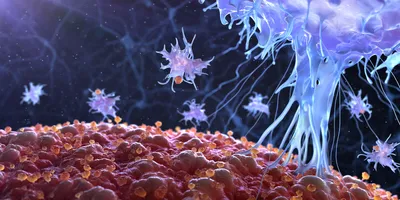
The team reasoned that among people in remission, roughly five percent relapse each year. Over five years, that could mean about a quarter of participants experiencing relapse. By examining patients just before and at the earliest stages of relapse, the researchers hoped to capture meaningful biological differences — differences that may be obscured once the disease is fully active and multiple immune pathways are simultaneously engaged.
What we already know is that it's clear that people in remission don't look like healthy individuals. The team is already observing immune system changes that, if confirmed in larger cohorts, could point to new therapeutic targets.
—Betty Diamond, Feinstein Institutes for Medical Research
So far, the team has looked at approximately 120 people in remission, 20 healthy individuals, and 20 patients with active disease. “What we already know is that it's clear that people in remission don't look like healthy individuals,” Diamond said. “The team is already observing immune system changes that, if confirmed in larger cohorts, could point to new therapeutic targets.”
Using single-cell sequencing and other high-resolution techniques, the researchers are mapping the immune system at an unprecedented level of detail, examining the activity, identity, and molecular state of individual immune cells in patients in remission, with active disease, and in healthy controls. By integrating these blood-based findings with brain imaging, cognitive testing and microbiome analyses, the study aims to build a more complete picture of how immune, neurological and gut systems interact — and what distinguishes long-term remission from ongoing disease activity or relapse.
Giving back
Despite the severity of her diagnosis, Harris said she often felt lucky. She was diagnosed quickly, without the years of uncertainty many lupus patients endure. Living in New York, she was treated at a hospital already doing cutting-edge lupus research, and her doctors recognized the disease early — a critical factor in preventing irreversible damage.
“I was really fortunate,” she said. “They didn’t have to guess. They knew to test me for lupus right away.”
Support also mattered. Harris joined a lupus support group that helped counter the isolation of the disease. “When people are going through what you’re going through, you don’t have to explain anything,” she said. “They just understand.”
Years later, after moving and needing a new rheumatologist, Harris found herself reunited with the same physician who had helped diagnose her decades earlier — now involved in lupus research. It was that doctor who told her about the remission study. “Out of all the places I could have gone, I ended up right there,” Harris said. “That felt like another miracle.”
Harris now visits the clinic twice a year as part of the study. The visits are straightforward — vital signs, samples, questions — but the meaning runs deeper.
“They’re trying to figure out what makes me different from someone who isn’t in remission,” she said. “And I’m just happy to be part of that.”
Her participation feels like a form of repayment — for early diagnosis, compassionate care, and a life reclaimed. “I’ve seen people with lupus on dialysis,” she said. “People with heart failure, kidney failure. And I thank, by the grace of God, that wasn’t me.”
Living with lupus, she said, changed her in lasting ways. It made her more aware of her body, more attentive to others, and more empathetic. “I don’t think I would have been this compassionate if I hadn’t gone through it,” she said. “And that’s the positive side, for me.”
Redefining success in lupus
For researchers, patients like Hazel Harris represent more than rare success stories. They challenge the assumption that lifelong immunosuppression is the only viable goal in autoimmune disease.
Current lupus treatments save lives, but they also carry risks — including infection, which remains a leading cause of hospitalization and in-hospital death among patients with lupus. If remission can occur without continuous suppression, the immune system may be capable of restoring balance in ways medicine has not yet learned to support.
“What we do now is quiet down their disease, but at the price of immunosuppression,” said Diamond. “So, what they’re doing for themselves is better than what we’re doing for them.”
The hope is that understanding remission could eventually shift treatment strategies away from constant suppression and toward restoring immune homeostasis.