LYON, France—Valneva SE, a leading pure play vaccine company, recently announced that it has signed a new R&D collaboration agreement with GlaxoSmithKline (GSK) for the development of EB66-based influenza vaccines. Under the agreement, Valneva will conduct an R&D program on behalf of GSK to develop and improve upstream processes which will serve for the manufacturing of influenza vaccines based on Valneva's EB66 cell line.
The program received the full support of the U.S. Department of Health and Services (HHS) which encourages the development of new vaccine technologies in order to prevent and treat diseases including influenza through its dedicated arm, the Biomedical Advanced Research and Development Authority (BARDA). In the framework of today's collaboration contract between GlaxoSmithKline and Valneva, BARDA will oversee and finance part of the advanced development program.
In May 2007, Valneva granted an exclusive commercial license to GSK to develop and market worldwide pandemic and seasonal human influenza vaccines using Valneva's EB66 cell line. Under the 2007 agreement, Valneva is entitled to receive milestone payments as well as royalties associated with future sales. Under the collaboration agreement just announced, Valneva also secured additional research fees.
Thomas Lingelbach, president and CEO and Franck Grimaud, deputy CEO of Valneva, commented "We are very pleased to extend our long term collaboration with GlaxoSmithKline and we are honored to see BARDA supporting the GSK vaccine approach based on our EB66 cell platform. This again illustrates the fact that EB66 is today recognized by leading healthcare institutions worldwide as one of the most efficient technologies to produce next generation vaccines."
The treatment and prevention of influenza is a major market, especially in the U.S. According to the Centers for Disease Control (CDC), seasonal influenza vaccination only should lead to the distribution of between 171 to 179 million doses of vaccines in the U.S. for the 2015-16 flu season.
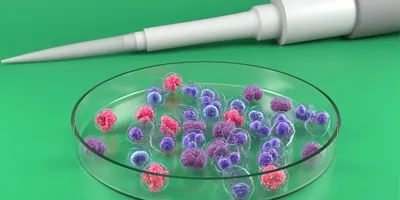
Valneva's EB66 cell line is a highly efficient platform for vaccine production. It is derived from duck embryonic stem cells and today represents a compelling alternative to the use of chicken eggs for large scale manufacturing of human and veterinary vaccines. To date, Valneva has more than 35 research and commercial agreements with the world's largest pharmaceutical companies to utilize its EB66 technology. The first human vaccine using EB66 technology received marketing approval in 2014 and the first veterinary vaccine in 2012.
Valneva is a fully integrated vaccine company that specializes in the development, manufacture and commercialization of innovative vaccines with a mission to protect people from infectious diseases through preventative medicine.
The company seeks financial returns through focused R&D investments in promising product candidates and growing financial contributions from commercial products, striving towards financial self-sustainability.
Valneva's portfolio includes two commercial vaccines for travelers: one for the prevention of Japanese Encephalitis (IXIARO/JESPECT) and the second (DUKORAL) indicated for the prevention of Cholera and, in some countries, prevention of Diarrhea caused by ETEC (Enterotoxigenic Escherichia coli). The company has proprietary vaccines in development including candidates against Pseudomonas aeruginosa, Clostridium difficile and Lyme Borreliosis. A variety of partnerships with leading pharmaceutical companies complement the company's value proposition and include vaccines being developed using Valneva's innovative and validated technology platforms (EB66 vaccine production cell line, IC31 adjuvant).
Valneva is incorporated in Lyon, France, listed on Euronext-Paris and the Vienna stock exchange and has operations in France, Austria, Scotland, Canada and Sweden with approximately 400 employees.
This project has been funded in whole or in part with Federal funds from the Office of the Assistant Secretary for Preparedness and Response, Biomedical Advanced Research and Development Authority, under Contract HHSO100201500010C.





 This person does not yet have a bio.View Full Profile