Washington State University (WSU) researchers have identified a way to disrupt a key molecular interaction that herpes viruses use to enter cells, a finding that could inform new approaches to antiviral drug discovery.
The research, published in Nanoscale, shows that modulating a single interaction within a viral fusion protein can significantly reduce the virus’s ability to fuse with host cells and initiate infection.
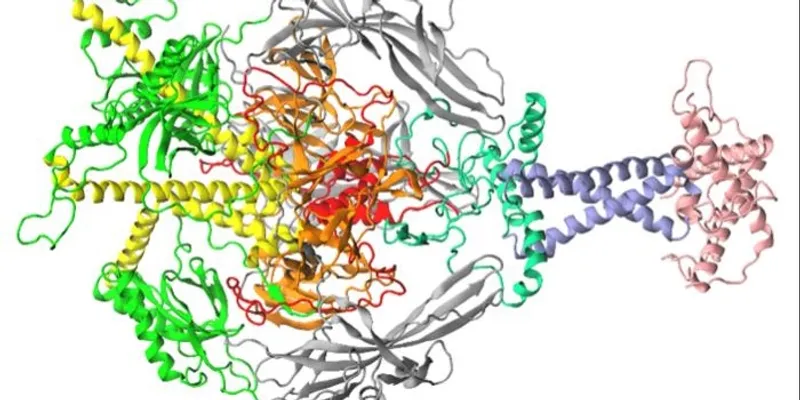
The study centered on glycoprotein B, a fusion protein that herpes viruses rely on to merge with cell membranes. Viral entry is a complex, multistep process involving thousands of molecular interactions, which has made it difficult to pinpoint actionable drug targets. By isolating one interaction that plays an outsized role in fusion, the researchers demonstrated that not all parts of the protein contribute equally to infectivity.
To find that interaction, researchers from WSU’s School of Mechanical and Materials Engineering used molecular simulations and machine learning to analyze thousands of amino acid interactions within glycoprotein B. They developed an algorithm to systematically examine these interactions and applied machine learning to distinguish which ones were most critical for enabling the protein to change shape and drive membrane fusion.
Experimental validation, led by microbiologist Anthony Nicola in WSU’s Department of Veterinary Microbiology and Pathology, confirmed the computational predictions. When the team introduced a targeted mutation to one of the identified amino acids, the herpes virus showed a marked reduction in its ability to fuse with and enter cells, effectively blocking infection in the experimental system.

From a drug discovery perspective, the work highlights viral entry as a potentially tractable intervention point. Many existing antivirals target viral replication after a cell has already been infected, and vaccines remain unavailable for several common herpes viruses. Identifying discrete, high-impact interactions within entry proteins could open the door to small molecules or biologics designed to prevent infection before it begins, rather than limiting viral spread after the fact.
The researchers caution that the current study does not yet provide a complete picture of how altering one interaction affects the structure and dynamics of the entire fusion protein. Future work will focus on scaling up simulations and experiments to understand those broader structural changes, an effort they say will be critical for translating molecular insights into viable therapeutic strategies.