Over the last several years, researchers in Pradeep Singh’s lab at the University of Washington observed something peculiar happening in the lungs of patients with cystic fibrosis. After giving them tobramycin — an inhaled antibiotic that achieves high concentrations in the lungs — the team noticed that the bacteria causing the lung infection suddenly became resistant.
“We observed almost instantaneous 10,000 fold increases in tobramycin resistance,” Singh told DDN. That didn’t make sense, as antibiotic resistance generally develops gradually as the bacteria’s genome slowly acquires mutations.
Singh’s team went digging for what could be causing such a rapid and drastic jump in resistance. By using long-read sequencing on hundreds of bacteria from patient samples, Sardar Karash, a postdoctoral researcher in Singh’s lab at the time, found the answer.
The infection-causing bacteria in the lung were not becoming resistant on their own. Instead, environmental bacteria that made its way into the lungs transferred small circular DNA called plasmids into the genomes of the infecting pathogens. Gene transfer from the environmental bacteria “completely transformed the ability of lung pathogens to resist treatment,” said Singh. “We see environmental bacteria from time to time in patients' samples, but did not think they did much harm. I don't think that anymore.”
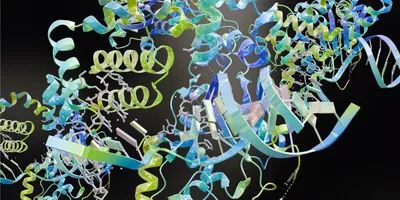
The researchers described the new mechanism recently in a paper published in Nature Microbiology.
Uncovering the secrets of bacteria
The researchers were surprised by the new findings, especially since the environmental bacteria they found were only seen once in the patient lung samples before disappearing. And, the environmental bacteria themselves are not generally able to infect humans. “Despite this, they were able to rapidly transfer resistance genes to infecting pathogens throughout the lungs,” said Singh.
“We see environmental bacteria from time to time in patients' samples, but did not think they did much harm. I don't think that anymore.”
—Pradeep Singh, University of Washington
The newly discovered mechanism of in vivo gene transfer could mean that transiently-infecting environmental bacteria could help pathogens inside human organs in other ways, too.
“If environmental bacteria can ferry resistance genes inside human organs, we have to worry about what other genes might be transferred,” Karash said in the press release. Beyond increasing resistance, it’s possible that these genes could make the infecting bacteria more adept at evading immune responses or acquiring nutrients.
The new work adds to increasing evidence that infecting bacteria have many more strategies to ward off antibiotics than previously known. Researchers at St. Jude Children’s Research Hospital recently published work showing that a subset of S. Pneumoniae cells are able to enter a transient low-activity state of antibiotic tolerance to survive treatment and then resume their growth afterwards.
New strategies needed
To fight back against the acquired boost in antibiotic resistance, drug developers may come up with new strategies to block in vivo gene transfer from environmental bacteria in the future. However, Singh noted that much more basic research into this novel topic is needed before that can happen.
“We first need to understand what organisms can carry mobile genetic elements into infected human organs. Then we need to understand what types of mobile elements carry key resistance and virulence genes, and how they get taken up by resident pathogens,” he said.
For now, the new discovery also emphasizes the importance of perseverance and creativity from scientists in basic research.
“On a personal level, it was great to see how the lead researcher, Sardar Karash, dug into this problem. He just wouldn't let up. He pushed and pushed until he got the answer. That’s what it takes,” said Singh.