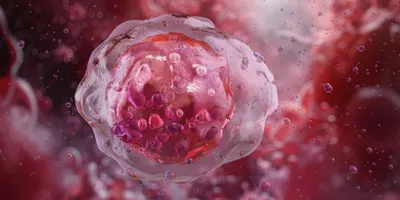
DURHAM, N.C.—A team of researchers at Duke University in North Carolina and Singapore has discovered that stress on cells can lead to the production of proteins that are unfolded or misfolded, which in turn can lead to a number of different diseases. To combat this, cells are capable of adjusting the process of producing proteins.
Christopher V. Nicchitta, Ph.D., a professor of cell biology at Duke University School of Medicine, presented it as such: “Essentially, the cell remodels the organization of its protein production machinery in order to compartmentalize the tasks at hand.”
Normally that organization follows a well-known routine. DNA, which is found in a cell’s nucleus, gets transcribed into messenger RNA, or mRNA, a working copy that then travels to the ribosomes found on the endoplasmic reticulum. These ribosomes function much like assembly lines, and are where mRNAs get translated into proteins.
When a cell is stressed, which can be caused by starvation or overheating, its proteins don’t fold properly, which can set off the unfolded protein response (UPR). Specifically, the UPR “is a stress response program that reprograms cellular translation and gene expression in response to proteotoxic stress in the endoplasmic reticulum.” This cellular alarm can slow down the assembly line, providing the cell with time to clean up the misfolded proteins, and, according to the paper, “encompasses a multistage translational response.”
As Nicchitta and his colleagues found, however, that is not the only avenue cells have for dealing with this issue. The team stressed cells by treating tissue culture cells with a stress-inducing agent known as thapsigargin. These cells were then separated into two groups, those that contained mRNAs associated with ribosomes on the endoplasmic reticulum, and those containing mRNAs associated with free-floating ribosomes in the cytosol of the cell. As it turned out, when the cells were stressed, they transferred mRNAs from the endoplasmic reticulum to the cytosol; when the stress was dealt with, the mRNAs were returned to the endoplasmic reticulum.
In addition, the researchers also found that transferring ribosomes between the endoplasmic reticulum and the cytosol only affected the subset of mRNAs that, when coded, result in secreted proteins like hormones or membrane proteins like growth factor receptors, the types of protein that will set off the stress response when misfolded.
“You can slow down protein production, but sometimes slowing down the workflow is not enough,” Nicchitta said in a press release. “You can activate genes to help chew up the misfolded proteins, but sometimes they are accumulating too quickly. Here we have discovered a mechanism that does one better -- it effectively puts everything on hold. Once things get back to normal, the mRNAs are released from the holding pattern.”
Moving forward, Nicchitta is trying to determine the factors that are responsible for deciding which mechanisms cells use when stressed, and one candidate has been identified already.
This work could potentially have implications in a host of well-known diseases, as Alzheimer’s disease, type 2 diabetes, Parkinson’s disease, ALS (also known as Lou Gehrig’s disease) and Huntington’s disease are all the result of the accumulation of misfolded proteins.
The study, “The Unfolded Protein Response Triggers Selective mRNA Release from the Endoplasmic Reticulum,” appeared in Cell Sept. 11.