Research Areas

| 2 min read
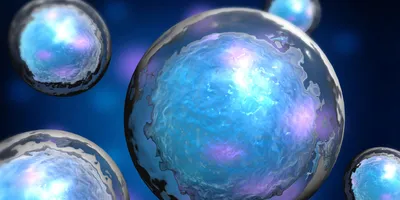
Osiris Therapeutics announced recently the expansion of a licensing agreement with JCR Pharmaceuticals that will see the Ashiya, Japan-based company sell adult human stem cells for use in drug screening and evaluation in Japan. The cell technology will allow companies involved in drug discovery and development to screen test compounds for a variety of metabolic effects.
| 3 min read
The learning curve for me continues to be steep, but one unexpected reality in the industry that has enthralled me from the very beginning is the vital and ever-increasing role played by computing and informatics providers. The work being done by folks such as Nallatech (see this month’s guest commentary by Dr. Malachy Devlin), The European Bioinformatics Institute, the Institute for Systems Biology, Silicon Graphics,
| 3 min read
Every so often, it is good for us to challenge the so-called truths that we hold dear, for it is often our defense of these truths that keep us from seeing the advantages around the corner. Until Stanley Prusiner and colleagues elucidated the mechanism of prion replication, few of us could conceive of an infectious disease that could propagate without a nucleic acid intermediate. Thalidomide offers a particularly special example of being a wonder drug that was vilified when its use as an anti-nauseate was linked to birth defects. And yet later still, it has seen a renaissanceas scientists have begun to use it as an effective treatment for cancer when proper precautions are followed.
| 6 min read
THE PAST DECADE has witnessed an explosive growth of data from biology including genome projects, proteomics, protein structure determination, cellular regulatory mechanisms and the rapid expansion in digitization of patient biological data. But while the raw computational power as predicted by “Moore’s Law” has led to the number of transistors that can be integrated doubling every 18 months, the genomic data at GenBank is doubling every 6 months. Post-genomic-era bioinformatics challenges are expected to require high-performance computing power of the order of petaflops or more.
| 3 min read
I must admit to wondering sometimes why anyone in his or her right mind would even consider a career in the pharmaceutical industry.
| 2 min read
A few weeks ago, while flipping through The Economist, I came across yet another article describing the latest exploits of the small biopharmaceutical company, the Institute for One World Health.
| 2 min read
In early August, I had the fortune to attend the Drug Discovery Technology and Development (DDT) 2005 conference, the 10th such conference to grace Boston.
| 1 min read
I am a very cynical man, but even my black heart was softened a little by the efforts of companies big and small in response to the recent carnage in Louisiana, Mississippi, Alabama, and Florida.
| 3 min read
OK, so now we’re getting somewhere. I’m sure the publisher and associate publisher of this publication will cringe at this statement, but sometimes half the fun of what we do as editors at any publication — be it trade or consumer – is to get under the skin of our readers. We don’t do this intentionally, mind you. But it is also inevitable that when a newspaper is read by thousands of people each month, you’re going to ruffle some feathers.
| 3 min read
Pharma is unlike any other industry; pass it on
Imust admit to wondering sometimes why anyone in his or her right mind would even consider a career in the pharmaceutical industry.
Popular Topics


Multimedia

Explore how direct cell lysis can reduce sample preparation steps and support efficient gene expression analysis by RT-qPCR.


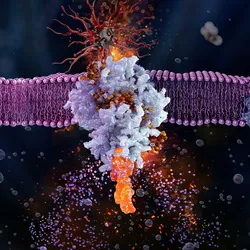
Explore how cereblon allostery and cellular target engagement profiling can reveal the mechanisms and selectivity underlying degrader activity.