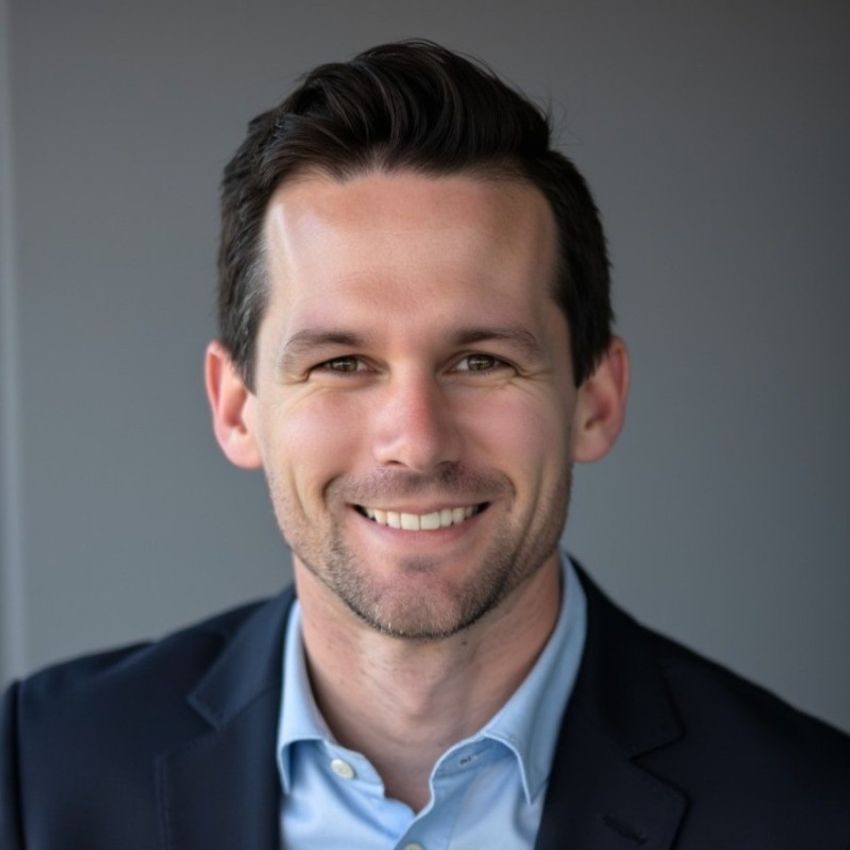
With a background in biomedical engineering and translational research, Cameron Ferris has spent his career bridging engineering and biology to develop technologies that make complex science practical and scalable.
Credit: Cameron Ferris
As drug discovery faces mounting pressure to deliver safer, more effective therapies faster, the tools used to model human biology are rapidly evolving. Traditional 2D cell cultures and animal models are increasingly seen as insufficient for capturing the complexity of human tissues and disease mechanisms. In their place, advanced three-dimensional (3D) cell models are emerging as powerful new systems that bridge the gap between in vitro simplicity and in vivo relevance.
To understand what’s driving this shift and how it’s reshaping preclinical research, DDN spoke with Cameron Ferris, co-founder and Chief Operating Officer at Inventia Life Science. In this conversation, Ferris discussed the technological and regulatory forces accelerating adoption of advanced cell models, the critical role of biofabrication in building scalable, human-relevant systems, and why the next era of drug discovery may depend on moving beyond the limitations of legacy models.
Advanced cell models have been gaining traction. Why now, and what gaps do they fill compared to traditional 2D cultures or animal studies?
For decades, drug discovery has relied on 2D cultures and animal models, despite their well-documented limitations. What’s changed is the convergence of three forces: regulators calling for human-relevant data, the maturation of enabling technologies, and the rising cost of late-stage failures. Advanced 3D models help close this gap by recreating tissue architecture, cell-cell interactions, and extracellular dynamics that traditional systems miss, giving researchers the chance to ask patient-relevant questions much earlier in the pipeline.
What are the main differences between how these models are applied in toxicity versus efficacy testing?
Early advanced cell models were primarily used for toxicity testing in late-stage preclinical studies, a clear opportunity to shift from animals towards high-fidelity, low-throughput in vitro systems. That remains a core focus, especially for cardiotoxicity or hepatotoxicity, where human-relevant insights are essential. However, equally exciting is the growing use of higher-throughput, reproducible models to generate human-relevant data on efficacy and mechanisms of action much earlier in discovery.
These systems make it possible to study complex disease contexts, such as tumor-immune interactions or fibrotic remodeling, that traditional models cannot capture. Unlike toxicity, which targets a narrower set of endpoints, efficacy testing demands a broader range of model systems since each program asks different biological questions. This is driving the need for advanced, scalable tools that let researchers create tailored models reproducibly, extending the impact of these systems from “Is it safe?” to “Does it work?”
What are the biggest limitations you see in today’s preclinical testing landscape?
More than 90 percent of therapies that succeed in preclinical models fail in human trials. That statistic tells the story — the core limitation is translation.
- Cameron Ferris, co-founder and COO at Inventia Life Science
The numbers speak for themselves: more than 90 percent of therapies that succeed in preclinical models fail in human trials. That statistic tells the story — the core limitation is translation. This isn’t just a scientific challenge, it’s an economic one. Every late-stage failure represents years of investment lost, making earlier, more predictive decision-making critical.
Preclinical systems often don’t reflect the heterogeneity of patient biology or the complexity of tissue environments. Access to patient-derived material is another barrier, since scaling it consistently is difficult. At Inventia Life Science, we see the opportunity as two-fold: improve biological fidelity, and make those models scalable and reproducible so they can actually be deployed in discovery programs.
How are new biofabrication techniques helping researchers better mimic native tissue environments?
A common misperception is that the purpose of biofabrication is to make models as complex as possible, aiming to perfectly recreate tissue architecture. In practice, that’s rarely the most useful approach. The real value lies in bringing engineering-level consistency and scalability to the creation of models with the right level of complexity: sufficient to capture key cell-cell and cell-matrix interactions that drive phenotype and drug response, but not so complex that the model becomes unscreenable.
Techniques like droplet-based bioprinting enable precisely this balance, giving researchers control over which cells are present, how they’re arranged, and the properties of the surrounding matrix. With this precision, we can begin to recreate microenvironments that behave much more like human tissues. This principle is at the heart of the RASTRUM™ platform. And with RASTRUM™ Allegro, we’ve extended that same level of control into high-throughput, screenable formats. The result is that researchers don’t have to choose between complexity and consistency. They can have both at a scale that matters for discovery.
What advantages do you see in approaches that can integrate multiple cell types into a reproducible, scalable system?
Disease is rarely the story of a single cell type. Cancer involves tumor, stromal, and immune players; fibrosis emerges from crosstalk between fibroblasts and epithelial cells; neurodegeneration reflects complex neuronal-glial interactions. Systems that can reproducibly integrate these populations let us study those dynamics in a controlled model. Just as importantly, reproducibility ensures that every plate and every experiment behaves the same, which is the foundation of data you can trust across labs, assays, and collaborators.
Do these advances change the kinds of questions researchers can ask in preclinical research?
They do, and the questions themselves are becoming more meaningful. Instead of asking “Does this compound shrink a mouse tumor?”, we can now ask “How does this therapy interact with specific immune populations in a human-like tumor microenvironment?” or “What resistance mechanisms emerge when we model patient heterogeneity in vitro?”.
This ability to reflect patient diversity in vitro also opens doors for precision medicine, where therapies can be tested in models that represent different patient populations or genetic backgrounds. Advanced models unlock more mechanistic, patient-relevant questions that matter for predicting clinical success.
How can drug discovery teams best take advantage of these new approaches to accelerate validation of disease models?
The key is partnership. Building and validating complex 3D models requires specialized expertise, from selecting matrices to adapting assays. By partnering with teams that live and breathe 3D biology, pharma can move quickly from concept to validated workflow. For instance, we often co-develop models with pharma partners, then transfer validated workflows back into their pipelines to execute in-house. Equally important, these models are designed to integrate with existing drug discovery workflows, from automated screening platforms to imaging and data analysis pipelines, so adoption enhances rather than disrupts established processes. That accelerates adoption while reducing risk.
What are some therapeutic areas or programs where advanced cell models have already shown meaningful impact?
Oncology has led the way, with tumor organoids and bioprinted cancer models already used to study resistance and predict response. Immuno-oncology is following closely, with models that integrate immune components into tumor microenvironments.
Several published and presented studies illustrate this impact.
- At SLAS 2025, Bristol Myers Squibb presented data showing how advanced 3D models were used to generate reproducible, high-throughput pancreatic cancer models, scaling to more than 30 plates in a single day with consistent drug response profiles.
- Merck & Co., Inc. researchers published work using 3D cortical Alzheimer’s disease models derived from patient induced pluripotent stem cells, revealing connectivity and mitochondrial deficits not visible in 2D.
- In pediatric oncology, Maria Kavallaris and her team at the Children’s Cancer Institute, University of New South Wales, just published a landmark study on how engineered 3D pediatric tumor models can be scaled while preserving cellular heterogeneity and tumor microenvironmental interactions.
- In reproductive biology, Claire Richards and colleagues at the University of Technology Sydney published a study in Nature Communications, describing how bioprinted “mini-placentas” provide a powerful new tool for investigating pregnancy complications, such as preeclampsia.
Together, these studies and many others demonstrate how advanced 3D models are producing actionable data that informs both discovery and translational science.
Where do you see the field of advanced cell models heading in the next 3–5 years?
Over the next three to five years, human-based 3D models are expected to transition from niche projects to the standard default in preclinical research. The conversation will shift from “Why use 3D?” to “Can you afford not to?”
- Cameron Ferris, co-founder and COO at Inventia Life Science
We’re at a clear inflection point. Regulators are moving beyond animal-first testing, technologies have matured, and pharma is under pressure to improve predictive power. Over the next three to five years, human-based 3D models are expected to transition from niche projects to the standard default in preclinical research. The conversation will shift from “Why use 3D?” to “Can you afford not to?”
For drug developers, the implications are real: Those who adopt advanced models will gain earlier, more predictive insights that reduce late-stage failures. Those who don’t risk falling behind as the field moves on. At Inventia Life Science, our goal is to make this transition not only possible but practical. With platforms like RASTRUM Allegro, we’re showing that researchers don’t need to choose between complexity and scalability. The next chapter is about embedding these models into pipelines at scale, generating data regulators trust, and ultimately accelerating the arrival of better therapies for patients.
This interview has been condensed and edited for clarity.