Boyang Wang's investment philosophy is deeply rooted in his educational and technical background.
CREDIT: Boyang Wang
The race to extend human healthspan is accelerating, with technologies that aim not just to treat disease but to replace failing organs entirely. Lab-grown tissues, engineered blood vessels, and 3D biofabrication are pushing the boundaries of regenerative medicine, offering a future where organ failure and transplant waitlists could become a thing of the past.
Immortal Dragons, a purpose-driven longevity fund, has invested in Frontier Bio, a biotechnology company advancing 3D biofabrication and tissue engineering. Frontier Bio’s platform combines 3D bioprinting, stem cells, organ-on-a-chip systems, and perfusion bioreactors to create functional blood vessels and complex tissues.
DDN spoke with Eric Bennett, CEO of Frontier Bio, and Boyang Wang, Founder of Immortal Dragons, to explore how lab-grown blood vessels, organ-scale tissue engineering, and 3D biofabrication are reshaping the future of organ replacement and radical life extension.
Immortal Dragons invests in technologies aimed at preventing aging-related deaths. How do Frontier Bio’s engineered tissues and organs fit into this vision?
Every engineered tissue depends on a stable blood supply for oxygen, nutrients, waste removal, and signaling. By solving vascularization first and manufacturing patient-matched blood vessels, Frontier Bio removes the core bottleneck that has limited tissue engineering.
– Boyang Wang, Founder of Immortal Dragons
Wang: Immortal Dragons invests in moonshot, radical life extension technologies with a firm commitment to "replacement over repair." Contemporary medicine excels at treating dysfunctional biological systems but cannot address the fundamental etiology of age-related diseases: aging itself. Think of it this way: When your smartphone shatters, no expert can truly "repair" it — replacement is always required. We believe human biological systems follow the same principle.
Frontier Bio is building the foundation that makes replacement possible. Every engineered tissue depends on a stable blood supply for oxygen, nutrients, waste removal, and signaling. By solving vascularization first and manufacturing patient-matched blood vessels, Frontier Bio removes the core bottleneck that has limited tissue engineering. This directly aligns with Immortal Dragons' thesis on overcoming aging.
Can you explain, in simple terms, what bioprinting is, how it works, and how it differs from traditional 3D printing? How does cellular self-assembly fit into the process?
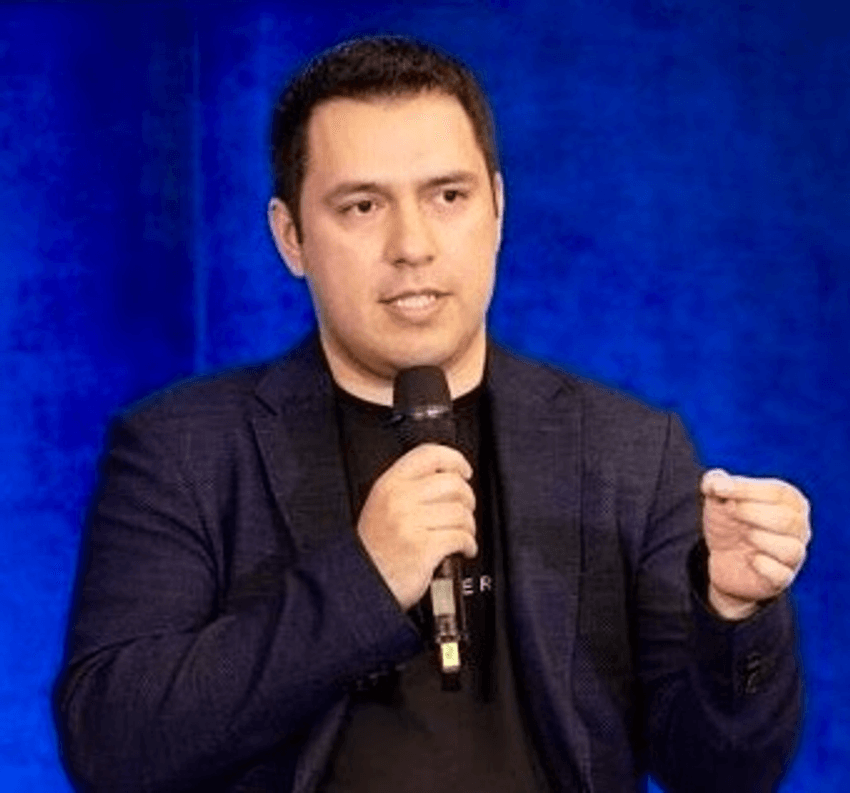
Eric Bennett’s scientific background spans brain-computer interfacing, optogenetics, microfluidics, DNA assembly, and bioprinting.
Credit: Frontier Bio
Bennett: Traditional 3D printing stacks layers of nonliving materials to create a shape. 3D bioprinting, by contrast, arranges living human cells and biocompatible gels into precise patterns under gentle conditions, allowing those cells to connect, form blood vessels, and develop tissue that can function in the body.
A crucial part of the process is cellular self-assembly. Here, cells sense their neighbors and the surrounding environment, then organize themselves into working microstructures, which is essential for creating fully functional, implantable tissues.
Frontier Bio has developed a new way to create lab-grown blood vessels. Can you explain how this manufacturing process works, what makes it different from traditional approaches, and how it can improve patient outcomes compared to purely synthetic grafts?
Bennett: Traditional vascular grafts today use purely synthetic, non-resorbable material with no cells at implant. They are never replaced with natural tissue and can often fail; for example, they have a 65 percent failure rate within two years when used as a bypass to treat peripheral artery disease.
Our blood vessel graft starts out partly synthetic and partly cell-based. Over time after implantation, the synthetic part dissolves and is replaced with cells and natural extracellular matrix (ECM). The process begins with 3D printing a mold and injecting a sacrificial, conductive material. The mold is then dissolved, leaving only the conductive material, which serves as a “collector” in the next step and already takes the desired blood vessel geometry. We then use thousands of volts to electrostatically coat nanofibers and sacrificial materials onto the collector. After post-processing, the conductive material is dissolved, along with the sacrificial components within the nanofibrous scaffold.
Once the scaffold is cleaned and sterilized, it can be stored for later use. In our in vivo work, the animal’s stem cells are isolated and seeded onto the scaffold, which is then immediately implanted. Over time, the cells proliferate and generate new ECM, eventually replacing the original scaffold with a blood vessel nearly identical to a natural one. Our method is fine-tuned to accommodate challenging geometries such as branched or tapered vessel scaffolds, while also optimizing properties like cell infiltration and adhesion.
We expect this tissue-engineered blood vessel to outperform purely synthetic grafts, achieving a much higher success rate — comparable to autografts — but available off the shelf without requiring an extra surgery. For creating tissues more broadly, our approach is to first mature perfusable blood vessels in a bioreactor, embed them into a cell-laden hydrogel, and guide self-assembly of tissue and microvasculature, eventually resulting in matured tissue that can be implanted.
Tissue engineering relies heavily on stem cells and self-assembly. Are there biological limits to how large or complex you can make these organs?
Bennett: Limits today are primarily due to oxygen and nutrient diffusion. Without perfusable vessels, oxygen and nutrients cannot reach cells, and lab-grown tissues die quickly if they are more than a few hundred microns from a vessel. Many approaches have tried to address this by creating holes or tubes in hydrogels that can be perfused with nutrient- and oxygen-rich media, or by using low cell densities to maximize diffusion.
At Frontier Bio, we are aiming to replicate true tissue characteristics, meaning perfusable vasculature made of living cells (not just a void within a hydrogel), supporting a high density of cells that have self-assembled into a functioning construct. By combining printed macro-scale geometry with self-assembled micro-scale architecture, we will eventually be able to create organ-scale constructs. Once the vascular foundation is in place, there is no inherent limit to size.
Your lung model develops bronchioles, alveolar sacs, and even beating cilia — how close does this bring us to creating a fully transplantable lung?
Bennett: These constructs are important steps towards fully transplantable lungs. However, key gaps remain: Scaling to full organ size, improving durability, building a continuous airway tree, and integrating a perfusable vascular network for gas exchange. Fully implantable lungs are still years away, but this work addresses some of the hardest challenges. In the near term, our clinical focus is on implantable blood vessels, since reliable perfusion is the foundation for every organ.
Many of your innovations replicate disease states — from aneurysms to pulmonary fibrosis. Could this shift preclinical testing toward patient- or disease-specific tissue models?
Bennett: Yes, animal preclinical studies often fail to predict human outcomes. Our lab-grown human tissues offer a human-relevant alternative. A key application is creating disease-specific models from patient-derived cells to test interventions more accurately.
Can you discuss any case studies or patient outcomes that highlight the real-world benefits of your technology?
Looking further ahead, our blood vessels are the master key to creating tissues that could end the organ transplant waitlist. Patients would no longer die waiting years for a matching donor, nor would they need to suppress their immune system after receiving an implanted organ. We’re excited about the potential to extend both healthspan and lifespan through replacement tissues.
– Eric Bennett
Bennett: Early in vivo data in a porcine carotid model show that our cellularized vascular graft remained patent and endothelialized without any adverse events such as infection or thrombosis. The eventual clinical significance will mean fewer complications and better outcomes for patients needing bypass, trauma reconstruction, or dialysis access.
Looking further ahead, our blood vessels are the master key to creating tissues that could end the organ transplant waitlist. Patients would no longer die waiting years for a matching donor, nor would they need to suppress their immune system after receiving an implanted organ. We’re excited about the potential to extend both healthspan and lifespan through replacement tissues.
Looking beyond Frontier Bio, what other emerging technologies or scientific approaches in longevity are you most excited about, and why?
Wang: Immortal Dragons supports radical life extension technologies that are overlooked by traditional venture capital but hold transformative potential. Our investment philosophy stems from a shocking reality: Of the more than 1500 medical conditions documented by the Mayo Clinic, over 700 are labeled as "incurable," "uncontrollable," or merely "manageable." This drives our commitment to moonshot technologies that prioritize impact over financial returns. We focus on three core pathways to longevity:
- Artificial wombs: Historically developed to protect preterm infants, artificial wombs represent a promising path to ectogenesis. We believe that fully ex utero fetal development could eliminate risks associated with natural pregnancy, surrogacy, stillbirth, and preterm birth.
- Whole-body replacement and xenotransplantation: These approaches offer radical interventions against aging. Rather than managing disease, we invest in technologies that prevent and eliminate dysfunction by replacing compromised body components entirely.
- Gene therapy: The success of COVID vaccines demonstrates that gene therapy is already part of our reality, not a distant prospect. With safe and effective delivery vectors, gene therapy opens the door to interventions for diseases that were once undruggable or incurable.
Our approach represents a shift from sick care to prevention and radical intervention — targeting the elimination of age-related conditions rather than simply managing them.
This interview has been condensed and edited for clarity.