For decades, targeting the WNT signaling pathway in cancer has eluded drug developers. That’s because while it’s a crucial pathway that drives uncontrolled cell division and tumor growth, it’s also essential in maintaining homeostasis in normal healthy tissues. Thus, any therapeutic that targets WNT and harms cancer cells also harms healthy cells, leading to severe toxicity and intolerable side effects in preclinical models.
For example, a common strategy has been to target a pair of enzymes that regulate the WNT pathway, TNKS1 and TNKS2. But earlier work with dual inhibitors led to gastrointestinal damage in animal models.
Now, Lukas Dow’s lab at Weill Cornell Medicine may have found a surprising way around these harsh side effects. His lab first built genetic tools to silence TNKS1 and TNKS2 independently of each other rather than silencing both. “When we started using them in cancer cell lines we noticed something unexpected: In some cases, suppressing TNKS2 alone was sufficient to suppress WNT,” Dow told DDN.
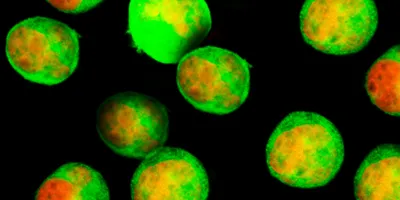
In a new paper published in Nature Chemical Biology, Dow’s team generated a first-in-class TNKS2 inhibitor and showed that it successfully inhibited WNT signaling in TNKS1-deficient cell and organoid models.
Targeting cancer cells only
As part of the new work, Dow’s lab demonstrated that a genomic loss of TNKS1 sets up the cancer cells to be dependent upon TNKS2, which allows the TNKS2 selective inhibitor to shut down the WNT pathway — without affecting TNKS1-expressing healthy cells.

The reason that some cancer cells naturally have a loss of TNKS1, Dow said, is because of a relatively common deletion on the short arm of chromosome 8, which houses the TNKS1 gene. These 8p deletions frequently happen in colorectal cancer — where targeting the WNT pathway is crucial, as WNT hyperactivation in the tumor is almost universal — as well as breast, lung, liver, prostate, and ovarian cancers. “In theory, the potential scope is quite broad, though the importance of WNT signaling as a target in these cancers is less well established,” said Dow.
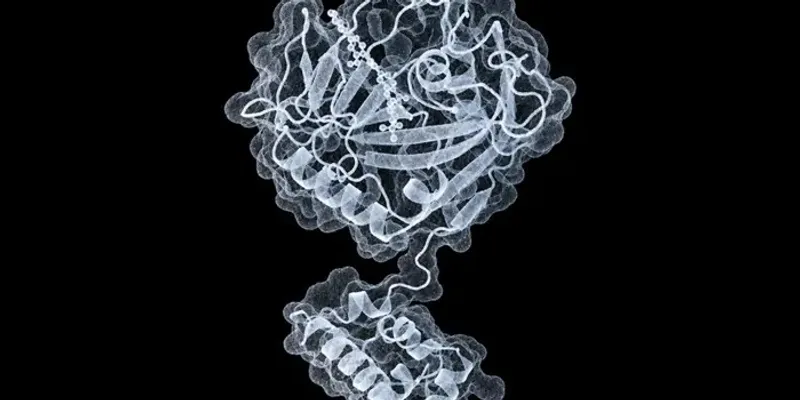
Finding the TNKS2-selective small molecule drug was a challenge, however, because the active sites of TNKS1 and TNKS2 look nearly the same. “The key was a flexible loop in TNKS2 that behaves differently from the corresponding loop in TNKS1. Designing small molecules that exploit the conformational flexibility of the TNKS2 loop, ultimately led to our lead compound, TDI-012804,” said Dow.
Optimizing the compound
Dow’s team is hopeful they will eventually bring this new strategy to clinical trials for patients, but not with the current compound. He explained they plan to improve the drug-like properties while keeping the efficacy of TNKS2 inhibition in place. “The current lead compound is not optimized for in vivo testing, so clinical use is a long way in the future and would depend on successful development of modified compounds,” said Dow.
But finding a potential new way to target the WNT pathway without toxicity is already a step in the right direction for a target that the field has wanted to hit for many years. Current estimates suggest that the market for WNT inhibitors could reach $1.86 billion by 2032.
“The initial identification of a cancer-specific vulnerability hiding in plain sight was an exciting moment,” said Dow.