The viruses that make up the orthoparamyxovirus subfamily — which includes the reemerging measles virus, the highly-lethal Nipah virus, and human parainfluenza virus types 1 and 3 (HPIV1 and HPIV3) that cause high mortality in vulnerable stem cell transplant patients — are extremely contagious and largely have no approved antiviral treatments.
That could soon change. New research by Richard Plemper’s lab at Georgia State University led to the development of a new oral antiviral drug candidate that could broadly treat multiple orthoparamyxovirus viruses, including HPIV3 and measles. The work was published recently in Science Advances.
Based on encouraging results in both rodents and non-rodent animal models, the advance could lead to a promising therapeutic option for the estimated three million annual cases of HPIV in the US that require treatment. Given that progression to pneumonia typically occurs over several days, an effective oral antiviral could also provide a clinically meaningful window to prevent serious complications.
The new oral antiviral, known as GHP-88310, could also offer a much-needed option to treat measles in the midst of increasing endemic transmission in the US and throughout the world due to vaccine hesitancy.
Plemper told DDN that the most exciting part of identifying the compound was seeing the “broad-spectrum activity across major pathogens of multiple orthoparamyxovirus genera, which is very unusual for a well-behaved non-nucleoside polymerase inhibitor such as GHP-88310 and demonstrates that this compound binds to a highly conserved druggable target site.”
Finding a better drug
Before finding GHP-88310, the team identified a non-nucleoside inhibitor class of the paramyxovirus polymerase. However, the drug was not well tolerated in higher mammals like ferrets. Given the need for this medication to be used in pediatric and immunocompromised patients, the drug candidate must have high tolerability.
To address the tolerability problem, the scientists developed GHP-88310, a chemical analog of the original screening hit. GHP-88310 was very well tolerated in ferrets and dogs even at daily doses in ferrets exceeding 2000mg/kg body weight. And, Plemper noted that it came as a surprise that GHP-88310 was not only much better tolerated but also even more efficacious against HPIV3 and measles in rodents and non-rodents than the original screening hit, as well as in human airway epithelium organoids — and suitable for once daily oral administration.
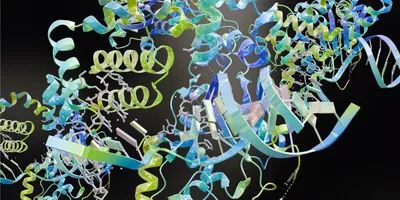
The drug works by targeting the central cavity of the viral P-L polymerase complex, which prevents the virus from being able to replicate.
Hope for measles outbreaks
An oral therapeutic can be rapidly administered to outpatients, enjoys higher patience compliance than injectables, and is therefore suitable for outbreak control through pre- and postexposure prophylaxis of social contacts of an index case in addition to providing direct therapeutic benefit.
—Richard Plemper, Georgia State University
With measles outbreaks on the rise that have put the US in imminent danger of losing its measles elimination status, a novel antiviral treatment could not come soon enough. Typically, the strategy public health officials use to contain regional measles outbreaks is known as ring vaccination, in which direct and social contacts around an infected person are vaccinated. Yet, with increasing vaccine hesitancy in some population groups, ring vaccination is no longer a viable option in some communities.
A drug like GHP-88310 could therefore be the next best thing. “An oral therapeutic can be rapidly administered to outpatients, enjoys higher patience compliance than injectables, and is therefore suitable for outbreak control through pre- and postexposure prophylaxis of social contacts of an index case in addition to providing direct therapeutic benefit,” said Plemper.
His team now has plans to advance the drug into formal preclinical development and prepare an Investigational New Drug (IND)-enabling safety package, moving closer to their goal of finally getting a broad antiviral option for a variety of orthoparamyxoviruses.