News

Single-cell sequencing data shows how pancreatic cancer tumors evolve to resist therapy

The multi-omics data on nearly half a million tumor cells showed that even cells with almost identical genetic makeup can show radically different behavior.
Written byAllison Whitten, PhD
| 2 min read
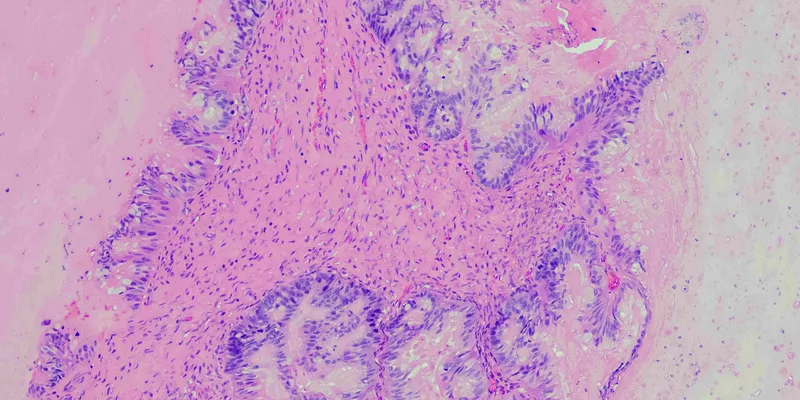
A microscopic view of pancreatic ductal adenocaricoma.

Pancreatic ductal adenocarcinoma (PDAC) has a five-year relative survival rate of just 13 percent in the US.

Credit: iStock.com/OGphoto

Register for free to listen to this article
Listen with Speechify
0:00
2:00

One abnormal cell is all it takes to kickstart cancer development. The cell acquires genetic mutations and then multiplies uncontrollably into clone cells that share nearly identical genes.

But, according to new research led by Diane Simeone of University of California, San Diego and Aristotelis Tsirigos’ of New York University. these clone cells don't behave like clones in the very aggressive pancreatic ductal adenocarcinoma (PDAC). In a new paper published in Nature Genetics, the researchers used single-cell RNA sequencing on 443,451 cells taken from 65 PDAC tumors, with 11 tumors that also had matched spatial transcriptomics. Their team showed that the clone cells behaved differently from one another, with some edging out others in their ability to resist treatments and some being more likely to spread and metastasize.

“Our work shows that within a single tumor, different clones are evolving in parallel, taking on different identities and interacting with the immune and stromal landscape in distinct ways. That heterogeneity is why the disease is so hard to treat, because every tumor is unique,” said Simeone in the press release.

A single-cell view

The new work offers an unprecedented view into PDAC with the focus on single cells instead of bulk tissue. That allowed the researchers to see for the first time how cancer cells shift between the less aggressive classical subtype and more aggressive basal type with help from the MYC oncogene.
Continue reading below...
A 3D illustration of two sphericaA 3D illustration of two spherical cells in close contact, with glowing blue nuclei and additional out-of-focus cells in the background.l cells in close contact, with glowing blue nuclei and additional out-of-focus cells in the background.
Application NoteRevealing cell-cell interactions in immuno-oncology
Imaging-enabled flow cytometry helps distinguish biologically relevant cell-cell interactions from coincident events to support immunotherapy research.
Read More

“We showed that there is not a clear distinction between classical and basal pancreatic cancers, but that most tumors are heterogeneous and contain both classical and basal cells intermixed. Phylogenetic trees were created from each tumor, and it appears that classical cells can transition to basal cells in some cases, and requires MYC amplification and immune suppression,” Simeone told DDN.

When the researchers blocked MYC activity, the cells returned to the classical form.

They also found that clone cells were found both in clusters together and dispersed throughout tumors, with the “dispersed cells being the ones that we find to metastasize to regional lymph nodes,” explained Simeone.

Targeted treatments

With this new understanding of clonal heterogeneity and how these cells evolve in PDAC tumors, the scientists are shining a light on how to better design treatments to target them.

“We are now extending this work into analysis of paired biopsies from PDAC patients on Ras inhibitors, to begin to better dissect mechanisms of response/resistance,” said Simeone.

But the work won’t stop there. “The most exciting part of the work is the incredible large data set that is suited to answer a broad array of questions in the field,” she said.

Add Drug Discovery News as a preferred source on Google

Add Drug Discovery News as a preferred Google source to see more of our trusted coverage.

About the Author

  • Allison Whitten

    Allison Whitten earned her PhD from Vanderbilt University in 2018 and continued her scientific training at Vanderbilt as a National Institute of Biomedical Imaging and Bioengineering (NIBIB) Postdoctoral Fellow. Her PhD and postdoctoral studies investigated the neurobiological causes of language impairments in neurological disorders. In 2020, she was awarded an AAAS Mass Media Fellowship to write for Discover Magazine. Her work has also appeared in WIRED, Quanta Magazine, Ars Technica, and more. 

    View Full Profile

Here are some related topics that may interest you:

Loading Next Article...
Subscribe to Newsletter

Subscribe to our eNewsletters

Stay connected with all of the latest from Drug Discovery News.

Subscribe

Sponsored

Scientists in a laboratory conducting pharmaceutical research using laboratory equipment and analytical instruments.
Explore a strategic guide to IND-enabling nonclinical development for small molecules and biologics.
Digital illustration of a human brain composed of glowing neural connections, surrounded by colorful, blurred lights against a dark blue background.
Discover how researchers are looking beyond individual neurons to understand how genetic variations shape activity across brain organoid networks.
3D illustration of a Y-shaped antibody with pink and blue molecular structures against a blurred pink and purple background.
Explore how dual binding assays reveal interactions between bispecific antibodies and their targets, providing insights into binding behavior and antibody function.