



- Key takeaways
- How the conventional seed train works and where N-1 perfusion changes it
- What cell densities does N-1 perfusion achieve and how does that change the production bioreactor?
- Equipment and process control requirements for N-1 perfusion
- How is the N-1 CSPR set and controlled during the perfusion phase?
- Integration with intensified fed-batch and continuous production
- What regulatory and analytical considerations apply to N-1 perfusion?
N-1 perfusion runs the final seed train stage in continuous perfusion mode to generate an inoculum at cell densities that conventional batch seed trains cannot reach. By inoculating the production bioreactor at 3 to 10 times the density of a conventional batch seed, N-1 perfusion compresses the production timeline, eliminates one or more upstream seed stages, and improves production bioreactor performance from the first day of the run.
Key takeaways |
|
|
|
|
|
For the bioreactor hardware context in which N-1 perfusion operates, see the related article on perfusion bioreactors for high-density cell culture. For the cell retention technology that enables N-1 perfusion without cell loss, see the related article on integrating alternating tangential flow in upstream processing. For the full process intensification overview, see mastering process intensification and continuous bioprocessing.
How the conventional seed train works and where N-1 perfusion changes it
A conventional seed train for a commercial-scale CHO biopharmaceutical process moves cells from a frozen vial through a series of increasingly large bioreactors, with each stage run as a batch culture until the required biomass density is reached for inoculation of the next larger vessel. A typical commercial seed train might progress from the frozen vial through a shake flask, then a 2-liter bioreactor, a 20-liter bioreactor, a 200-liter bioreactor (the N-1 stage), and finally into the 2,000-liter production bioreactor (the N stage). Each batch stage ends when the culture reaches a viable cell density that is adequate to inoculate the next vessel at the target seeding density.

The fundamental limitation of a batch seed train is that each stage can only accumulate biomass to the point where nutrient depletion and waste product accumulation inhibit further growth. In a conventional batch N-1 bioreactor, the maximum viable cell density at harvest is typically 8 to 15 million cells per milliliter before viability begins to decline. This constrains the inoculation density at the production bioreactor to the ratio of the N-1 volume to the N volume, multiplied by the N-1 harvest density. A 200-liter N-1 bioreactor harvested at 10 million cells per milliliter into a 2,000-liter production bioreactor gives an inoculation density of 1 million cells per milliliter.
N-1 perfusion breaks this constraint by continuously supplying fresh nutrients and removing waste products from the N-1 bioreactor, allowing cell density to grow far beyond the batch ceiling. Research from Boehringer Ingelheim confirming that perfusion processes can reach over 100 million cells per milliliter, allowing the biomass generation of several sequential batch pre-stages to be combined into one perfusion stage, demonstrated N-1 perfusion at 4-liter and 20-liter pilot scale achieving peak cell densities up to 45 million cells per milliliter within six process days. When that density is achieved in the N-1 bioreactor, the production bioreactor can be inoculated at 4.5 million cells per milliliter instead of 1 million cells per milliliter, a 4.5-fold increase in inoculation density from the same N-1 vessel volume.
What cell densities does N-1 perfusion achieve and how does that change the production bioreactor?
The cell density achievable in an N-1 perfusion stage depends on the duration of the perfusion run, the CSPR, and the quality of the perfusion medium. Research on N-1 perfusion platform development using a capacitance probe confirmed that in-line capacitance measurements correlated linearly with offline viable cell density up to 130 million cells per milliliter across six different mAb-producing CHO cell lines, establishing this density as an experimentally validated operating ceiling for N-1 perfusion cell density monitoring. Practical N-1 perfusion processes typically target 40 to 80 million cells per milliliter as the harvest density for production bioreactor inoculation, because above this range the CSPR required to prevent nutritional limitation and waste product accumulation approaches one vessel volume per day, creating a high media consumption rate.
The impact of high-density inoculation on the production bioreactor is the primary productivity benefit of N-1 perfusion. Research on N-1 semi-continuous transient perfusion in shake flasks for ultra-high density seeding confirmed that seeding at ultra-high densities above 10 million cells per milliliter improves cell culture performance by shortening the production timeline and achieving higher final product concentrations. When the production bioreactor is inoculated at high density, the cell growth lag phase is eliminated or substantially shortened, the culture reaches the high-productivity phase faster, and the total bioreactor occupancy time per batch is reduced.
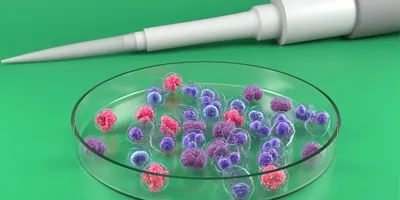
For intensified fed-batch production, the high inoculation density also enables a different cell density trajectory during the production run. A conventionally seeded fed-batch bioreactor must grow through multiple doublings before reaching the peak density at which maximum volumetric productivity is achieved. An N-1 perfusion-seeded intensified fed-batch bioreactor may be inoculated close to the target production density, reaching maximum productivity at or near the start of the fed-batch phase rather than days into the run. This changes the feeding strategy, the dissolved oxygen management strategy, and the control logic for the production bioreactor.
Dimension | Conventional batch seed train | N-1 perfusion seed train |
N-1 harvest cell density | Typically 8 to 15 million cells per milliliter; bounded by nutrient depletion and inhibitory metabolite accumulation in batch culture | 40 to 100 million cells per milliliter achievable; not bounded by nutrient depletion because spent medium is continuously removed and fresh medium supplied |
Production bioreactor inoculation density (10:1 volume ratio) | 0.8 to 1.5 million cells per milliliter; culture must grow several doublings before reaching productive cell density | 4 to 10 million cells per milliliter; production phase may begin within 1 to 2 days of inoculation rather than after 4 to 5 days of growth phase |
Number of seed train stages | Typically 3 to 4 sequential batch stages: N-3 (shake flask or small bioreactor), N-2, N-1, then N production | Typically 1 to 2 batch stages (N-2 or earlier), then N-1 perfusion eliminates the remaining batch pre-stages; total seed train stages reduced by 1 to 2 |
Seed train calendar time | Typically 14 to 21 days from vial thaw to production inoculation; determined by sequential doubling time and batch stage durations | N-1 perfusion phase runs 7 to 14 days; total seed train time may be similar to conventional but eliminates intermediate stages; schedule flexibility improved by continuous CSPR control |
Production bioreactor titer improvement | Baseline: determined by cell line productivity, media, and fed-batch strategy | Titer improvements of 20 to 50% reported in intensified fed-batch with high inoculation density from N-1 perfusion; shorter growth phase gives more time in productive state within same batch duration |
Equipment and process control requirements for N-1 perfusion
N-1 perfusion requires the same bioreactor as a conventional N-1 batch stage, with the addition of three elements: a cell retention device that separates spent medium from the cell-containing culture and removes the spent medium while recycling or retaining the cells; a perfusion medium supply system that delivers fresh medium at the required CSPR as density increases; and a process control system that monitors cell density in real time and adjusts the perfusion rate accordingly.
The most widely used cell retention technologies for N-1 perfusion are alternating tangential flow filtration and tangential flow filtration. ATF systems cycle the culture through a hollow fiber membrane in alternating flow directions, preventing membrane fouling and allowing the high-density culture to be maintained for the full duration of the N-1 stage. TFF systems apply tangential flow unidirectionally through a membrane, which is simpler but requires more careful membrane management at high cell density. Centrifuge-based cell retention is used in some N-1 implementations, particularly for scale-up above 500 liters where hollow fiber membrane area would be limiting.
For the membrane engineering and design details of ATF systems used in cell retention, including hollow fiber membrane selection, module design, and fouling prevention, see the related article on ATF filtration mechanics and membrane design for high-density continuous cell culture. The upstream productivity and process integration angle of ATF in N-1 and production perfusion contexts is covered in the related article on integrating alternating tangential flow in upstream processing.
Single-use rocking bioreactors are commonly used for N-1 perfusion at development and clinical manufacturing scale because they are available with integrated hollow fiber membrane cell retention ports, providing a ready-made platform for N-1 perfusion without requiring custom assembly of a stirred-tank bioreactor with a separate ATF system. At commercial scale, single-use stirred-tank bioreactors with external ATF or TFF circuits are more common because they provide better mixing characteristics and oxygen transfer at the high cell densities that commercial N-1 perfusion targets.

How is the N-1 CSPR set and controlled during the perfusion phase?
The CSPR for N-1 perfusion is set based on the nutritional requirements of the cell line at the target cell density range, the waste product generation rate at those densities, and the osmolality constraints of the perfusion medium. Research implementing N-1 perfusion with online CSPR control via capacitance measurement used a CSPR of 50 picoliters per cell per day in a single-use rocking bioreactor N-1 perfusion stage, controlling perfusion rate based on real-time viable cell count from a capacitance probe. At this CSPR, the N-1 perfusion stage provided adequate nutritional support for exponential cell growth without accumulating inhibitory levels of lactate or ammonium at the target cell densities.
Capacitance-based cell density monitoring is the standard approach to automated CSPR control in N-1 perfusion because it provides real-time viable cell density measurement non-invasively through the bioreactor wall, without requiring sampling or physical contact with the culture. As the N-1 perfusion culture grows exponentially, the capacitance signal increases proportionally, and the control system increases the perfusion pump rate to maintain the target CSPR. Without this automated control, maintaining adequate nutrition as density increases requires frequent manual sampling and pump rate adjustment, which is impractical over a 10 to 14-day N-1 perfusion run.
The CSPR used in N-1 perfusion is typically higher than the CSPR used in continuous production perfusion, because the N-1 objective is rapid cell density accumulation rather than steady-state productivity at a fixed density. A production perfusion might target a CSPR of 15 to 25 pL/c/day to maintain steady-state density at minimal media consumption. An N-1 perfusion stage might use a CSPR of 40 to 60 pL/c/day to support the higher specific growth rate of cells growing exponentially toward the target inoculum density, and to prevent the metabolic inhibition that would reduce the growth rate and viability of the inoculum.
Integration with intensified fed-batch and continuous production
N-1 perfusion is most commonly integrated with an intensified fed-batch production stage, where the high inoculation density from N-1 perfusion enables a fed-batch process to start at high cell density and reach productive density faster than a conventionally seeded batch. The production stage is still batch-operated, with a defined medium and feed strategy, but the starting cell density is substantially higher than a conventional fed-batch inoculation. This configuration captures much of the productivity benefit of process intensification while limiting the continuous manufacturing commitment to the N-1 stage only.
Integration with a continuous perfusion production stage requires that the N-1 perfusion density target be high enough to inoculate the production perfusion bioreactor at its target steady-state density from the beginning of the run, or close to it. Starting a production perfusion bioreactor at low density requires a growth phase during which the production perfusion is not at steady state, complicating the process control and the timing of the bleed rate and harvest initiation. N-1 perfusion inoculation at high density compresses or eliminates this startup phase.
The economics of using N-1 perfusion as the seed stage for an intensified fed-batch or continuous perfusion production stage are addressed in the related article on the economics of process intensification. The custom media requirements for an N-1 perfusion stage, including how CSPR and amino acid balance are optimized for rapid cell density accumulation rather than steady-state production, are addressed in the related article on custom media development for continuous cell lines.
What regulatory and analytical considerations apply to N-1 perfusion?
N-1 perfusion introduces a perfusion stage into a seed train that regulatory filings typically describe as a series of batch stages, which requires that the N-1 perfusion process be characterized and documented to the same standard as the production stage in terms of critical process parameters, operating ranges, and in-process controls. The CSPR, the viable cell density at transfer, the viability threshold for acceptable inoculum, the perfusion medium specifications, and the cell retention device configuration are all process parameters that affect inoculum quality and must be defined and justified in regulatory filings.
The inoculum quality attributes that are released before production bioreactor inoculation typically include viable cell density, cell viability above a minimum threshold, absence of contamination, and pH within the specified range. For N-1 perfusion inoculum, additional quality attributes may include verification that the perfusion has maintained adequate nutrient conditions throughout the run, typically confirmed by glucose and lactate concentrations within specified ranges at the time of transfer.
Analytical monitoring of the N-1 perfusion stage is more intensive than for a conventional batch N-1 stage because the process runs for a longer duration and the cell density changes continuously throughout. Daily or twice-daily at-line measurements of viable cell density, viability, glucose, lactate, glutamine, and ammonium are standard practice in N-1 perfusion development and manufacture. Capacitance-based real-time VCD monitoring supplements these off-line measurements with continuous process data that supports CSPR control and provides the real-time state awareness needed to detect and respond to deviations during the 7 to 14-day perfusion run.
This article was produced under Drug Discovery News' AI Editorial Guidelines.





