High-performance biomarkers are essential across drug discovery and development, through clinical trials and regulatory review. Historically, biomarker development has been a challenging and cumbersome task, with the result that biopharma scientists often rely on a limited number of well-established biomarkers.
But the advent of multiplexing technologies has streamlined the biomarker discovery and characterization process, providing access to a universe of biomarkers that might otherwise have remained out of reach. These tools have made it possible to study dozens or even hundreds of molecules at once, generating reams of data for a more thorough understanding of each prospective marker.
With proper vetting, these biomarkers could play important roles in disease characterization, target discovery and validation, analysis of candidate drugs, evaluation of drug performance in preclinical and clinical studies, and selection of clinical trial participants. Collectively, these uses could improve the success rate of advancing therapeutic candidates from concept to clinic, while enabling earlier elimination of low-confidence leads.
That’s a tremendous amount of benefit from something as simple as multiplexing technology for biomarker analysis. The ideal platform should allow scalability and flexibility while remaining responsibly cost-effective.
The rise of multiplexing
Early-stage drug discovery scientists are no strangers to multiplex biomarker assays. These tools have been used for years to elucidate disease biology, identify and characterize novel targets, and define biomarkers for downstream stages of drug development. Multiplexing technologies have been critical in drug discovery for a wide range of therapeutic products, including vaccines, small molecule therapies, and antibody-drug conjugates, among many others.

Multiplexing assays are increasingly used across the drug development pipeline, from preclinical research through to later-stage development and clinical studies. In preclinical settings, in particular, they enable scientists to generate richer datasets on dosage and toxicology from limited animal models. By querying dozens or even hundreds of markers simultaneously for a more complete view of biology, these assays increase the informational value of each animal used — and may also help reduce the number required in a given study.
The same approach is important for early-stage clinical studies, where human samples must be used sparingly, and scientists typically have to scrutinize the potential value of each biological question they ask. More often than not, researchers wind up paring back the number of markers queried at this stage simply because there is not enough sample volume to enable serial testing of each marker.
Multiplexing technologies offer an entirely different value proposition, enabling researchers to ask as many questions as they want from a single low-volume sample. For instance, scientists can deploy a broad cytokine panel to adjust dosage levels during Phase 1 or 2 trials. Other classes of biomarkers can be used to flag off-target effects and even predict response to treatment. Even better, all of these large groups of biomarkers can be analyzed in a single multiplexing assay. This technique has been used extensively in vaccine testing studies, where multiplex assays are frequently used to evaluate vaccine induced immune responses.
Of course, the advantages of multiplexing biomarkers depend heavily on the chosen technology platform. Broadly, there are two main categories: planar arrays (also known as solid-phase assays) and bead-based assays. Planar arrays typically provide stronger multiplexing capabilities for nucleic acids, with more limited options for protein analysis. Their fixed format also means they cannot be easily modified by adding or removing biomarkers. In contrast, bead-based assays offer greater flexibility, as specific bead sets can be added or removed within the liquid suspension. This adaptability makes them well suited to workflows where assay content may need to change. Bead-based systems can also multiplex hundreds of biomarkers in a single run.
How to implement multiplexing technology
Even with the opportunity to multiplex 500 different targets, biopharma scientists must be selective about the biomarkers they query during clinical-stage work. Establishing “context of use” is important, as it defines how and why a biomarker will be used. This step also requires a hypothesis about how the biomarker will increase, decrease, or otherwise change as a result of the study, as well as a plan for how that change will inform the current study or future investigations.
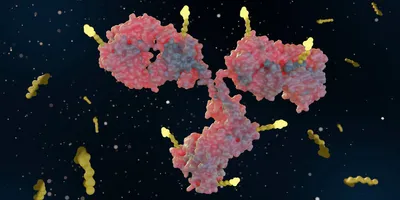
The choice of multiplexing technology depends on the type and number of biomarkers being measured. Protein and other molecular biomarkers can be assessed using planar or bead-based assays, while tumor size requires radiographic methods and physiological endpoints rely on dedicated measurement techniques.
All assays must be sufficiently robust not only to detect biomarkers, but also to quantify changes over time. In clinical studies, biomarker panels are typically smaller and more targeted than those used in discovery research. Nevertheless, highly scalable multiplexing platforms can still offer advantages in clinical settings, enabling continuity from early-stage discovery through to clinical studies and reducing the risk of measurement inconsistencies.
Because most pharma companies outsource clinical study data collection and analysis to external laboratories, another important point to consider is how specialized that technology is. Multiplexing platforms that are commonly available in contract labs are easier to source partners for, while niche technologies can be limiting if few labs have the required expertise and infrastructure. As a general rule, commercially available biomarker panels are easier for most laboratories to run than custom assays.
One final point is that if a biomarker is likely to be needed post-approval, for example as a companion diagnostic, the assay and underlying technology will require regulatory approval or clearance. Considering this early can help avoid costly and complex assay redesign later in development.
Biomarker multiplexing has already transformed early-stage drug discovery, and is now poised to deliver similar gains across preclinical and clinical development. This represents a clear opportunity to meaningfully improve the success rate of new drug development.