Cystic fibrosis (CF), first identified in 1938, affects multiple organs — most critically the lungs. Thick mucus buildup causes persistent infections and progressive lung damage.
As recently as 2010, half of all people with cystic fibrosis were not expected to live beyond 40, relying on daily mucus-clearing therapies, frequent hospitalizations, and, in severe cases, lung transplants.
Since then, advances have shifted the outlook.
This year, the 2025 Lasker-DeBakey Clinical Medical Research Award honors the scientists whose work combining molecular insights with high-throughput drug discovery technology transformed the disease into one compatible with near-normal lifespans.
From fatal prognosis to targeted therapy
The turning point came with the identification of the CFTR (cystic fibrosis transmembrane conductance regulator) gene in 1989. The most common mutation, ΔF508, is carried by nearly 90 percent of patients with CF.
This year, the 2025 Lasker~DeBakey Clinical Medical Research Award is recognizing Michael J. Welsh (University of Iowa), Jesús González (formerly Vertex Pharmaceuticals), and Paul A. Negulescu (Vertex Pharmaceuticals) for their roles in developing a triple-drug combination that has changed the course of CF.
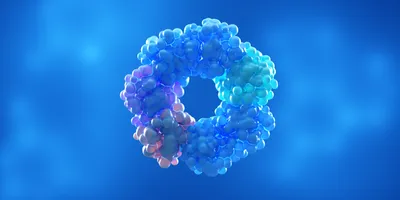
Their work was the first to show that the defective CFTR protein was not completely inactive, suggesting that drugs could potentially correct or enhance its function. Building on this insight, they developed a three-drug therapy combining correctors, which stabilize CFTR folding, and a potentiator, which improves channel opening, to restore protein function more effectively.

Fluorescent screening technology enables discovery
To translate these insights into medicines, researchers needed a way to measure CFTR activity inside living cells at scale.
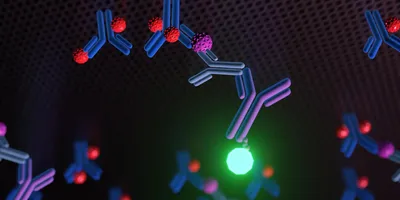
González developed a fluorescence resonance energy transfer (FRET)-based system that used paired dyes to report ion channel activity. When combined with automated robotics, the platform allowed screening of more than a million compounds in just two years.
Negulescu, who directed the CF project first at Aurora Biosciences and later Vertex Pharmaceuticals, guided the large-scale discovery effort. This structure-function-based approach led to two classes of compounds: potentiators, which improve channel opening, and correctors, which stabilize CFTR protein folding and trafficking.
A stepwise path to a triple-drug therapy
The first success came in 2012, when ivacaftor became the first FDA-approved therapy targeting the underlying cause of CF.
Subsequent approvals included Orkambi (lumacaftor/ivacaftor) in 2015, which paired a CFTR corrector with a potentiator to improve protein function, and Symdeko (tezacaftor/ivacaftor) in 2018, offering a better-tolerated corrector-potentiator combination.
The real breakthrough came with Trikafta (elexacaftor/tezacaftor/ivacaftor) in 2019, a triple therapy that further boosted CFTR activity. Clinical studies showed the regimen improved lung function, increased weight gain, reduced hospitalizations, and lowered the need for lung transplants.
Today, more than 90 percent of the 40,000 people with CF in the United States and at least 100,000 globally are eligible for CFTR-modulating therapies, with roughly 75,000 already taking them.
Children and adolescents who begin treatment are expected to live near-normal lifespans, a striking contrast to the historical trajectory of the disease.
Looking ahead
Beyond CF, the success of Trikafta highlights the potential for small-molecule therapies to correct protein misfolding and channel dysfunction in other genetic diseases. It also illustrates the power of sustained foundation-industry partnerships — as the Cystic Fibrosis Foundation’s early investment was pivotal in keeping the project alive.
As a result, a disease once synonymous with a shortened lifespan is now a model for how drug discovery can directly alter the natural history of genetic disorders.