For over a century, doctors and physicians have attempted to mobilize viruses to destroy tumors within the body. However, early attempts often harmed healthy tissues as well. Today, the field of oncolytic virus therapy has seen major successes — including the FDA’s 2015 approval of Amgen’s modified version of the herpes simplex virus type 1, talimogene laherparepvec (T-VEC), to treat unresectable metastatic melanoma.
Now, the next frontier in this space may focus on combining the powers of viruses with those of bacteria to create multi-organism therapies that can achieve better outcomes than single microbes could on their own. A new paper published in Nature Biomedical Engineering showed for the first time that viruses and bacteria can indeed work together to fight off small-cell lung cancer and neuroblastoma tumors in mice.
Led by Tal Danino’s lab at Columbia University, the team of researchers showed that genetically modified bacteria can sneak past antiviral antibodies to deliver a viral RNA genome into host tumor cells — that will only produce viral particles under the control of the bacteria — to selectively kill cancer cells and not healthy cells.
While the concept seems simple enough, the reality was far more challenging. Jonathan Pabón, a synthetic biologist at Columbia University and co-first author on the paper, said that they spent a significant amount of time first trying to answer the question, “Can you even create cooperation between microbial and viral platforms?”
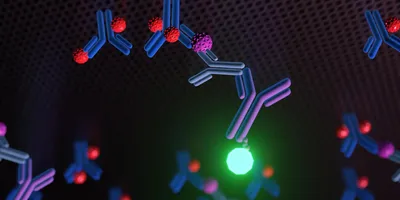
Due to the biological constraints of viruses, the team chose to use bacteria to deliver oncolytic viruses into tumors. “Bacteria are larger than most viruses and can incorporate more changes or edits to their genetic material,” said Pabón. With that goal in mind, they developed a system called the Coordinated Activity of Prokaryote and Picornavirus for Safe Intracellular Delivery, or CAPPSID for short.
CAPPSID works by using an attenuated version of Salmonella typhimurium — engineered to thrive only in tumor cells while avoiding a systemic immune response — to deliver the Senecavirus A RNA genome. The researchers co-opted S. typhimurium SPI-2 (Salmonella pathogenicity island 2) promoters to initiate the activation of particular genes in their system. These included genes encoding T7-RNA polymerase, which transcribes viral RNA, as well as lysis proteins that break down the cell wall of the bacteria to let the viral RNA release into the cytoplasm of the cancer cell and launch its attack.
“Since the virus is a positive-sense RNA virus that replicates inside the cytoplasm, it initiates its life cycle quickly after RNA release into the cytosol, with our work showing subsequent production of mature viral particles that can affect other nearby cancer cells,” said Pabón.
As proof of principle, the scientists also demonstrated that maturation of infectious viral particles can be controlled by bacteria-delivered proteins, presenting a novel therapeutic safety mechanism. Essentially, they built a kill switch into the oncolytic virus: Without the recombinant bacterial protease, the virus could not mature into an infectious particle, providing an added safety layer. “To date, no one has produced a bacterial system that can launch and control a virus itself,” said Pabón. “That is a very unique aspect of the system.”
Another unique benefit of a two-microbe system, Pabón explained, is that the bacteria and virus could kill off different subsets of cancer cells, leading to more cancer cells killed overall.
For now, just getting this system to work in the first place came as a surprise to Pabón. “It seemed much more like a pipe dream,” he said. “There was just failure upon failure upon failure at every step, but we persisted.”
Because they were able to successfully create CAPPSID, the team now plans to fine-tune it to make it possible to test in humans. One of the first things towards this objective involves removing the antibiotic resistance markers they used to keep the system stable. “Anything that goes into a human cannot start out with antibiotic resistance,” said Pabón.

They also plan to further their research on which viruses to use, as the Senecavirus A has gone through Phase 1 clinical trials and been shown to be safe, but it’s not clear how many types of cancer it could target. Based on their work in this study, it seems to kill off neuroendocrine-derived cancer cells, but the team wants to figure out whether they could use another virus that could treat a broader array of cancers. Right now, they’re studying the implementation of coxsackievirus for this purpose.
Fortunately, the CAPPSID platform appears to work well as a system with interchangeable parts. “We have found success after many years using one bacteria and one virus, but now that we have that strategy, and now that we optimized the mechanism, and now that we have it well characterized, we can start to play with it,” said Pabón. “It’s really just the first instance where we show that you can create cooperation between microbes to improve or overcome a clinical scenario. We hope that this leads to more studies.”
Pabón emphasized that all their work was made possible by advances in synthetic biology over the last 25 years, specifically the accumulated knowledge related to expressing an exogenous gene in a new synthetic system to achieve a certain behavior. “I think that we’re at a point where we can do such incredible sci-fi type work,” he said.