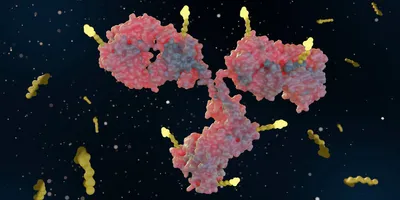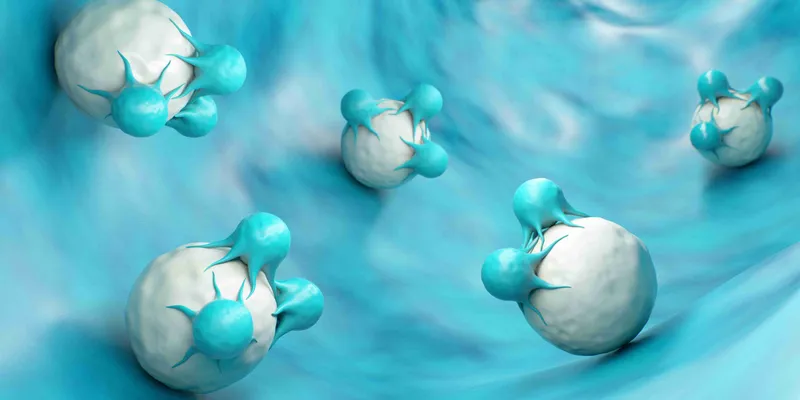
T cell receptor (TCR) therapy has a major advantage over the more widely known CAR T cell therapy: it goes beyond the cell’s surface to target tumor proteins that lie inside a cell. This makes it a particularly enticing approach for solid tumors where most of the tumor proteins remain on the inside.
Yet, TCR therapy falls prey to the same drawbacks as CAR T therapy — namely the fact that personalized treatments made from each individual’s cells can take weeks to engineer, and off-the-shelf approaches from healthy donors can lead to graft-versus-host disease (GvHD).
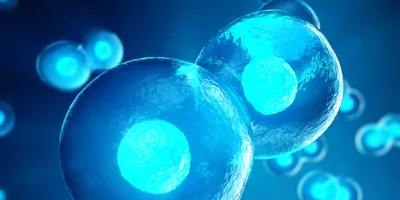
Now, scientists at the University of California, Los Angeles (UCLA) may have come up with a third approach that solves both issues. In a new paper published in Cell Reports Medicine, the researchers developed a next-generation in vitro method that generates antitumor T cells from stem cells taken from donated cord blood. Because these cells are immunologically immature, they are less likely to attack host tissues. And, they’re much more efficient to manufacture from a scalability perspective compared to personalized treatments.
“From a small number of cord blood stem cells, we can generate trillions of therapeutic cells -- enough for thousands of doses — within about six weeks," said Yanruide Li, a UCLA postdoctoral fellow in Lili Yang’s lab at UCLA and co-senior author on the paper, in the press release. "At an estimated $5,000 per dose, this approach would be far more accessible than today's therapies."
In mouse models of ovarian cancer and melanoma, the new therapy was shown to slow down tumor growth, extend survival — all with reduced GvHD responses.
T cells from cord blood
To generate the TCR therapy, called AlloESO-T cells, the research team introduced a receptor gene that identifies NY-ESO-1 (New York esophageal squamous cell carcinoma 1) found in many solid tumors.
Their results showed that a single dose of AlloESO-T cell therapy led to durable tumor control and longer lifespans in the mice, while mice that received the more traditional engineered TCR therapy from donor cells did not achieve full tumor control, and developed GvHD.
Importantly, the scientists also noticed that the AlloESO-T cells continued to increase about 100-fold and remained mostly in the tumors rather than healthy tissue — compared to the standard approach where the cells built up in the liver and lungs.
Plus, the AlloESO-T cells have a built-in fail safe that allows them to continue killing cancer cells that stop displaying NY-ESO-1. The researchers equipped the cells to have natural killer cell receptors that can spot stress signals from tumor cells.
"Some tumor cells lose or hide the antigen a therapy is designed to find — what we call antigen escape. When that happens, a therapy built around a single target loses its grip. Our stem cell-derived cells still have a second mechanism to kill those tumor cells,” said Yichen Zu, a graduate student in the UCLA Broad Stem Cell Research Center Training Program and co-first author on the paper, in the press release.
A ready-made product
The scientists hope that their new method will be expanded to treat all kinds of cancers. “We're not just presenting one therapy for one target. We want to share the platform itself," said Li. "As long as a receptor for a given cancer antigen has been validated, we can build it into this system and generate T cells specific to that target."
To move forward and continue scaling up the product, their team is partnering with the UCLA Health Center for Advanced Biotherapies to manufacture the cells.
"This platform brings us closer to a future where the product is already made, frozen and ready to go as soon as the patient needs," said Yang in the press release.