The goal of precision oncology is to deliver the right cancer treatment to the right patient at the right dose and at the right time. Advances in genomics have made this a reality, giving rise to targeted therapies, antibody-drug conjugates, and immunotherapies that exploit the unique molecular features of individual tumors. Yet despite increasingly sophisticated medicines, many patients still fail to respond as predicted.
The reason may not lie with the drugs themselves, but with the tests used to decide who receives them. “[The industry has] developed a lot of therapies that are marketed as being precise and personalized,” Richard Kuo, CEO of Wobble Genomics, told DDN. “But the application of those medicines has to happen through diagnostics, and I think that's where the gap is. That's the missing layer, and that's what we're trying to fill."
Imagine trying to understand an email after reading every third sentence or following a conversation where half the words have been removed. According to Kuo, that is effectively how cancer biology has been studied for decades. Researchers have learned an enormous amount from DNA and short-read sequencing, but these approaches provide only part of the picture.
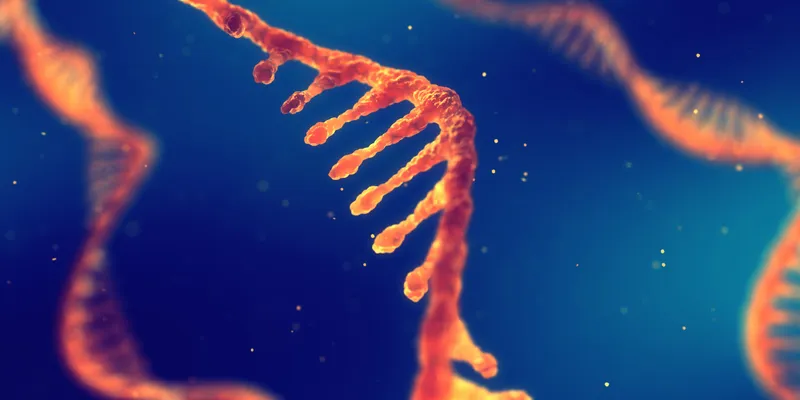
Wobble Genomics, a spin-off company from the University of Edinburgh, believes the missing piece lies in RNA. While DNA provides the genetic blueprint of a tumor, RNA reflects how that blueprint is being used, revealing which genes are actively being expressed, which protein variants are being produced, and how a cancer is functionally behaving.

Measuring a proxy rather than the target
I like to call RNA the primary phenotype of a cell. Genomically, almost all of our cells have the same DNA backbone, but they're all behaving differently. That's determined by how that DNA is transcribed into RNA.
—Richard Kuo, Wobble Genomics
Modern oncology has largely been built on DNA. Genetic sequencing reveals the mutations a tumor carries and has become the foundation for patient stratification and companion diagnostics.
But DNA represents possibility rather than activity. "I like to call RNA the primary phenotype of a cell," Kuo said. "Genomically, almost all of our cells have the same DNA backbone, but they're all behaving differently. That's determined by how that DNA is transcribed into RNA."
While current biomarkers have enabled the widespread adoption of targeted therapies, Kuo emphasized that they often measure signals that are only indirectly related to how those therapies actually work. "The biomarkers currently used in diagnostics typically don't directly measure the drug-binding site or the underlying biology that's required for response," he said.
One example of this is HER2-positive breast cancer. Patients are typically tested using immunohistochemistry to determine whether their tumors express the HER2 protein, with those testing positive becoming eligible for HER2-directed therapies such as trastuzumab. However, Kuo argued that while the test confirms HER2 is present, it cannot determine whether the tumor is producing the specific HER2 isoform that contains the drug-binding site required for trastuzumab to work.
That distinction becomes increasingly important as cancers evolve. Alternative RNA splicing can generate different protein isoforms, potentially altering the regions recognized by targeted therapies. Conventional biomarker tests may confirm HER2 expression but cannot necessarily determine which isoform is present. As a result, a patient could be given a drug that is designed to bind HER2 but cannot interact with this particular isoform, leading to ineffective treatment.
Reading the whole message
Measuring RNA provides a real-time snapshot of cellular behavior — including changes that may influence treatment response. However, conventional sequencing approaches have relied predominantly on short reads, reconstructing transcripts from fragments rather than observing complete molecules.
"RNA is a message," Kuo said. "In the past, we didn't really read the messages in their full length. We just took pieces of them and assumed we could understand what was being said. But that's not how messages work."
Wobble Genomics uses long-read sequencing technology to read complete RNA molecules, revealing alternative splice forms, fusion transcripts, and other structural changes that shorter sequencing methods can miss. This provides a more direct window into the biology that determines whether a therapy is likely to succeed.
In particular, Wobble's approach focuses on circulating long RNA (clRNA), full-length RNA molecules that can be recovered from a blood sample. Unlike DNA fragments released by dying cells, many of these RNA molecules are packaged within extracellular vesicles, which cancer cells use to communicate with neighboring cells and remodel their environment.
“By looking at circulating long RNA, we can identify which messages are coming from the tumor and begin to decode what the cancer is actually doing,” Kuo explained.
However, RNA molecules are fragile, degrade rapidly outside cells, and tumor-derived transcripts are often present at extremely low concentrations in blood. Existing enrichment approaches typically require researchers to know exactly which sequence they are looking for, making it difficult to capture unexpected isoforms or previously uncharacterized fusion transcripts.
To overcome this, Wobble developed its proprietary ATLUS enrichment technology, which targets a short conserved region of a gene while recovering the entire RNA molecule. Rather than searching for one predefined sequence, the approach is designed to capture the diversity of isoforms associated with a target gene.
Starting where clinical utility already exists
Although Wobble's broader vision is functional profiling of cancer, the company is initially focusing on fusion gene diagnostics.
Fusion genes already serve as established biomarkers for several highly effective targeted therapies, but their RNA transcripts can vary considerably between patients because of different breakpoints and splice patterns. Current panel-based tests may therefore fail to detect clinically relevant fusion variants.
In a recent white paper, the company reported that the ATLUS platform had a limit of detection below 0.05 parts per million, enabling the identification of extremely low-abundance clRNA biomarkers from a single blood draw. Additionally, the platform demonstrated 100 percent molecular specificity in the company's validation dataset, with no false positive detections of cancer-specific fusion transcripts.
These findings suggest that ATLUS can detect rare tumor-derived signals while maintaining confidence that identified biomarkers truly represent genuine cancer biology rather than background noise. This combination of sensitivity and specificity could be critical for liquid biopsy approaches intended to guide targeted treatment decisions, where both missing a clinically relevant fusion and incorrectly assigning a biomarker could have consequences for patient care.
The next phase of precision oncology
As targeted therapies continue to proliferate, selecting the right drug for the right patient is becoming as important as developing the drugs themselves. This requires diagnostic technologies that do more than simply detect mutations or confirm protein expression. They must provide a more complete picture of tumor biology, revealing whether a drug's target is functionally present, biologically active, and capable of responding to treatment.
If precision oncology is to fulfill its original promise, it's no longer enough to identify what a tumor is. The next generation of diagnostics need to reveal what that tumor is actually doing.
This article is part of The Spin-Off, a Drug Discovery News series that follows the journey from academic discovery to biotech company. From unexpected biological insights to first-in-class therapeutic approaches, university research often lays the foundation for the next generation of medicines. The Spin-Off follows the journey beyond the lab, examining the people, technologies, and translation challenges involved in turning scientific discoveries into biotech ventures.