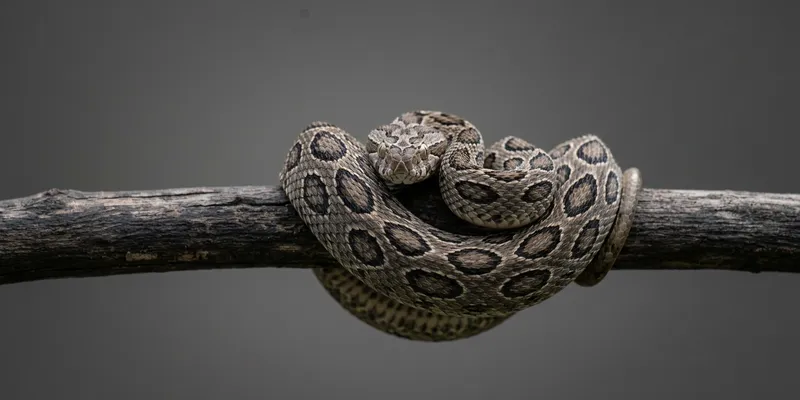
Snakebite envenoming kills between 80,000 and 140,000 people worldwide each year, and India alone accounts for roughly 58,000 of those deaths, disproportionately affecting rural agricultural communities.
Current treatment relies on antivenoms made by immunizing horses with venom, a decades-old approach that suffers from batch-to-batch variability, limited coverage of geographically distinct venoms, and risk of severe allergic reactions. In India, commercial antivenoms are formulated against the so-called "big four" snakes and often provide little protection against other clinically important species.
Now, a team of researchers from the Indian Institute of Science, the Technical University of Denmark, and Mizoram University has developed a recombinant antivenom made of five nanobodies that protected mice against lethal doses of venom from four medically important snake species in India, according to a new study published in Science Translational.
A closer look at the treatment
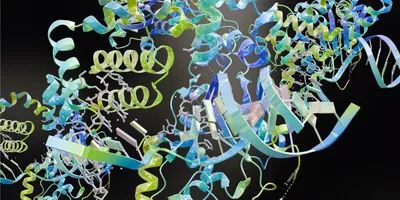
The new cocktail combines five nanobodies, or VHHs, single-domain antibody fragments derived from camelid immune systems, that target long- and short-chain alpha-neurotoxins, cytotoxins, and phospholipases A2, the toxin families that dominate cobra and king cobra venoms.
Anne Ljungars, one of the study's corresponding authors and a researcher at the Technical University of Denmark, told DDN in an exclusive interview that nanobodies bring several advantages over the polyclonal antibody mixtures used in conventional antivenoms. "Their small size may support rapid tissue penetration and is compatible with microbial expression, which creates opportunities for scalable and cost-efficient manufacturing," she said. Nanobodies also have a favorable safety profile, with a low risk of immunogenicity. In addition, because the antivenom's composition is precisely defined, it can also be rationally engineered and expanded to cover additional toxins —, in contrast to plasma-derived antivenoms, which require routine venom collection and horse immunization to produce.
In laboratory testing, all five nanobodies bound to venom from five populations of the spectacled cobra (Naja naja), two populations of the monocled cobra (Naja kaouthia), and both Indian king cobra species (Ophiophagus kaalinga and O. hannah). The mixture showed no detectable binding to unrelated antigens such as DNA, insulin, or human serum albumin, and it remained thermally stable and largely free of aggregation even after 16 hours at 40 degrees Celsius.
In mice, the cocktail prevented death in both a preincubation model, where venom and antivenom were mixed before injection, and a rescue model that more closely mimics a real snakebite, where the antivenom was given intravenously five minutes after a subcutaneous venom injection. Venom-only control animals died within 15 to 60 minutes depending on the experiment, whereas all treated animals survived the full 24-hour observation period.
The cocktail remained protective even when treatment was delayed by up to 20 minutes and when the antivenom dose was reduced to a 1:1 molar ratio with the toxins. The mixture did not protect against venom from the common krait (Bungarus caeruleus), consistent with that species' venom being dominated by beta-bungarotoxins, a toxin class the cocktail was not designed to target.
How the targets were chosen
The team focused on the toxin families primarily responsible for cobra and king cobra envenoming, and selected nanobodies that had already shown broad binding and neutralization against those families in other snake species. "All five nanobodies bound venoms from geographically diverse populations of spectacled and monocled cobras and both Indian king cobra species," Ljungars said, adding that combined with the functional and mouse-protection data, this suggests toxin surfaces important for neutralization are conserved enough across species for the same nanobodies to work broadly. She noted that these nanobodies had previously shown protection against African cobra, mamba, and rinkhals venoms as well, reinforcing that a shared toxin-family strategy can extend across geographically distant snake species, and, more broadly, that a single well-characterized nanobody library can be redeployed across multiple discovery programs rather than built from scratch each time.
The gap in krait protection, she said, illustrates the flip side of that strategy: breadth depends on targeting the right toxin families, and krait venom's heavy reliance on beta-bungarotoxins fell outside this cocktail's design.
What's left before the clinic
Ljungars said the next steps center on large-animal studies to characterize how the nanobodies distribute through the body, penetrate tissue, clear, and align with the toxicokinetics of venom itself, along with safety data.
Beyond snakebite treatment, the approach uses rationally designed nanobody cocktails to hit multiple related but non-identical targets at once, a strategy that could extend to other therapeutic areas where a family of related toxins, antigens, or disease-driving proteins needs to be neutralized together. The nanobody scaffold's compatibility with microbial expression also positions it as an attractive candidate for pipelines looking to cut manufacturing costs and timelines compared to traditional monoclonal antibody development.