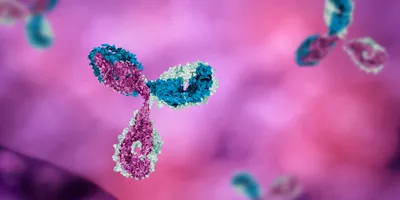
A 37-year-old man who once had no hope of receiving a matched donor kidney is now living dialysis-free with a new kidney that has excellent function. After spending 12 years on an organ waiting list, the joyful outcome came thanks to a new drug recently approved from Johnson & Johnson to treat multiple myeloma, called teclistamab. The drug is a bispecific T cell engager antibody that works by activating T cells and binding to B-cell maturation antigen (BCMA) on the target cells to tag them for destruction.
The drug drew the attention of kidney transplant researcher Georg Böhmig at the Medical University of Vienna because BCMA also exists on late-stage B cells and plasma cells, which produce antibodies. Antibodies — specifically human leukocyte antigens (HLA) — are the reason that the 37-year-old patient and others like him are no longer good candidates for organ transplant. Following two previous kidney transplants, the patient developed HLA sensitization, which means that the immune system synthesizes antibodies against HLA from another person. These preexisting HLA antibodies mean a much higher risk of rejecting another organ, as they can quickly attack a new donor organ, too.
“After decades of research, there has been no treatment that allowed for substantial and prolonged depletion of long-lived plasma cells, the major source of anti-HLA alloantibodies,” Böhmig told DDN.

For the first time, Böhmig’s team tested teclistamab in the patient to attempt HLA desensitization.
The results, published recently in the New England Journal of Medicine, were dramatic. “Detailed immunologic analyses revealed a reduction in HLA antibodies to an extent we had never seen before — by far more than 1,000-fold,” said Böhmig. “The recipient had five different donor-specific antibodies before teclistamab treatment. Treatment led to the complete disappearance of these antibodies.”
A surprising effect
The research team did not expect teclistamab to work so well in the patient. “The unprecedented efficacy was particularly surprising, as it allowed transplantation in a patient who had been on the transplant waiting list for more than 10 years,” said Böhmig.
The success is due to teclistamab’s ability to heavily deplete B cells as well as plasma cells in the bone marrow, which reduces antibody production.
However, the treatment is not without side effects. The patient experienced mild cytokine release syndrome as well as episodes of cytomegalovirus infection as a result of teclistamab leading to reductions in protective immunity to viruses.
“My major concerns are interference with adaptive immunity and an increased risk of infections,” said Böhmig.
The full analysis of the drug’s risks and benefits in the area of transplant medicine will need additional studies. However, the results certainly provide overwhelming proof of benefits in this one case study.
“The most exciting aspect was the patient's impressive clinical course and, of greatest importance, the unbelievable improvement in quality of life. With excellent graft function, the patient — a young man — is now able to enjoy his life,” noted Böhmig.
Hope for others still on waiting lists
With more research, teclistamab may be prescribed to help treat HLA sensitization in other patients with limited transplant options, too. However, Böhmig believes it will be relevant to a small subgroup of highly sensitized patients who do not respond to other current methods for desensitization, like imlifidase or apheresis. “Systematic clinical trials, however, will be necessary to clarify which patients would benefit most,” said Böhmig.
His research team now plans to focus on further investigating the potential of T cell engagers for organ transplantation beyond kidney transplants — and perhaps even xenotransplantation approaches, like organs from genetically modified pigs.
However, the present case study stands on its own as a significant scientific feat that forever changed a young patient’s life.
“The detailed immunologic evaluation of this case was a wonderful example of translational immunologic research, which has been one of the most important visions of my scientific work from the beginning,” said Böhmig.