The more compounds screened, the more targets validated, the more assay conditions tested — the better the odds that something meaningful will surface. For decades, that logic ran headlong into a practical ceiling: the capacity of human hands, human attention, and human consistency to execute the work.
That ceiling has not disappeared, but it has shifted. Laboratory automation — spanning liquid handling, sample movement, assay setup, and integrated data capture — has become the infrastructure through which modern discovery programs are built and scaled. It is no longer a productivity enhancement layered onto existing workflows. It is the foundation those workflows increasingly depend on.
The shift reflects a change in what discovery demands. Compound libraries have grown larger, biological models have grown more complex, and the expectation that data generated across sites, programs, and time points should be directly comparable has grown more pressing. Meeting those demands with manual processes is no longer feasible — not because automation is faster, though it often is, but because manual workflows introduce variability that undermines the very data they generate.
The limits of manual workflows
The reproducibility challenges facing biomedical research are well documented. A widely cited figure from the Center for Open Science puts the failure rate for drugs progressing from Phase 1 trials to final approval at around 90 percent, with inadequate replicability, transparency failures, and translational gaps between preclinical and clinical phases among the contributing factors. While no single cause explains that statistic, the quality and consistency of early experimental evidence plays a significant role in determining which candidates survive.
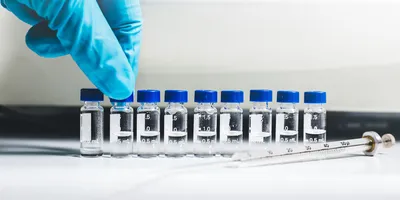
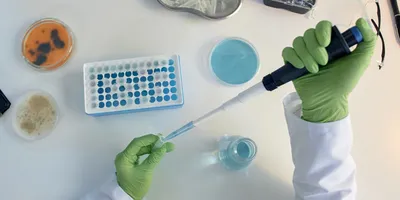
Manual laboratory workflows are a recurring source of that inconsistency. In high-throughput screening (HTS) — an integral component of early drug discovery that enables rapid testing of large compound libraries — variability arises from inter- and intra-user differences in pipetting, timing, reagent handling, and protocol execution. A 2023 peer-reviewed study published in the Journal of Mass Spectrometry and Advances in the Clinical Lab found that variations in manual pipetting exist across operators and across days, and that possession of a common skill such as pipetting — and understanding of a technique — cannot simply be assumed. In complex assay workflows, those variations propagate directly into results in ways that are difficult to detect or trace after the fact.
The problem is structural. Manual workflows require operators to make dozens of small decisions — pipette angle, tip immersion depth, aspiration speed, timing between steps — that are rarely captured in protocols and almost never tracked systematically. The resulting gaps in documentation contribute directly to irreproducibility: not through scientific error, but through the fundamental impossibility of capturing every variable in a complex, manually executed workflow.
As biological models grow more sophisticated — organoids, patient-derived systems, co-cultures, and multiplexed phenotypic assays — the problem intensifies. These systems are inherently more variable than simpler cell lines, and they generate richer, more complex data. Without consistent, automated execution, that complexity becomes noise rather than signal.
Automation as infrastructure
The framing of laboratory automation has evolved. Where it was once described primarily in terms of throughput — running more samples, faster — the conversation in research and industry has shifted toward consistency, data integrity, and the ability to generate evidence that holds up across conditions. This reframing matters because it changes what automation is for. An automated liquid handler that dispenses reagents with high precision into a 384-well plate does not just save time; it ensures that the biological signal in well A1 was produced under the same conditions as the signal in well P24. That comparability is the precondition for any meaningful analysis of the data those wells contain. Without it, results from the same experiment cannot be reliably compared — let alone results from experiments conducted weeks apart, by different operators, or at different sites.
A 2025 Nature Communications study demonstrated this directly, reporting an integrated platform combining automated liquid handling with live-cell imaging that eliminated user variability in confluency and viability measurements while enabling high-throughput monitoring of multiple samples simultaneously. The authors noted that automated imaging enhanced data reliability by providing consistent readouts that manual microscopy could not match at scale. The platform supported workflows spanning cell seeding, drug dosing, media exchange, and long-term imaging — the kind of end-to-end integration that makes automation genuinely foundational rather than task-specific.
That integration across workflow stages is increasingly where the value of automation is realized. A liquid handler that operates in isolation, disconnected from upstream sample preparation and downstream analysis, captures only a fraction of the reproducibility gains available. When liquid handling, plate handling, detection systems, and data capture are coordinated into a unified workflow, the consistency achieved at each step is preserved through the entire experimental process — and the data generated becomes genuinely comparable across runs, operators, and sites.
Reducing variability, expanding scale
High-throughput screening represents perhaps the clearest case study in what automation enables and what it protects against. Modern HTS platforms integrate robotic liquid handlers, plate readers, imaging systems, and data management software into workflows capable of screening libraries of tens of thousands to millions of compounds, with results captured in a unified, structured format.
The reproducibility gains from this integration are substantial. Automated workflows standardize assay conditions, reduce the incidence of errors in reagent addition and timing, and enable verification of dispensing steps — allowing errors to be identified, logged, and corrected rather than propagating invisibly through a dataset. The result is not just more data, but more trustworthy data: hits that reflect genuine biological activity rather than artifacts of inconsistent execution.
Assay miniaturization, which automation enables, compounds these benefits. Moving from 96-well to 384-well or 1,536-well formats reduces reagent consumption, lowers the cost per data point, and allows more conditions to be tested within a single experiment — without any sacrifice in precision, provided the liquid handling system can reliably dispense at the required volumes. For programs screening large chemical libraries or evaluating compound behavior across a matrix of concentrations, cell types, and time points, this density is not a luxury but a necessity.
A 2025 Communications Engineering study described a robotic liquid-handling method — validated across 96- and 384-well formats — that produced uniform hydrogel coatings compatible with high-content imaging and dose-response assays with anticancer compounds. The authors emphasized that the method's consistency was the enabling condition for its utility: without reproducible coating geometry across wells, the biological data generated in each well would not be comparable.
Integration across the workflow
The broader promise of laboratory automation — and the source of its growing strategic importance — is not in any single automated step but in the integration of multiple steps into coherent, traceable workflows. Sample preparation, compound addition, cell treatment, incubation, imaging, and data analysis can each be automated individually. When they are connected, the compounding variability that accumulates across a manually executed multi-step workflow is replaced by a reproducible, documented process that produces data with a clear and auditable lineage.
This integration has particular significance for multi-assay and multi-site programs. Discovery organizations often run parallel campaigns evaluating the same compounds in different biological contexts, or the same assay at different locations. Ensuring that results from those campaigns are directly comparable — that a hit identified in one assay cohort or at one site would be identified the same way elsewhere — requires that the underlying experimental execution is standardized. Automated, integrated workflows make that standardization achievable.
It also has implications for the data that feeds computational models. Artificial intelligence (AI) and machine learning (ML) tools for hit prediction, structure-activity relationship analysis, and ADME/toxicology modeling are only as reliable as the experimental data they are trained on. Noisy, inconsistent data propagates errors into predictive models, producing false positives and misleading correlations that waste synthetic chemistry resources downstream. Standardized, automated workflows produce the kind of structured, consistent datasets that make computational approaches genuinely useful — not despite automation's constraints, but because of them.
The phrase "AI-ready data" has begun appearing in discussions of laboratory infrastructure, reflecting a recognition that the value of computational tools depends on the quality of the experimental inputs they receive. Automation is the mechanism through which that quality is enforced at scale.
What scalable discovery now depends on
The lab automation market reflects the pace of this shift. Valued at approximately $8.5 billion in 2025, it is projected to reach $14.1 billion by 2034, driven by increasing pressure on pharmaceutical research and development timelines, the growing complexity of biological models, and the need to reduce discovery costs without sacrificing data quality.
That growth is not simply a function of adoption spreading to more laboratories. It reflects a change in what automation is being asked to do. Rather than automating a single high-volume step within an otherwise manual workflow, leading discovery organizations are deploying automation across interconnected stages — from sample handling and assay setup through detection and analysis — and building data infrastructure around those workflows to ensure outputs are structured, traceable, and compatible with downstream computational analysis.
For discovery teams navigating these decisions, several principles have emerged from the literature and practice. First, automation investments should be evaluated not just in terms of throughput but in terms of variability reduction — the degree to which a system enforces consistent execution across operators, runs, and sites. Second, integration across workflow stages should be treated as a design criterion, not an afterthought; disconnected automated steps preserve the variability that accumulates at their interfaces. Third, data capture and documentation should be built into automated workflows from the outset, providing the audit trails and structured outputs that allow results to be interpreted, replicated, and fed into computational models with confidence.
The underlying logic is straightforward. Discovery decisions made on the basis of inconsistent, poorly documented experimental data carry a higher probability of being wrong — and the cost of those wrong decisions compounds as programs advance. Automation does not guarantee scientific insight. But it does provide the consistent, reproducible evidence base that makes insight possible, and that scales as discovery demands grow.