Who hasn’t suffered from a bout of indigestion? For most people, it’s unpleasant but temporary. For people living with inflammatory bowel disease (IBD), however, pain is part of everyday life — and it’s often severe.
IBD is a life-altering chronic illness that’s rising dramatically around the world. Over the past 30 years, cases have increased by almost 50 percent, now affecting around 5 million people globally. The syndrome, which includes Crohn’s disease and ulcerative colitis, can cause symptoms such as diarrhea, bleeding, weight loss, and excruciating abdominal pain.
While these symptoms may sound like an extreme case of food poisoning, IBD is far more complex and far harder to treat. Many patients find that existing therapies don’t work well for them, and scientists still don’t fully understand what causes the disease.
At its core, IBD is marked by excessive, uncontrolled inflammation — the body’s immune system attacking even when there’s no infection to fight. This runaway response is thought to be triggered by an imbalance in the gut microbiome, the community of bacteria living inside us. Yet despite decades of research, scientists are only beginning to untangle how these microbes might contribute to pain and inflammation.
Now, two new studies are shedding light on the connection between gut bacteria and pain — and offering a glimpse of a new kind of treatment.
A bacterial enzyme that flips the pain switch
In research published in Cell Host & Microbe and Proceedings of the National Academy of Sciences (PNAS), scientists have identified a previously unknown bacterial enzyme that may be a key player in gut pain.
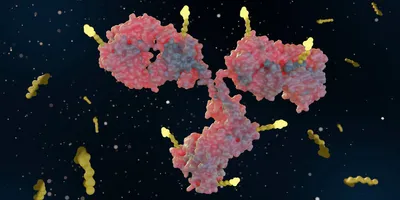
The researchers focused on PAR2 (protease-activated receptor 2), a receptor involved in pain signaling that has been shown to play a role in gastrointestinal diseases marked by inflammation and pain. Found on the lining of the gut and on pain-sensing nerves in the gut, PAR2 is activated by proteases and is a promising target for treating gut pain.
Matthew Bogyo, a pathologist at Stanford University, wanted to understand if bacteria also communicate by producing proteases and whether these enzymes regulate PAR2 activity and may be a factor driving pain.
Using a large library of human gut bacterial strains, Bogyo and his colleagues tested each strain to see if they produced enzymes that would cleave and activate PAR2. Surprisingly, more than 50 bacteria secreted enzymes that cleaved PAR2.
Nigel Bunnett, a neuropharmacologist and pain researcher at NYU College of Dentistry, told DDN that, “There are a remarkable number of bacterial species that secrete proteases that can cleave PAR2, suggesting that this is a common mechanism by which many bacteria can regulate pain.”
The researchers focused on a major colonizer of the human large intestine, Bacteroides fragilis. Nigel explained to DDN that, “This species had very high PAR2 cleaving activity. It has also been linked to IBD, which makes it more interesting.”
“B. fragilis is a sleeping pathogen of sorts,” explained Bogyo in the news release. “It can live in the gut without causing harm, but under certain conditions, it can disrupt signaling in ways that may lead to disease.”
Working with Nigel Bunnett, the team found that the B. fragilis enzyme directly activated PAR2, triggering pain signaling. In mice, the enzyme disrupted the intestinal barrier, excited nerve cells, and caused inflammation and pain in the colon.
“The results were black and white: if the protease was present, there was pain signaling, and if the protease was not present, there was no pain signaling. Our study identifies a new axis of communication between gut bacteria and the host that has implications for how symptoms may be triggered in inflammatory bowel disease,” said Bogyo in the release.
Using nanoparticles to reach the pain receptor inside cells
In a second study, Bunnett’s team explored how to block PAR2 once it’s activated. However, this was no simple task. When PAR2 is switched on, it doesn’t just stay on the surface of gut cells — it moves into internal compartments called endosomes, continuing to send pain and inflammation signals from inside the cell. Traditional drugs often cannot reach these hidden sites, which may explain why many existing painkillers fail to fully relieve gut pain.
“If this receptor internalizes and signals from these compartments, we have to develop a drug delivery strategy that will target the receptor inside the compartments,” said Bunnett in the press release.
To do this, the researchers used nanoparticles that can penetrate cells and release their contents precisely where needed. The team packaged an experimental PAR2-blocking drug, AZ3451, into nanoparticles designed to target both the gut epithelial cells and nerve cells, major sites of receptor signaling that drive abdominal pain. These nanoparticles released the drug slowly over several days, providing sustained delivery.
In both cell and mouse studies, the nanoparticle-encapsulated drug was shown to be far more effective at suppressing PAR2 signaling and reducing pain-like behavior than the free drug alone.
“Using nanoparticles for drug delivery demonstrates a precision-targeted approach. These nanoparticles are precisely directed not only to a particular cell, but a particular compartment within the cell and a particular receptor within the compartment,” said Bunnett in the news release.
By delivering drugs directly inside gut cells, researchers can now tackle chronic pain right at the source. It’s an early step, but one that could transform how we treat digestive pain and inflammation in conditions like IBD and irritable bowel syndrome.