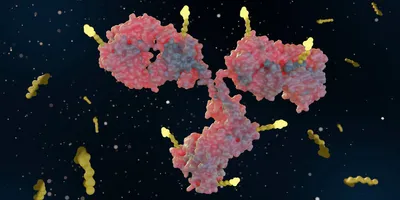
LAUSANNE, Switzerland—Swiss global biopharma Debiopharm Group and U.S. academic giant Yale University have elected to extend and broaden a relationship going back to 2011 in the area of autoimmune and inflammatory diseases, with an eye toward the discovery and development of macrophage migration inhibitory factor (MIF)-oriented therapeutics. MIF is described by the partners as “a key regulatory cytokine that has been linked genetically to the pathogenesis of several autoimmune and inflammatory diseases.”
Articles
Getting more ‘MIF’ed
Debiopharm and Yale broaden collaboration on MIF inhibitors for autoimmune and inflammatory diseasesWritten byJeffrey Bouley
| 3 min read

To continue reading this article, subscribe for FREE to
Subscribe today to keep up to date with the latest advancements and discoveries in drug development achieved by scientists in pharma, biotech, non-profit, academic, clinical, and government labs.


Add Drug Discovery News as a preferred Google source to see more of our trusted coverage.
About the Author
 This person does not yet have a bio.View Full Profile
Here are some related topics that may interest you:
LAUSANNE, Switzerland—Swiss global biopharma Debiopharm Group and U.S. academic giant Yale University have elected to extend and broaden a relationship going back to 2011 in the area of autoimmune and inflammatory diseases, with an eye toward the discovery and development of macrophage migration inhibitory factor (MIF)-oriented therapeutics. MIF is described by the partners as “a key regulatory cytokine that has been linked genetically to the pathogenesis of several autoimmune and inflammatory diseases.”
This new license and research agreement penned in May will enable the discovery and development of potential oral first-in-class compounds that inhibit MIF, and it is a deal that Thierry Mauvernay, delegate of the board for Debiopharm Group, is positive about, saying, “We are convinced that building a strong relationship with leading, medically focused academic institutions is a productive way of creating drugs for tomorrow.”
The partners tout Debiopharm’s track record in developing prescription drugs that target unmet medical needs as well as companion diagnostics and Yale’s reputation as a premier university with a long tradition of basic and clinical biomedical research.
“This is a great example of how scientists of academia and industry can put their efforts together to bring solutions to pressing medical needs in a more efficient manner,” notes Andrés McAllister, chief scientific officer of Debiopharm International SA, in the news release about the joint effort.
Yale researchers Dr. Richard Bucala, a professor of medicine, epidemiology and pathology, and Dr. William L. Jorgensen, Sterling Professor of Chemistry and director of the Division of Physical Sciences and Engineering, are leading the Yale scientific team designing small-molecule antagonists to block inflammation in patients.
“Debiopharm’s reputation for early-stage drug development is well known, and this is an exciting new therapeutic approach that may ultimately allow us to tailor treatment to a patient’s immunogenetic profile,” according to Bucala.
“The project is progressing well with great synergies between computer-aided molecular design, synthetic chemistry, crystallography and biology,” Jorgensen added. “We are delighted with Debiopharm’s participation, which is essential for spearheading the preclinical and clinical efforts.”
It was almost exactly three years before this deal that the two entities had announced an exclusive worldwide license agreement concerning the development and commercialization of Debio 1036, a first-in-class inhibitor for autoimmune and inflammatory diseases.
“We are very excited about this new collaboration with Yale,” said Dr. Rolland-Yves Mauvernay, president and founder of Debiopharm International, at the time. “Their leadership in marrying chemistry and biology to identify and validate lead drug candidates has yielded a new approach to treating inflammatory disease. The Debio 1036 project aims at developing inhibitors targeting a fundamental inflammatory pathway, which plays essential roles in myriad diseases’ progression and severity.”
Perhaps prophetically, Yale University President Richard C. Levin said then, “We sincerely believe this agreement represents the beginning of a long and fruitful relationship between Yale and Debiopharm for both Debio 1036 and other programs at Yale.”
There are no references on the Debiopharm website for Debio 1036 in the pipeline, though it does list Debio 1036B, which the company describes as an MIF inhibitor “developed in collaboration with Yale University for the treatment of autoimmune and inflammatory diseases,” adding that “MIF is a promising therapeutic target, which functions as an upstream regulator of inflammation and as an endogenous antagonist of glucocorticoid immunosuppression.” Debio 1036B is still listed as being in the discovery stage.
Debiopharm Group is a group of four companies active in drug development, GMP manufacturing of proprietary drugs, diagnostics and investments. Debiopharm International SA is focused on the development of prescription drugs that target unmet medical needs. The company in-licenses, develops and/or co-develops promising biological and small-molecule drug candidates for global registration. The products are commercialized through out-licensing to pharmaceutical partners to give access to the largest number of patients worldwide.