The oligonucleotide therapeutics field faces a supply bottleneck that chemistry alone has not resolved. Solid-phase phosphoramidite synthesis (SPOS) has underpinned commercial production since the 1980s, yet its process mass intensity (PMI) frequently exceeds 4,000 kg of raw material per kilogram of active pharmaceutical ingredient (API) produced. Batch sizes top out below 10 kg; demand for small interfering RNA (siRNA) and antisense oligonucleotide (ASO) drugs routinely requires kilogram-to-metric-ton annual volumes.
The global oligonucleotide contract development and manufacturing organization (CDMO) market reflects that pressure directly. According to a 2026 forecast by Global Market Insights, the market was valued at approximately $2.3 billion in 2025 and is projected to reach $15.7 billion by 2035 as the therapeutic pipeline matures and commercial programs multiply.
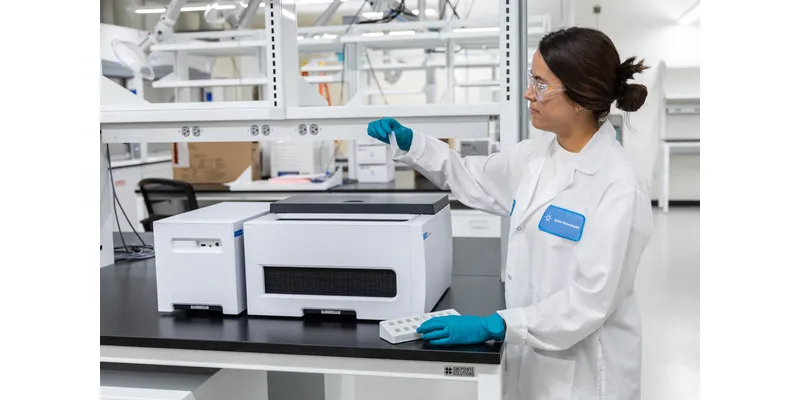
Agilent Technologies announced the addition of new laboratory space in Boulder, Colorado, to support the development and scale-up of enzymatic ligation as a manufacturing technology for oligonucleotide therapeutics. Initial customer programs are expected to begin at the facility in November 2026, subject to applicable operational and regulatory requirements. The expansion complements Agilent's existing cGMP facilities in Boulder and Frederick, Colorado, and manufacturing capabilities in Canada added through the 2024 acquisition of BIOVECTRA.
Together, those sites form Agilent Advanced Therapeutics, a CDMO division launched in March 2026. The division covers oligonucleotides, microbial fermentation, complex and synthetic chemistry, bioreagents, highly potent APIs, and cell line development.
What makes chemoenzymatic ligation a lower-waste alternative to SPOS?
Enzymatic ligation joins shorter, chemically synthesized oligonucleotide fragments into longer therapeutic sequences using enzymes rather than continued solid-phase chemistry. This hybrid approach (sometimes called chemoenzymatic ligation) preserves SPOS precision for fragment synthesis while replacing the most wasteful assembly steps with an aqueous, enzyme-driven joining reaction. A 2024 perspective in Communications Chemistry estimated PMI around 530 kg per kg of oligonucleotide for enzymatic synthesis routes, substantially below SPOS benchmarks, though the approach remains under active development for GMP readiness.
Enzymatic ligation shows particular promise for siRNA and long guide RNA (sgRNA) constructs, where full-length sequences push against SPOS yield and purity limits. The process synthesizes and purifies shorter fragments before assembly rather than accumulating them through sequential coupling cycles; this reduces N-1 impurities (truncated sequences missing one nucleotide) and improves full-length product abundance. The DIA Oligonucleotide-Based Therapeutics Conference, and other 2026 conferences, dedicated sessions to translating enzymatic ligation into GMP-ready processes, reflecting growing evaluation activity across the CDMO landscape.
Agilent's CDMO footprint: seven commercial approvals since 2006
Agilent Advanced Therapeutics has, according to company figures, supported seven commercially approved oligonucleotide therapeutics since 2006. Across clinical and commercial programs, the Colorado operations span siRNA, ASOs, aptamers, and sgRNAs from gram to kilogram scale.
The following specifications summarize the sites and capabilities across Agilent Advanced Therapeutics' North American footprint:
- Enzymatic ligation lab: dedicated process development and scale-up space in Boulder, Colorado
- Existing cGMP facilities: oligonucleotide manufacturing in Boulder and Frederick, Colorado
- Canadian capabilities: microbial fermentation and complex chemistry through BIOVECTRA
- Supported modalities: siRNA, ASO, aptamers, sgRNA, and related oligonucleotide formats
Blake Unterreiner, Vice President and Business Unit Leader for Agilent's Advanced Therapeutics Division, framed the Boulder expansion around responsiveness to customer program needs. "The additional laboratory space gives our teams a dedicated environment to further evaluate the customer's enzymatic ligation processes and respond to evolving customer manufacturing needs."
Oligonucleotide synthesis routes: waste, scale, and regulatory trade-offs
SPOS underpins every approved oligonucleotide drug on the market, with well-documented process control strategies, analytical methods, and impurity profiles. Its PMI and batch size constraints, however, become acute at commercial scale, driving interest in alternatives at every stage of regulatory maturity.
Chemoenzymatic ligation is building its regulatory record, with IND-stage CMC strategies among the earliest data points to emerge. Fully enzymatic synthesis operates in aqueous conditions, eliminating organic solvents entirely, and shows promise for ultra-long sequences that chemical methods struggle to deliver reliably; it remains in preclinical and early development stages. Liquid-phase oligonucleotide synthesis (LPOS) replaces the solid support with a soluble anchor molecule, enabling standard industrial reactors and lower solvent consumption than SPOS, with no major commercial approvals and limited regulatory history to date.
The gap between SPOS and its alternatives is widest on waste output and narrowest on regulatory precedent, a trade-off the table makes quantifiable:
| Synthesis approach | PMI (kg/kg) | Batch size ceiling | Regulatory precedent | Best-suited modalities |
|---|---|---|---|---|
| Solid-phase phosphoramidite (SPOS) | >4,000 | <10 kg | Established; underpins all approved oligonucleotide drugs | ASOs, short-to-medium siRNA |
| Chemoenzymatic ligation | ~530 (single comparative assessment; not peer-reviewed consensus) | Under evaluation | Emerging; IND-stage CMC strategies in development | siRNA, long sgRNA, high-purity conjugates |
| Liquid-phase synthesis (LPOS) | Lower than SPOS; varies by process | Larger than SPOS | Limited regulatory history; no major approvals confirmed | siRNA, large-volume programs |
| Fully enzymatic synthesis | Lowest (projected; not at GMP scale) | TBD | Preclinical and early development stage | Long RNA constructs, future modalities |
Scale pressure makes the trade-offs concrete: approved siRNA therapies targeting common cardiovascular conditions require metric-ton annual production quantities that SPOS struggles to deliver sustainably. Next-generation cardiometabolic and neurological RNA therapeutics now in Phase 3 will face similar demands, making process flexibility an increasingly important criterion when sponsors evaluate CDMO partners.
Enzymatic ligation's CDMO future rests on GMP data from labs like Boulder
GMP adoption of enzymatic ligation depends on how well purity profiles, impurity characterization strategies, and process control systems hold at manufacturing scale. Agilent's Boulder laboratory will generate process performance data under manufacturing-representative conditions, building the evidence base that regulators and sponsors need before chemoenzymatic routes can support late-stage and commercial programs. How fast those data arrive will shape whether enzymatic ligation becomes a routine option in oligonucleotide CDMO manufacturing.
This article is based on a press release issued by Agilent Technologies and was produced under Drug Discovery News' AI Editorial Guidelines.