Stanford University’s Ronald Davis is a giant in the field of genetics. He spent decades developing new ways to map and edit DNA, and he played a key role in the success of the Human Genome Project.
When Davis’ son was diagnosed with myalgic encephalomyelitis/chronic fatigue syndrome, or ME/CFS, solving the mystery of this poorly understood and often stigmatized disease became his new mission.
Whitney Dafoe, Davis’s son, first developed symptoms of ME/CFS in 2004. Over the next several years, his condition slowly deteriorated until he was unable to leave the house and then became bedridden. At his lowest point, Dafoe described his state as “being alive but dead at the same time,” in an article he wrote for the journal Healthcare in 2021 (1).
The biggest problem is that physicians have generally not been trained in the disease at all, even though it’s not a rare disease.
- Ronald Davis, Stanford University
Dafoe is far from alone in his battle with this disease. According to an Institute of Medicine report, as many as 2.5 million people may have ME/CFS in the United States alone (2). Yet this remains a rough estimate, as most people with ME/CFS are likely undiagnosed. There is currently no molecular diagnostic test available. Patients are diagnosed based on symptoms alone, which can be difficult for a variety of reasons. Symptoms can wax and wane over time and vary from patient to patient. Furthermore, dozens of other diseases, including lupus, rheumatoid arthritis, adrenal insufficiency, leukemia, and sleep apnea, can present with similar fatigue symptoms (3). However, said Davis, “the biggest problem is that physicians have generally not been trained in the disease at all, even though it’s not a rare disease.”
This is likely rooted in a long history of skepticism about the disease. “The lore has always been that it’s a psychosomatic disease,” said Davis. Even today, many patients feel that their doctors do not take their concerns seriously (4).
“This idea that if we don't understand an illness, it must be psychological, is really pervasive,” said Maureen Hanson, a Cornell University molecular biologist and ME/CFS researcher.
The diagnostic process is often a long and arduous one. As Dafoe wrote in Healthcare, he only secured a diagnosis “after seeing countless doctors and specialists in every area of medicine I could find… having blood drawn over and over again and literally hundreds of tests done.” Nearly one third of ME/CFS patients reported that it took them more than five years to be diagnosed (5). In addition to being stressful and expensive for patients, diagnostic delay also associates with a lower likelihood of recovery or improvement (6).
Now, a small but dedicated band of researchers is attempting to develop a diagnostic test for this disease by analyzing microRNAs, immune cells, extracellular vesicles, and more.
What is ME/CFS?
While the severity of ME/CFS can vary dramatically across individuals, the disease is characterized by the inability to do normal activities and post-exertional malaise, in which symptoms substantially worsen after physical or sometimes mental activity. Problems with sleep and cognition are common. Patients may also experience muscle and joint pain, headaches, digestive problems, and altered cardiac function. The disease is more common in women than in men.
Scientists still aren’t sure exactly what triggers the onset of this disease or continues to drive it once it manifests, although the immune system almost certainly plays a starring role. Many patients report a viral or flu-like illness shortly before the onset of the disease. Researchers have explored the roles of relatively common human herpesviruses and enteroviruses in ME/CFS, although the evidence is mixed and the exact nature of the link between these viruses and ME/CFS remains unclear (7). It may be that the virus itself is cleared from the body while leaving behind some form of autoimmunity or other immune dysregulation. Some researchers believe that pathogens may linger, hiding within cells themselves or in a tissue that’s difficult to biopsy like the brain.
Many people with ME/CFS feel that doctors do not take their illnesses seriously.
credit: istock/SDI Productions
While there’s currently no simple biological marker for ME/CFS — patients’ routine laboratory tests generally fall within normal values — Hanson emphasized that patients with ME/CFS are biologically distinguishable from healthy people. Patients on average show differences in the composition and function of their gut microbiomes, plasma metabolic profiles, autoimmune gene expression, and immune cell function (9–12).
“One problem with developing a marker is that there are lots of differences between individuals,” she said. “It could be that there's a single underlying cause [of the disease], but people's own genetics cause the manifestation of the illness to be different.”
For example, some studies revealed significant differences in certain markers between men and women with ME/CFS (8). Variability in biomarkers may also relate to the wide range of severity of the disease. Those with mild ME/CFS may still be able to participate in many activities (despite exhaustion afterwards), while those with more severe cases may be unable to leave their beds. Despite these challenges, a handful of research groups are exploring a variety of different assays to help make the vision of a simple ME/CFS diagnostic a reality.
Out for blood
A handful of researchers, including Davis and Hanson, are working on developing blood tests that can distinguish patients with ME/CFS from healthy people.
Davis developed the Nanoneedle biosensor to examine differences in blood cells from people with ME/CFS compared to those from a control group. Using nanoscale electrodes, this technology was originally developed as a rapid way to determine the effect of antibiotics on bacteria. “If the antibiotic is affecting the bacteria, it will affect their metabolism, and that will change the electrical impedance of the sample,” said Davis. In addition to assessing bacterial cell activity, this technique has also been used to study how cancer cells behave (9,10).
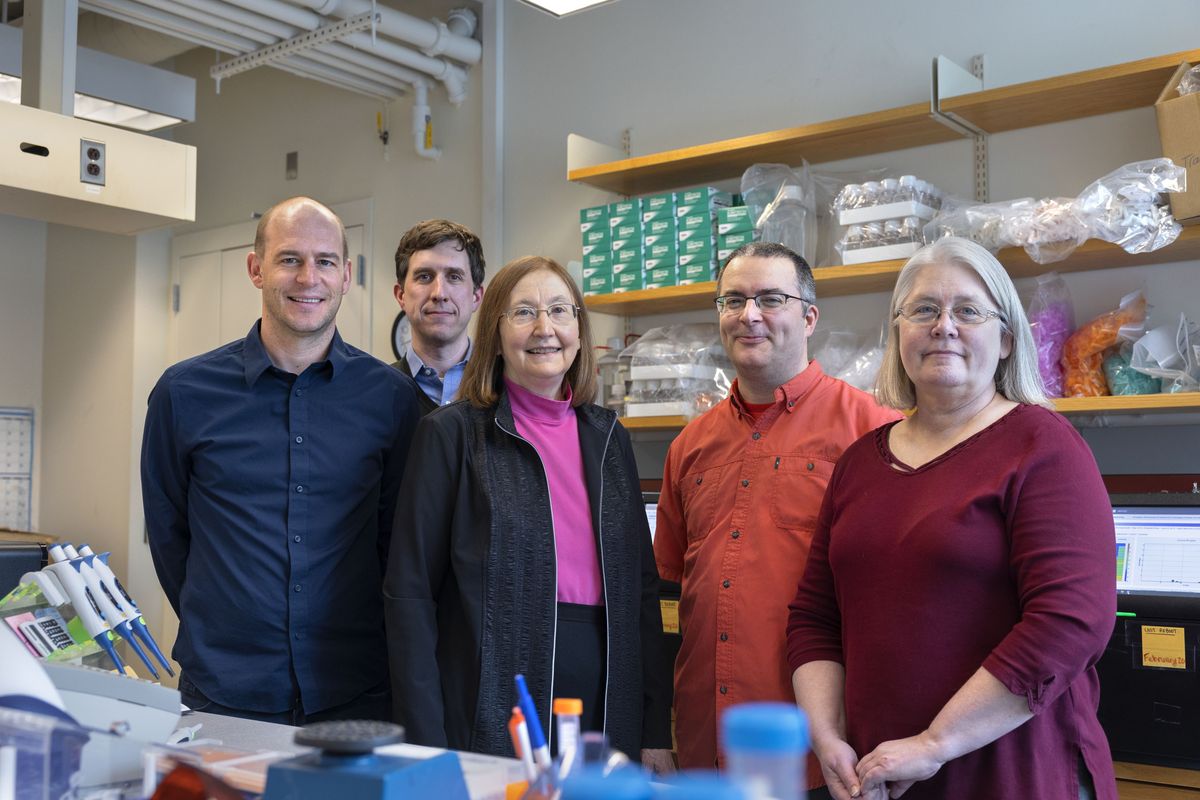
Cornell University researchers (left to right) Iwijn DeVlaminck, Benjamin Cosgrove, Maureen Hanson, Andrew Grimson, and Jennifer Grenier study the molecular and cellular biology underlying ME/CFS.
credit: Noël Heaney
Since a variety of cellular and molecular interactions affect electrical impedance, this technique allows researchers to measure whether certain stimuli or drugs affect cells without needing to know in advance exactly what type of change they are looking for. Patients with ME/CFS experience an abnormal response to exertion, so Davis and his team attempted to mimic this at a cellular level by exposing patients’ cells to a stressor. In this case, the team measured how patients’ peripheral blood mononuclear cells (PBMC) responded to hyperosmotic stress compared to the response in healthy PBMC.
They found that when a sample of these blood cells in the plasma of healthy people were stressed, the electrical impedance of the sample stayed fairly constant. In samples from ME/CFS patients, however, the response to the stressor looked very different: within a few hours, the impedance dramatically increased (11).
“We don’t actually know why it works,” Davis said. The electrical impedance of cells in plasma can be altered by a number of factors, including cell-cell interactions, changes in the cell membranes, changes in the conductivity of the cytoplasm within the cells, or changes in the proteins, exosomes, or lipids present in the plasma (11). Davis worries that the fact that the mechanism is unknown may hinder general acceptance of the test. This research was also performed in a relatively small number of people, with 20 patients and 20 healthy individuals.
Other researchers are trying to pin down specific proteins that can be used as biomarkers. In a recent study, Hanson and her team analyzed proteins in plasma and extracellular vesicles from 49 patients and 49 healthy controls. Using machine learning, they identified a set of 20 proteins that distinguished the two groups with 86 percent accuracy. Many of these proteins are related to immune function (12).
These tests are an important starting point, and characterizing the biology of ME/CFS is an important endeavor in itself, as it may one day help scientists understand the mechanisms that drive the disease. However, it’s not always clear if these differences between healthy controls and patients are due to the disease itself or due to other factors that vary between the two groups. These include differences in activity levels (some but not all studies have used sedentary control groups) or medications. Diet could also be a factor; people with ME/CFS may have different diets due to the digestive problems they experience, high rates of self-reported food intolerances, and high usage of nutritional supplements to attempt to treat the disease (11). As in the development of any diagnostic test or drug, large, well-controlled studies will be needed to confirm early promising findings.
Distinguishing ME/CFS from other similar illnesses
A test to distinguish people with ME/CFS from healthy people is an important start, but to truly diagnose the disease, a test must distinguish ME/CFS patients from people with other illnesses that also involve severe fatigue. Some researchers are already making strides towards this goal.
Alain Moreau, a molecular medicine researcher at the University of Montreal, is developing a diagnostic based on circulating microRNA. MicroRNAs don’t code for any proteins; instead, they play a role in regulating gene expression. Moreau said there are a few reasons why microRNAs are good candidates for diagnostic development. ME/CFS often seems to be triggered by a viral infection; microRNAs are rapidly altered upon infection and play an important role in how the host responds to the infection (13). Furthermore, a microRNA signature simply may be easier to identify than a signature in certain other types of markers.
Alain Moreau is developing a diagnostic test for ME/CFS using microRNA.
credit: Véronique Lavoie
“There are about 2,500 mature microRNA in humans, which is not a lot,” said Moreau. “It’s a lot worse if you decide to study metabolites; there might be more than one million different metabolites.”
Moreau decided to begin by examining the hallmark symptom of ME/CFS: post-exertional malaise. Since this symptom is specific to this disease, biomarkers related to this symptom might be specific as well. To achieve this, Moreau and his teamed first needed to design a maneuver to provoke post-exertional malaise in a standardized and relatively safe manner.
Traditionally, researchers provoke post-exertional malaise with a cardiopulmonary exercise test, which requires two consecutive days of high-intensity exercise. However, those with severe disease are generally unable to achieve the intensity of exercise needed for the test, and there are concerns about the degree to which the test itself may exacerbate patients’ symptoms (14).
Working with patient partners, Moreau and his team developed a gentler method that could be used on people with more severe forms of the disease. “We know that the most severely affected patients — I'm talking house-bound patients — rarely participate in clinical studies. So, we’re missing the opportunity to gather very precious information,” said Moreau.
The team used an arm cuff that inflated and deflated to deliver a massage-like stimulation for 90 minutes. Even this gentler method triggered post-exertional malaise in patients with ME/CFS. The team collected blood samples before and after the procedure from healthy individuals and severely affected patients, eventually identifying changes in 11 microRNA biomarkers (15). Most but not all of these microRNAs related to immune function or inflammation. By applying a machine learning algorithm to the measured values of these 11 microRNAs before and after stimulation, researchers distinguished between patients and controls with 90 percent accuracy. Researchers also identified four subtypes in their sample, each with a different microRNA profile and somewhat different symptom profiles.
Next, researchers wanted to test whether these 11 microRNAs could differentiate between people with ME/CFS and those with fibromyalgia, another poorly understood chronic disease which also involves fatigue. “We saw a very different picture, even at baseline without the stress test,” Moreau said. Again using machine learning, they distinguished between these two disorders with a specificity and sensitivity of 100 percent (16).
Moreau now plans to further refine the test and seek approval from Health Canada so that the test can be performed in certified diagnostic labs throughout the country.
Where to go from here
Determining biomarkers for ME/CFS is still an area of active research. Most scientists are exploring different approaches simultaneously rather than putting all of their eggs in one basket. Davis, who developed the Nanoneedle, and his team are developing a diagnostic test using neutrophils, an important component of the innate immune system which may be dysfunctional in people with ME/CFS. Hanson, who developed a proteomics-based test, is also studying gene expression in muscle cells, immune cell dysregulation, and dysfunction of the endothelium, the thin membrane lining the inside of the cardiovascular system. Still others are analyzing blood cells with Raman spectroscopy, interrogating the gut microbiome, and investigating brain activity using multimodal magnetic resonance imaging (17–19).
In short, said Moreau, “We’re looking at everything.”
We’re looking at everything.
- Alain Moreau, University of Montreal
Some researchers, including Moreau, believe that these diagnostic biomarkers are crucial for the success of future clinical trials. These biomarkers will be helpful for assessing treatment efficacy, and since the disease may exhibit substantial heterogeneity between individuals, they may also help determine which types of patients respond to which therapies.
This view is not universal, however. “I have heard people say that we can't have clinical trials for ME/CFS because we don't have a molecular marker. In my mind, that is ridiculous. You can still have clinical trials using health surveys that have been vetted and tested that are used in other diseases to find out whether a drug is doing any good,” said Hanson.
Hanson noted that there are other diseases such as depression that do not have validated biomarkers, but nevertheless, scientists perform clinical trials and identify effective drugs. While emphasizing that ME/CFS is by no means a mental health condition, Hanson noted that a lack of biomarkers does not render effective drug development impossible, even for heterogeneous conditions.
While they don’t agree about everything, researchers do generally agree that while scientific developments in the understanding of the molecular underpinnings of the disease and the ability to diagnose it are important, more education and acceptance in the medical community is also sorely needed.
“It is important to have a test, but I really don't know how successful it will be until we educate the doctors,” said Davis.
References
- Dafoe, W. Extremely Severe ME/CFS-A Personal Account. Healthcare (Basel) 9, 504 (2021).
- Myalgic Encephalomyelitis/Chronic Fatigue Syndrome (ME/CFS) | CDC. (2023). at <https://www.cdc.gov/me-cfs/index.html>
- Other Conditions for Evaluation | Diagnosis | Healthcare Providers | Myalgic Encephalomyelitis/Chronic Fatigue Syndrome (ME/CFS) | CDC. (2019). at <https://www.cdc.gov/me-cfs/healthcare-providers/diagnosis/other-conditions.html>
- Saul, H. People with chronic fatigue syndrome want to be taken seriously and to receive personalised, empathetic care. NIHR Evidence (2021). doi:10.3310/alert_45455
- Read ‘Beyond Myalgic Encephalomyelitis/Chronic Fatigue Syndrome: Redefining an Illness’ at NAP.edu. doi:10.17226/19012
- Ghali, A. et al. Factors Influencing the Prognosis of Patients with Myalgic Encephalomyelitis/Chronic Fatigue Syndrome. Diagnostics 12, 2540 (2022).
- Rasa, S. et al. Chronic viral infections in myalgic encephalomyelitis/chronic fatigue syndrome (ME/CFS). J Transl Med 16, 268 (2018).
- Cheema, A. K. et al. Unravelling myalgic encephalomyelitis/chronic fatigue syndrome (ME/CFS): Gender-specific changes in the microRNA expression profiling in ME/CFS. Journal of Cellular and Molecular Medicine 24, 5865–5877 (2020).
- Ur, A. & Brown, D. F. J. Impedance Monitoring of Bacterial Activity. Journal of Medical Microbiology 8, 19–28 (1975).
- Pan, Y. et al. 3D microgroove electrical impedance sensing to examine 3D cell cultures for antineoplastic drug assessment. Microsyst Nanoeng 6, 1–10 (2020).
- Esfandyarpour, R., Kashi, A., Nemat-Gorgani, M., Wilhelmy, J. & Davis, R. W. A nanoelectronics-blood-based diagnostic biomarker for myalgic encephalomyelitis/chronic fatigue syndrome (ME/CFS). Proceedings of the National Academy of Sciences 116, 10250–10257 (2019).
- Giloteaux, L. et al. Proteomics and cytokine analyses distinguish myalgic encephalomyelitis/chronic fatigue syndrome cases from controls. Journal of Translational Medicine 21, 322 (2023).
- Girardi, E., López, P. & Pfeffer, S. On the Importance of Host MicroRNAs During Viral Infection. Front Genet 9, 439 (2018).
- Snell, C. R., Stevens, S. R., Davenport, T. E. & Van Ness, J. M. Discriminative Validity of Metabolic and Workload Measurements for Identifying People With Chronic Fatigue Syndrome. Physical Therapy 93, 1484–1492 (2013).
- Nepotchatykh, E. et al. Profile of circulating microRNAs in myalgic encephalomyelitis and their relation to symptom severity, and disease pathophysiology. Sci Rep 10, 19620 (2020).
- Nepotchatykh, E. et al. Circulating microRNA expression signatures accurately discriminate myalgic encephalomyelitis from fibromyalgia and comorbid conditions. Sci Rep 13, 1896 (2023).
- Xu, J. et al. Developing a blood cell-based diagnostic test for myalgic encephalomyelitis/chronic fatigue syndrome using peripheral blood mononuclear cells. 2023.03.18.23286575 Preprint at https://doi.org/10.1101/2023.03.18.23286575 (2023)
- Guo, C. et al. Deficient butyrate-producing capacity in the gut microbiome is associated with bacterial network disturbances and fatigue symptoms in ME/CFS. Cell Host Microbe 31, 288-304.e8 (2023).
- Shan, Z. Y. et al. Multimodal MRI of myalgic encephalomyelitis/chronic fatigue syndrome: A cross-sectional neuroimaging study toward its neuropathophysiology and diagnosis. Front Neurol 13, 954142 (2022).