Is there a vaccine for Bundibugyo virus? Not yet. The species has driven the largest recorded Bundibugyo virus disease outbreak in the Democratic Republic of the Congo (DRC), with 9,552 cases and 4,602 deaths confirmed as of October 21, 2026, and no licensed vaccine available.
The only vaccine in the Phase 2/3 Tumaini trial so far is licensed for Zaire ebolavirus, not Bundibugyo virus. Any Bundibugyo vaccine therefore still depends on candidates in early development, and each needs sterile, clinical-grade material that is hard to make from very large viral vectors.
ProBioGen announced on November 10, 2026, that its dedicated viral manufacturing facility in Berlin received extended manufacturing authorization and an updated Good Manufacturing Practice (GMP) certificate from the Berlin State Office for Health and Social Affairs (Lageso). The authorization covers sterile biological drug substances and investigational medicinal products, including viral vectors, viral vaccines, and advanced therapy medicinal products (ATMPs).
ProBioGen is a wholly owned subsidiary of Minapharm. The Berlin facility will make GMP drug substance for a Minapharm-led Bundibugyo vaccine candidate built on ProBioGen's modified vaccinia Ankara (MVA) platform, MVA-CR19. The authorization also supports ProBioGen's planned operation of the future GMP facility at the Berlin Center for Gene and Cell Therapies, a hub under construction.
Why can't MVA vaccines use a sterilizing filter?
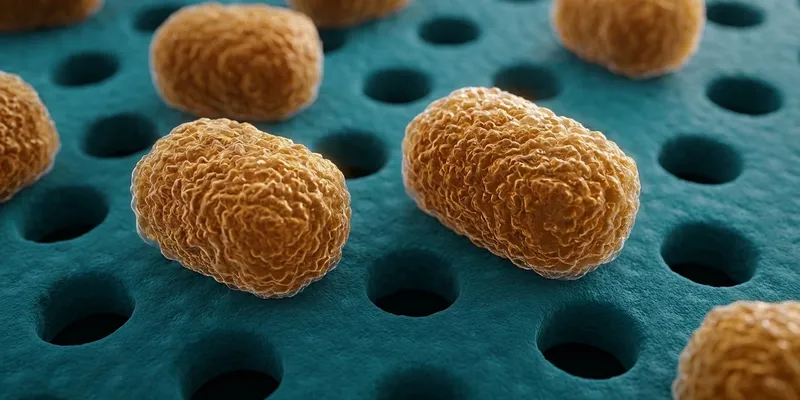
MVA particles are too big for a 0.2µm sterilizing membrane, so a finished MVA vaccine cannot be filter-sterilized. MVA is a highly attenuated poxvirus vector that cannot replicate in human cells, and a 2015 report from ProBioGen scientists in BMC Proceedings found its particles too big for filtration, centrifugation, and chromatography by standard methods. Aseptic handling therefore has to cover the whole production process.
MVA vaccines also need large doses. In the same 2015 BMC Proceedings paper, the ProBioGen scientists reported that each dose requires about 100 million infectious units because MVA cannot amplify in vaccine recipients, which they put at 400-fold above the dose recommended for replication-competent poxviruses.
GMP authorization: Annex 1 qualification and specifications

Aseptic filling inside a restricted access barrier system, the setup ProBioGen uses for viral vaccine drug product in Berlin.
ProBioGen
ProBioGen qualified its Berlin viral facility under the revised European Union (EU) GMP Annex 1 for sterile medicinal products, which took effect in August 2023. The company reported three successful aseptic process simulations.
Pre-use post-sterilization integrity testing (PUPSIT), an Annex 1 requirement, confirms that a sterilizing-grade filter is intact after sterilization and before use. ProBioGen applies it to filters that prepare sterile media and buffers, which protect upstream solutions rather than sterilize the virus.
ProBioGen's reported specifications matter because a product that cannot be sterile-filtered has to stay inside controlled aseptic equipment from production to vial.
- Capacity: Drug substance production of up to 200L
- Filling: In-house aseptic filling on an L1 system with restricted access barrier system (RABS) technology
- Quality control: Adjacent laboratories supporting testing and handling of sensitive products and intermediates
- Filter integrity: PUPSIT for filters used to prepare sterile media and buffers
Simon Bulling, Chief Operating Officer at ProBioGen, said the facility gives sponsors one integrated service. "With the authorization of our dedicated viral facility, we can offer an integrated service covering process development, GMP drug substance manufacturing and aseptic drug product filling for clinical supply," Bulling said.
Berlin will supply drug substance for Minapharm's Bundibugyo vaccine
ProBioGen will generate recombinant MVA drug substance under GMP in Berlin, and Minapharm's Cairo facility will convert it into the finished drug product, a split manufacturing plan CEPI described in August. Minapharm will receive up to $16.5 million from the Coalition for Epidemic Preparedness Innovations (CEPI) for the program. Minapharm also plans to move drug substance manufacturing to Cairo for fully local production.
CEPI described MVA-CR19 as the only candidate in its Bundibugyo vaccine portfolio designed to induce both B-cell and T-cell responses. Volker Sandig, Chief Scientific Officer at ProBioGen, coauthored a 2009 avian cell line study and said in CEPI's August 27 announcement that "ProBioGen's MVA-CR19 platform was developed to enable rapid generation of recombinant MVA vaccine candidates and scalable manufacturing."
Human data on MVA-containing regimens come from Zaire ebolavirus vaccines that use a different MVA, so they support the platform concept without predicting how MVA-CR19, which has no human data yet, will perform. Senior author Rodolphe Thiébaut of the University of Bordeaux and colleagues modeled antibody data from 487 participants across six Phase 1 and Phase 2 trials of a licensed regimen that pairs an adenovirus vector with an MVA boost. The model estimated durable humoral immunity, with a half-life of at least 15 years for long-lived antibody-secreting cells.
Five programs across four platforms target Bundibugyo virus
CEPI supports five Bundibugyo-specific vaccine programs across four platforms, and none has efficacy data yet. The European Centre for Disease Prevention and Control (ECDC) reported in October that candidates remained in preclinical development or early-stage trials. World Health Organization (WHO) advisers proposed using the licensed Zaire ebolavirus vaccine primarily within a research protocol to test possible cross-protection.
Developers using adenovirus vectors projected in May that a candidate could reach trials within months. The table below groups Bundibugyo vaccine approaches in development as of November 2026 by platform to show how far each has advanced.
| Platform | Stage | Notes |
|---|---|---|
| Recombinant vesicular stomatitis virus (rVSV) | Phase 2/3 for a licensed Zaire ebolavirus vaccine; CEPI-funded Bundibugyo-specific candidates in development | The licensed vaccine entered Tumaini first; first participant vaccinated October 23 |
| Chimpanzee adenovirus vector | Phase 1 began July 2026 | Slated to enter Tumaini |
| mRNA | CEPI-funded | Slated to enter Tumaini |
| MVA (MVA-CR19) | Preclinical | Phase 1 expected in Africa; drug substance to be made in Berlin |
Tumaini, a randomized adaptive Phase 2/3 trial registered as NCT07842107, is expected to produce the first efficacy evidence for any Bundibugyo vaccine. Its design and backing are summarized below.
- Design. Investigators vaccinate contacts of confirmed cases through ring vaccination.
- Selection. A WHO advisory group prioritizes candidates, and CEPI named only the adenovirus-vector and mRNA candidates as preparing to join.
- Goal. CEPI aims to bring at least two Bundibugyo vaccines to emergency use authorization and WHO prequalification.
- Supply. Gavi committed up to $40 million to manufacturing readiness so doses could be available at scale once approved.
Aseptic MVA manufacturing supports a Bundibugyo vaccine candidate
ProBioGen's Berlin facility holds GMP authorization and EU Annex 1 qualification to make sterile viral drug substance, which matters for MVA vaccines that cannot be sterile-filtered. The facility will supply drug substance for Minapharm's MVA-CR19 Bundibugyo vaccine candidate, which has no human data yet and is expected to enter a CEPI-funded Phase 1 trial in Africa. If that trial succeeds, CEPI anticipates working with Minapharm and ProBioGen on late-stage trials toward emergency use authorization.
This article is based on a press release issued by ProBioGen and was produced under Drug Discovery News' AI Editorial Guidelines.