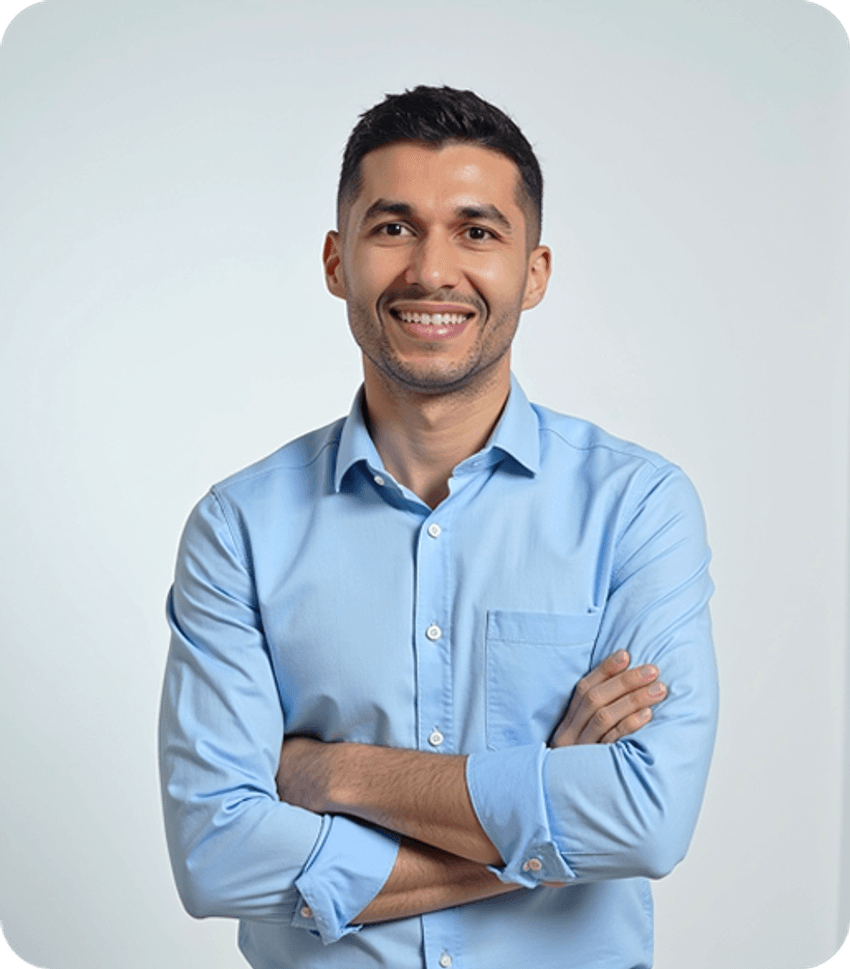
Riad Gacem’s vision is to simplify laboratory management by delivering one of the most intuitive and flexible LIMS on the market.
Credit: DiData
Pharmaceutical research is becoming increasingly data-intensive, with laboratories generating information across instruments, samples, experiments, and sites at a scale that traditional data management systems were not designed to handle. As drug development becomes more collaborative and geographically distributed, the ability to connect this information is increasingly important for maintaining traceability, supporting automation, and enabling researchers to make timely, informed decisions.
Laboratory information management systems (LIMS) have traditionally provided the infrastructure for organizing samples and laboratory data, but many legacy platforms can struggle to accommodate increasingly complex workflows and modern connected technologies. Rigid configurations, fragmented systems and reliance on manual data entry can create bottlenecks for researchers and make it harder for organizations to adapt their digital infrastructure as their needs evolve.
To explore how laboratory data management is evolving and what researchers can expect from the next generation of LIMS, DDN spoke with Riad Gacem, CEO and founder of DiData. He discusses the limitations of legacy systems, the importance of user-configurable workflows and interoperability, and how AI could help laboratories turn increasingly complex datasets into actionable insights.
How have the demands placed on laboratory data management changed over the past decade, and why have traditional systems struggled to keep up?
Over the past ten years, the volume and complexity of laboratory data have grown dramatically. We now have high-throughput sequencing, multi-site biobanks, connected instruments, and much stronger requirements around traceability, compliance, and audit trails.
Laboratories are no longer just managing samples. They need to connect samples, experiments, results, and workflows across different teams and sometimes multiple sites.
Traditional systems were designed for a time when data was more static and workflows were simpler. They can be rigid, require significant IT support for even small changes, and often don't integrate easily with modern instruments. As a result, researchers spend too much time on manual data entry and reconciling information spread across different systems, which also increases the risk of human error.
Many researchers still view LIMS as an administrative necessity rather than a scientific enabler. How do you think a well-designed LIMS can actively accelerate research and improve decision-making?
A well-designed LIMS should support the science rather than get in the way of it. By automating workflows and reducing manual steps, it allows researchers to spend less time on data entry and documentation and more time on their actual research.
It also helps reduce the margin for human error. For example, unique sample identifiers and barcode labelling improve traceability, while built-in validation rules help prevent incorrect data from entering the system. Integrating laboratory instruments can also automate the transfer of results instead of relying on manual entry.
By connecting samples, experiments, and results in a consistent and traceable way, researchers can access information more quickly, monitor their work more effectively and make decisions with greater confidence. As research grows, the system needs to grow with it. DiData is designed to be scalable, supporting laboratories as they add new studies in Di-BIMS or Di-LIMS, or implement protocol amendments in Di-EDC, without having to rebuild their workflows from scratch.
DiData was founded around the idea of closing the gap between modern IT and the tools available to researchers. What did you see missing from existing LIMS platforms that inspired you to build something different?
Many existing solutions were complex, expensive, and not particularly user-friendly, largely because they relied on outdated technology. By leveraging more current technologies, we set out to offer a solution that is simple, user-friendly, and affordable.
The starting point was not really that one specific feature was missing. It was the fragmentation of the laboratory environment. In many laboratories, data was spread across different, disconnected tools: one system for storage and freezers, another for clinical data, another for sample management, with little communication between them.
We felt that laboratories shouldn't have to keep adding software to connect all these pieces. They need an ecosystem where everything works together seamlessly. That's why DiData brings Di-LIMS, Di-Freeze, and Di-EDC together in one web-based environment, with a REST API that also allows our modules to connect with systems already in place.
The goal is to make data flow smoothly from sample collection all the way to analysis, without unnecessary breaks, re-entry, or data silos.
One of your key messages is that laboratories shouldn't need dedicated IT specialists to configure their workflows. Why has usability become such an important differentiator for laboratory software?
Because science needs flexibility, the tools that support it must adapt to the science, not the other way around. At the same time, users' expectations are rising quickly, and rightly so, as IT continues to advance at a fast pace.
Because even the best technology is of little value if users need an IT team to operate it.
Our users are scientists first, not IT specialists. That's why DiData provides a workflow editor that allows laboratory processes to be configured and reproduced without requiring specific technical skills.
Our feature packages, for clinical trials, biobanking, freezer management, and other use cases, can also be activated or deactivated depending on the laboratory's needs, without requiring custom development every time.
We also focus on fast deployment through ready-to-use libraries and a REST API, making it easier to integrate with existing systems and instruments.
For us, usability is not just about having a nice interface. It determines whether a platform is actually adopted by researchers in their daily work or becomes another obstacle.
You're working with a range of research organizations and laboratories. Can you describe a case study that demonstrates how Di-LIMS has improved laboratory operations or accelerated research?
A very good example is our collaboration with LVBMC, the Genome Database of the Latvian Population, operated by the Latvian Biomedical Research and Study Centre.
It is one of Europe's most advanced national biobanks, with more than 30,000 participants, over 500,000 biological samples, more than 120 studies, including 25 active ones, and an official role within the BBMRI-ERIC network.
As their activities grew, their previous LIMS started to show its limitations. Workflows were fragmented between laboratories, data migration was difficult, monitoring was spread across disconnected Excel files, and there were recurring issues with traceability and sample collection.
With Di-LIMS, we built an infrastructure around their specific needs, including sample derivation and genealogy, randomized patient codes, local hosting, enhanced security, Di-Freeze for sample storage management, and custom-developed plugins.
AI is increasingly being applied across the drug discovery workflow. Beyond automating routine administrative tasks, how do you see AI helping scientists make better use of the vast amounts of data generated in modern laboratories?
This is exactly where we are investing heavily today with the launch of DiBrain, our new AI module integrated into the DiData ecosystem. The idea is not to add AI as a separate feature on top of a LIMS. We want to bring intelligence directly into the environment where researchers work and make decisions.
DiBrain can help identify trends or anomalies in datasets that are too large for humans to analyze easily, suggest optimized workflows based on laboratory history, and make it easier to interact with data using natural language rather than complex technical queries.
Our ambition with DiBrain is to help transform connected laboratories into environments that can learn from their own data, so researchers spend less time looking for information and more time turning it into meaningful insights.
As research becomes increasingly data-intensive and collaborative, what capabilities do you think laboratories will expect from the next generation of LIMS?
I think four things will become increasingly important: interoperability, flexibility, stronger security and traceability, and AI. Laboratories will expect solutions that are smarter, easier to use, and able to evolve rapidly to keep pace with their needs.
Laboratories will need to connect instruments, external databases and other platforms easily. They will also want to adapt workflows without constantly depending on developers.
At the same time, security and traceability will become even more important, especially for multi-site research and projects involving sensitive data.
We will also see a growing need for platforms that can support international collaboration, with granular access controls and complete audit trails.
What advice would you give organizations that are still relying on legacy laboratory management systems but are considering modernizing their digital infrastructure?
I would say: Don't wait until technical debt becomes a real operational problem. The longer you wait, the more difficult and costly modernization can become.
But modernization doesn't have to mean replacing everything overnight. It can be done progressively, module by module, starting with the workflows that matter most, without disrupting ongoing laboratory activities.
The key is to choose a solution that adapts to your existing processes rather than forcing your laboratory to reorganize around the software. It should also give scientific teams enough autonomy to configure their workflows without constantly relying on external IT support.
That's the philosophy we've followed with the DiData ecosystem: an environment designed to evolve with the laboratory, rather than lock it into a fixed way of working.